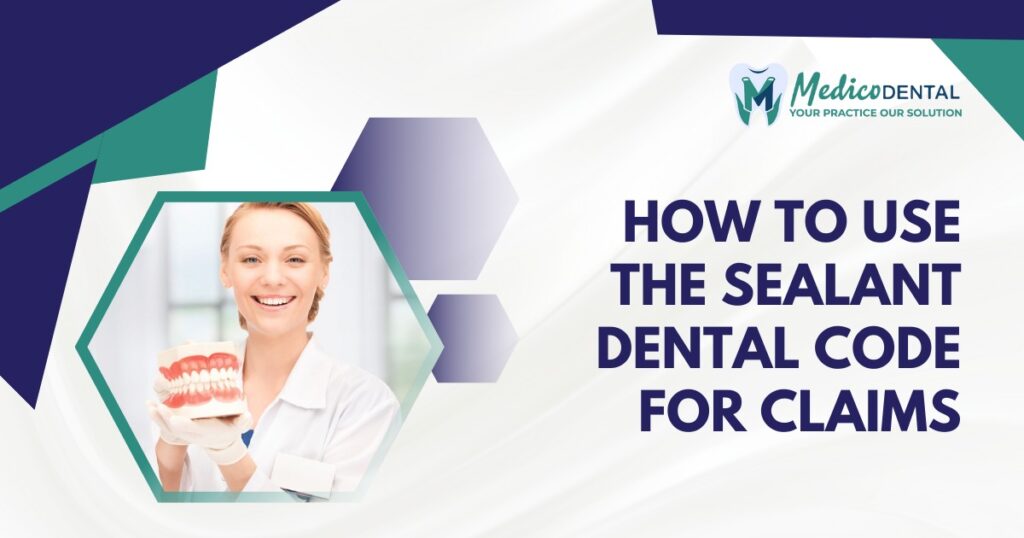
Dental sealants are a critical preventive measure in oral health care, designed to protect teeth from cavities by creating a barrier over vulnerable areas. Correct coding and billing for sealant procedures are essential for ensuring that dental claims are processed quickly and accurately. This article will provide an in-depth overview of sealant dental codes, their correct application, and the importance of using them accurately in claims submission to maximize reimbursement and avoid errors.
Overview of Sealant Dental Codes
Dental sealants are commonly applied to the chewing surfaces of the back teeth (molars) to prevent cavities. The American Dental Association (ADA) has established specific codes to properly identify and bill for these sealant-related procedures. Using these codes correctly is crucial for dental practices to receive appropriate reimbursement from insurance companies and avoid claim denials or delays.
Why Proper Use of Sealant Codes Matters for Claims
Proper use of sealant codes in dental billing ensures that the insurance company understands the service provided, which is essential for reimbursement. Incorrect or incomplete coding can result in delayed or denied claims, affecting cash flow for the practice. Additionally, incorrect coding can result in compliance issues or audits, which could harm the practice’s reputation.
Understanding Sealant Dental Codes
What is the Sealant Dental Code?
Sealant dental codes are part of the ADA’s Current Dental Terminology (CDT) system, a set of codes used by dental professionals for billing and insurance claims. The sealant codes are specifically designed to describe procedures related to the application of sealants, which can be used for both preventive care and restorative treatments.
The main purpose of these codes is to standardize the billing process, ensuring that both dental professionals and insurers have a clear understanding of the procedure performed. Proper usage of these codes allows for accurate claims submission, quick reimbursement, and streamlined administrative processes.
Common Sealant Codes Used in Dental Claims
-
D1351: Sealant Application
-
Definition: D1351 is the most commonly used code for the application of a dental sealant to the chewing surface of a tooth. This procedure is often performed on the back teeth (molars) to protect against cavities.
-
Purpose: This code applies to routine sealant applications on permanent molars, primarily as a preventive measure for children and adolescents.
-
When to Use: When a dentist applies a sealant to a tooth that is free of decay or disease. It is typically billed as part of a preventive care routine for younger patients or as part of a preventive package for adult patients at higher risk for decay.
-
-
D1352: Preventive Resin Restoration (Sealant with Composite)
-
Definition: D1352 refers to a procedure in which a composite resin is used in conjunction with a sealant to fill areas of a tooth that may show early signs of decay. The resin helps to prevent further deterioration.
-
Purpose: This code is used when a dentist performs a preventive resin restoration, which is a more extensive procedure compared to a simple sealant. It combines the benefits of a sealant with the added strength of a composite resin to restore the tooth’s surface.
-
When to Use: Use this code when there are small areas of decay that require a restorative treatment, in addition to applying a sealant. The procedure is most commonly applied in cases where the tooth has minimal decay that hasn’t yet reached the pulp but requires more than just a simple sealant.
-
The Importance of Using the Sealant Dental Code Correctly
How Incorrect Use of Sealant Codes Can Impact Claims
Incorrectly using sealant codes can cause several issues for a dental practice. These errors typically arise from misclassification of the procedure or failure to provide sufficient documentation. Common problems include:
-
Code Misapplication: Using the wrong code for the procedure can lead to claim denials or delays. For instance, using D1351 (sealant application) when a more complex procedure, like a preventive resin restoration (D1352), is actually performed could lead to the claim being rejected.
-
Underbilling or Overbilling: Incorrect coding might result in underbilling (leading to insufficient reimbursement) or overbilling (which could trigger audits or penalties).
Common Errors in Sealant Code Application
-
Confusing Preventive vs. Restorative Sealants: One of the most frequent errors is misclassifying a preventive sealant (D1351) as a restorative one (D1352), or vice versa. A preventive sealant is applied when there’s no decay, while a restorative sealant is used when there is a need for composite resin in addition to the sealant.
-
Wrong Tooth or Surface: Sometimes, the wrong tooth or tooth surface is coded for sealant application. Ensuring the correct tooth and surface are billed for is crucial for accurate processing.
Consequences of Incorrect Billing
Incorrect billing can lead to:
-
Claim Denials: If the insurer believes the code does not accurately describe the procedure, they may reject the claim.
-
Delayed Reimbursement: Incorrect codes can lead to delays in payment as insurers request additional information or clarification.
-
Compliance Issues: Overbilling or using incorrect codes can be flagged during audits, which may lead to fines or reputational damage to the dental practice.
Benefits of Accurate Sealant Dental Coding
When dental sealant codes are used correctly, the following benefits can be achieved:
-
Faster Claims Processing: With accurate coding, insurers are able to process claims more quickly without requiring additional clarification or resubmission.
-
Improved Reimbursement Rates: Correctly coded claims are more likely to be reimbursed in full, leading to better financial outcomes for the practice.
-
Reduced Risk of Audits: Proper documentation and accurate use of sealant codes reduce the likelihood of an audit or investigation by insurers.
Step-by-Step Guide to Using the Sealant Dental Code for Claims
Step 1: Identify the Correct Sealant Code for the Procedure
-
Factors to Consider:
-
Is the procedure preventive or restorative?
-
Are there signs of decay or just a risk of future decay?
-
Is a composite resin being used along with the sealant?
-
-
Review the patient’s dental history to determine the most accurate code, whether it’s for a standard sealant (D1351) or a preventive resin restoration (D1352).
Step 2: Gather All Necessary Patient Information
-
Patient’s Dental History: Ensure that the patient’s record indicates the need for a sealant. This may include a documented history of cavities, high caries risk, or age-appropriate recommendations for sealant application.
-
Insurance Details: Verify the patient’s insurance plan and ensure that the sealant procedure is covered. Different plans may have specific requirements or limitations on sealant coverage.
Step 3: Properly Document the Procedure
-
Notes to Include for Sealant Claims:
-
Document the tooth surfaces that received the sealant or restoration.
-
Provide details about the patient’s age and risk factors (e.g., high decay risk).
-
Include notes about any other treatments performed during the visit.
-
Step 4: Submit the Claim Using the Correct Code
-
Electronic vs. Paper Formats: Submitting claims electronically is typically faster and more efficient, reducing processing times and potential errors. Paper submissions may require additional processing time.
-
Key Details to Include in the Claim Submission:
-
Ensure the correct CDT code (D1351 or D1352) is used.
-
Include the date of service, patient details, and the provider’s information.
-
Ensure that all necessary documentation, such as charts or X-rays, is included, especially for more complex procedures.
-
Common Mistakes to Avoid When Using Sealant Codes
Misclassifying the Type of Sealant Procedure
-
Preventive vs. Restorative: Always distinguish between a basic preventive sealant (D1351) and a preventive resin restoration (D1352). Avoid using the same code for both, as they involve different techniques and billing processes.
Incomplete or Inaccurate Documentation
-
How to Ensure Accurate Patient and Procedure Records: Keep thorough records of each procedure. This includes clear documentation of which tooth surfaces were sealed, any signs of decay, and why a composite material was used (if applicable).
Missing or Incorrect Insurance Information
-
Common Insurance Errors with Sealant Claims: Double-check the insurance information to ensure it’s accurate. Misentered information, such as incorrect policy numbers or plan details, can delay or deny claims.
How to Maximize Reimbursement with the Sealant Dental Code
Ensuring accurate billing and maximizing reimbursement for sealant procedures can be challenging. However, by following best practices for documentation, communicating effectively with insurance providers, and using modifier codes when necessary, dental practices can streamline the process and increase reimbursement rates. In this section, we’ll outline strategies that can help you get the most out of your sealant claims.
Optimizing Documentation for Higher Reimbursement
Proper documentation is crucial when submitting claims for dental procedures, including sealant applications. Insurance companies rely heavily on documentation to verify the necessity of the procedure and to ensure that the correct procedure code is being used.
Providing Clear and Complete Procedure Descriptions
One of the most effective ways to maximize reimbursement is by ensuring that your documentation clearly reflects the procedure performed. This means more than just listing the code—detailed, thorough notes are essential.
-
Describe the Procedure in Detail: Clearly outline the steps of the sealant application, including which teeth were sealed, whether any composite resin was used (for D1352), and any factors that may have complicated the procedure (e.g., hard-to-reach areas or patient discomfort).
-
Document the Patient’s Risk Factors: If a patient has a high risk for cavities (e.g., a history of frequent cavities, dry mouth, or orthodontic treatment), make sure this is noted in the patient’s record. This information helps justify the preventive nature of the procedure and reinforces the need for a sealant.
-
Include Relevant Medical History: If there are any specific health conditions that make the application of a sealant particularly important, document these. This could include conditions like deep fissures in the teeth, or when a child is particularly vulnerable to developing cavities.
By providing clear, detailed descriptions of the procedure and the patient’s dental history, you demonstrate the necessity of the sealant treatment, which helps with faster claim approvals and higher reimbursement rates.
Working with Insurance Providers to Clarify Coverage
Insurance companies may have varying policies on sealant coverage, so understanding these policies and clarifying coverage details upfront can help avoid denied or delayed claims.
Insurance Policies for Sealant Claims and Coverage Limits
Many insurance providers cover sealant applications as a preventive measure for children, but coverage can differ for adults or certain procedures, especially when more complex work (like D1352) is involved. Here’s how to optimize reimbursement:
-
Know the Coverage Limitations: Some insurance plans may limit the number of times a sealant can be applied per tooth or per patient. Understand the limits within the patient’s plan, especially for adult patients, as some insurers may only cover sealants for children or teens.
-
Contact Insurance Providers Before Treatment: If you’re uncertain about a patient’s coverage for sealants, especially for adults or certain types of sealants (like D1352), it can be helpful to contact the insurer for clarification. By doing so, you can ensure that you’re billing correctly and avoid delays due to coverage confusion.
-
Get Pre-Authorization When Needed: For more complex sealant procedures (e.g., D1352), or if you’re applying sealants on a patient who has exceeded the age limits for preventive sealant coverage, some insurers may require pre-authorization before proceeding with treatment. Submit this early to prevent claim denials.
Using Modifier Codes When Necessary
Modifier codes are used in dentistry to provide additional information about a procedure and are especially important for more complex treatments like sealants.
When to Add Modifier Codes for Preventive Sealants
In some cases, you may need to add a modifier to the sealant code to clarify specific details about the procedure. Here are some common scenarios in which modifier codes might be used:
-
D1351 with a Modifier for High Complexity: If the sealant is applied in a particularly difficult or time-consuming manner (for example, if the tooth is hard to access), you may need to add a modifier like “59” (Distinct Procedural Service) to indicate that the procedure was distinct from other services provided on the same day.
-
Modifier for Age Limitations: Some insurers may have age restrictions for sealant procedures, particularly for adult patients. If the patient is outside the typical age range but still receives a sealant due to medical necessity, a modifier may be required to justify the procedure.
-
Multiple Procedures: When a sealant is applied during the same visit as other procedures, such as fillings or exams, modifiers help distinguish between the procedures for billing and ensure you are reimbursed for each service appropriately.
Be sure to review the insurer’s guidelines to determine when and which modifier codes are necessary to ensure maximum reimbursement.
Additional Resources for Dental Billing and Sealant Claims
Online Databases and Coding Tools for Dentists
There are many online resources that provide comprehensive guides to dental coding. Websites like the American Dental Association (ADA) offer tools to search for current CDT codes and stay updated on any changes. Additionally, other coding platforms like CodeX provide resources for looking up codes and modifiers in real-time.
Continuing Education and Training in Dental Coding
The world of dental coding is constantly evolving, and continuing education is vital for staying current with the latest changes. Many organizations offer workshops and courses on dental billing, including the correct use of sealant codes. Look for training programs that provide certification in dental coding, which can help you and your practice stay compliant and efficient.
Consulting with a Dental Billing Expert
If you’re unsure about how to maximize reimbursement or navigate complex insurance policies, consulting with a dental billing expert can be beneficial. These professionals can help you understand coding nuances, ensure correct modifier usage, and advise on handling claim denials and rejections.
Conclusion
Final Thoughts on Mastering Sealant Dental Codes for Successful Claims
Mastering the use of sealant dental codes is crucial for ensuring accurate billing and maximizing reimbursement. By documenting procedures thoroughly, working closely with insurance providers, and using modifier codes correctly, you can significantly improve the accuracy of your claims and reduce the likelihood of denials. Always stay informed about changes in coding practices and continue to educate yourself and your team on best practices. Doing so will not only improve your claims process but also enhance the financial health of your dental practice.
Summary of Best Practices for Sealant Code Use:
-
Choose the correct sealant code (D1351 for preventive, D1352 for resin restoration).
-
Document the procedure thoroughly to justify the need for sealants.
-
Clarify insurance coverage before applying sealants, especially for adults.
-
Use modifiers correctly to indicate complex or additional procedures.
Stay proactive, educate yourself, and keep your practice up-to-date with the latest coding standards to ensure that you’re providing the best service while optimizing your reimbursement opportunities.
FAQs
What is the Difference Between D1351 and D1352?
Ans.
-
D1351: This code is for the application of a dental sealant to prevent cavities. It is used when no decay is present in the tooth, and the sealant is purely a preventive measure.
-
D1352: This code is for a preventive resin restoration, which combines a sealant with a composite resin to address early signs of decay. This procedure is used when there are minimal signs of decay, but the tooth is not yet fully damaged.
In short, D1351 is for a simple sealant application, while D1352 involves a more restorative approach with composite resin.
Can Sealants Be Billed with Other Procedures?
Ans. Yes, sealants can be billed with other dental procedures. For example, if a patient receives a sealant along with an exam or cleaning on the same visit, these can be billed together, provided each procedure is documented and the appropriate codes are used. Ensure that you are following the insurance company’s specific rules on billing multiple procedures during the same appointment.
How Often Can Sealants Be Applied and Reimbursed?
Ans. The frequency of sealant application and reimbursement varies by insurance policy. Typically, insurance companies allow sealants to be applied once every 3–5 years per tooth, but this can depend on the patient’s age, health, and risk of cavities. Children are often eligible for sealants on permanent molars, but adult coverage can be more limited. It’s essential to check the patient’s insurance coverage before proceeding with treatment to avoid issues with frequency limits.