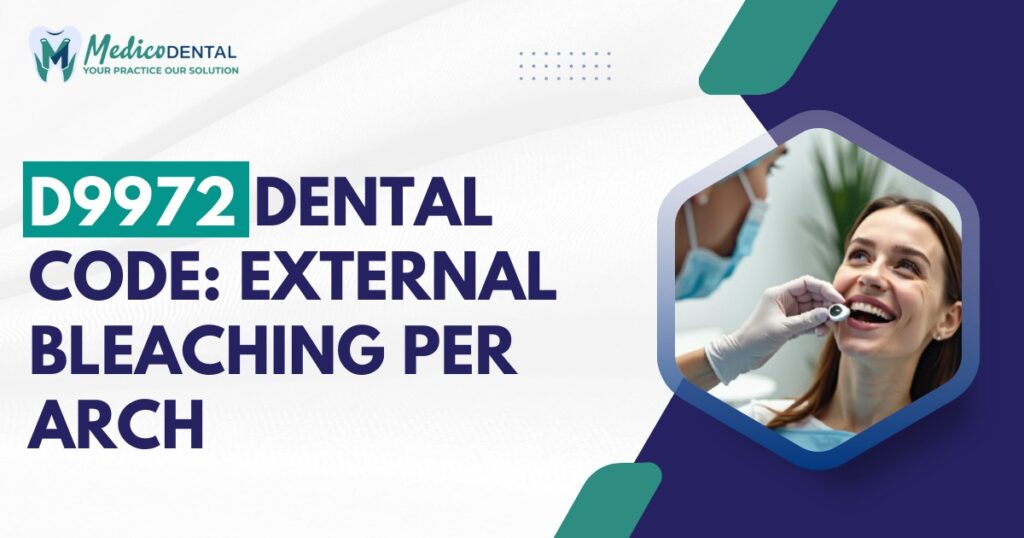
The D9972 dental code is a classification used in the dental industry to represent external bleaching (commonly referred to as tooth whitening) procedures. This code is part of the American Dental Association’s (ADA) Current Dental Terminology (CDT) system, which ensures that dental procedures are properly documented and billed. Its significance in dentistry is twofold: it helps dental professionals standardize the process of whitening treatments and allows for accurate insurance billing and claims.
External bleaching is an increasingly popular cosmetic dental procedure aimed at enhancing the aesthetic appearance of teeth by lightening their color. The D9972 code specifically pertains to the professional use of bleaching agents that target surface stains and discoloration, which can occur over time due to dietary habits, aging, or lifestyle factors.
Brief Explanation of External Bleaching and Its Common Applications
External bleaching, or teeth whitening, is a cosmetic dental procedure that involves the use of bleaching agents to lighten the color of the teeth. The most common bleaching agents include hydrogen peroxide and carbamide peroxide, which work by breaking down stains on the surface of the enamel.
This procedure is widely used for various reasons:
-
Cosmetic Enhancement: Teeth whitening improves the appearance of stained or discolored teeth, helping individuals achieve a brighter, more youthful smile.
-
Teeth Restoration: External bleaching is often used alongside other dental treatments, such as crowns or veneers, to ensure a consistent, uniform color across the teeth.
-
Pre-Orthodontic Treatment: Whitening teeth before beginning orthodontic treatment can provide a better aesthetic result post-treatment.
What is the D9972 Dental Code?
Definition and Explanation of D9972
The D9972 code is used to identify external bleaching procedures performed by dental professionals. Specifically, this code refers to whitening treatments that involve applying bleaching agents to the outer surface of the teeth. The bleaching agents often contain hydrogen peroxide or carbamide peroxide, substances known for their stain-removing and lightening properties.
As a CDT code, D9972 allows for the clear documentation and classification of whitening procedures, ensuring that these treatments are accurately recorded for billing and insurance purposes.
Purpose and Relevance of the D9972 Code in Dental Procedures
The D9972 code serves several important purposes in the dental field:
-
Insurance Reimbursement: The code ensures that external bleaching treatments are properly categorized for insurance claims, making the process more streamlined for both dental practices and patients.
-
Documentation: The use of D9972 helps dental professionals keep accurate records of the treatments they perform, contributing to consistent care and patient follow-up.
-
Clarity in Billing: The D9972 code helps distinguish external bleaching treatments from other dental procedures, ensuring proper billing and reducing confusion between various cosmetic treatments.
When and Why the D9972 Code Is Used
The D9972 code is used whene\ver an external bleaching treatment is performed. This includes in-office whitening procedures, where a dental professional applies a bleaching agent and may use light or heat to enhance the process, as well as take-home kits provided by the dentist. The code is typically used in the following scenarios:
-
Cosmetic Whitening: When patients request a brighter smile to address staining or discoloration.
-
Post-Dental Treatment: Patients may use whitening procedures after restorative work (like crowns or fillings) to ensure their natural teeth match the dental work.
-
Preventive Aesthetic Treatment: Some individuals opt for whitening as a preventive measure to maintain the whiteness of their teeth and avoid future staining.
Understanding External Bleaching in Dentistry
What is External Bleaching?
External bleaching refers to the cosmetic procedure of lightening the color of the teeth by applying a bleaching agent to the enamel surface. The procedure primarily targets extrinsic stains those caused by food, beverages, tobacco, or aging. It works by breaking down and removing or lightening the pigments that have adhered to the tooth surface, giving the teeth a whiter and brighter appearance.
Difference Between Internal and External Bleaching
The main difference between internal and external bleaching lies in the location of the stain:
-
External Bleaching: Focuses on surface stains on the enamel (the outer layer of the tooth). This is the more common type of bleaching and is typically performed using gels, strips, or trays that contain hydrogen peroxide or carbamide peroxide.
-
Internal Bleaching: Targets intrinsic stains that are embedded within the tooth structure itself, often as a result of trauma, medications, or aging. This type of bleaching is usually applied after procedures like root canals and requires different techniques, such as placing bleaching agents inside the tooth.
Benefits of External Bleaching for Patients
External bleaching offers several benefits for patients:
-
Non-invasive: It does not require any drilling or structural alteration of the teeth.
-
Quick Results: Many patients experience noticeable whitening within a single in-office visit, or after a few days to weeks with at-home treatments.
-
Affordable: Compared to more extensive cosmetic procedures like veneers or crowns, external bleaching is a relatively affordable way to enhance the appearance of teeth.
-
Boost in Confidence: Whiter teeth can improve a person’s smile, leading to enhanced self-esteem and confidence.
The Role of External Bleaching in Cosmetic Dentistry
External bleaching is a cornerstone of cosmetic dentistry. It is often one of the first steps in a smile makeover, providing an instant improvement to a patient’s overall appearance. Since teeth whitening is non-invasive and can dramatically alter the look of a smile, it serves as an accessible option for patients seeking aesthetic improvements without undergoing more complex dental procedures.
External bleaching also plays a crucial role in post-restorative treatments. For instance, if a patient receives a porcelain crown or veneer, they may undergo bleaching to match the natural color of their newly restored teeth.
How the D9972 Dental Code Relates to External Bleaching
How D9972 is Applied in the Context of External Bleaching Procedures
The D9972 code is specifically used for billing and documenting external bleaching procedures. It applies to both in-office whitening treatments, where a dental professional applies a bleaching gel directly to the teeth, and take-home kits that are prescribed and custom-fitted by the dentist.
The code ensures that these procedures are appropriately recorded for insurance purposes, and it helps distinguish the whitening process from other dental treatments such as restorative procedures (fillings, crowns, etc.).
A Step-by-Step Breakdown of an External Bleaching Treatment Covered by D9972
An external bleaching treatment typically follows this process:
-
Initial Consultation: The dentist assesses the patient’s teeth, discusses their goals, and checks for contraindications (such as cavities or gum disease).
-
Customization of Treatment:
-
For in-office treatments, the dentist selects the appropriate strength of the bleaching agent.
-
For take-home treatments, custom trays are made to fit the patient’s teeth precisely.
-
-
Application of Bleaching Agent:
-
In-office treatments typically involve applying the bleaching gel to the teeth and using a special light to activate it.
-
For take-home kits, the patient applies the gel themselves in the custom trays, usually over a period of days or weeks.
-
-
Post-Treatment Care: The dentist will advise the patient on how to maintain the whitening effect, which may include avoiding stain-causing foods and drinks.
-
Follow-Up: A follow-up visit may be scheduled to assess the treatment’s success and address any sensitivity issues.
Types of Treatments Eligible Under the D9972 Dental Code
The D9972 code applies to a variety of external bleaching treatments, including:
-
In-Office Bleaching: A more immediate solution where the dentist applies a higher concentration of bleaching agent and may use light or heat to activate the treatment.
-
Take-Home Bleaching Kits: Custom trays with a lower concentration of the bleaching agent, designed for the patient to use at home over a specified period.
D9972 Dental Code: Procedures and Requirements
Detailed Description of the Procedures Involved in External Bleaching Per Arch
The D9972 code covers external bleaching for per arch, meaning that treatment is typically applied either to the upper or lower teeth at a time, though both arches may be treated within a single session. The procedures involved generally include:
-
Preparation: The dentist will clean the teeth to remove plaque and debris before applying the bleaching agent.
-
Bleaching Application: A bleaching gel or paste is applied to the tooth surfaces, and in-office treatments often involve using special lights or heat to enhance the whitening process.
-
Rinsing: After the recommended time, the bleaching agent is removed, and the teeth are rinsed thoroughly.
Necessary Materials and Tools for a D9972 Treatment
The materials and tools typically used for D9972 treatments include:
-
Bleaching Gels: Containing hydrogen peroxide or carbamide peroxide.
-
Custom Trays: For at-home treatments, trays are custom-fitted to the patient’s teeth to hold the whitening gel.
-
Protective Barriers: Such as rubber dam materials or gum shields, to protect soft tissues from the bleaching agent.
-
Light or Heat Sources: To enhance the efficacy of the in-office whitening treatment.
Common Dental Practices Using the D9972 Code
Many general dentistry practices and specialized cosmetic dental offices use the D9972 code. Common dental practices offering this treatment include:
-
Cosmetic Dentistry Offices: Dedicated to improving the aesthetic appearance of patients’ smiles.
-
General Dentistry Offices: Offering whitening as an adjunct to routine dental care.
-
Orthodontic Offices: Where external bleaching is sometimes offered before or after braces treatment.
Expected Duration and Follow-Up Care for D9972 Treatments
-
In-Office Treatments: Typically last 30 to 90 minutes, with results visible immediately or within a few days.
-
At-Home Treatments: May take a few days to weeks, depending on the strength of the bleaching agent.
Follow-up care often includes guidance on maintaining the whiteness of the teeth, managing any potential sensitivity, and scheduling touch-up treatments as needed.
Who Qualifies for D9972 External Bleaching per Arch?
Patient Eligibility for D9972 Dental Procedures
D9972 External Bleaching per Arch is a procedure designed for patients seeking to improve the appearance of their smile through teeth whitening. While anyone can technically undergo external bleaching, certain factors determine whether a patient qualifies for this procedure. The ideal candidates for D9972 treatments are those who:
-
Have Healthy Teeth and Gums: Before undergoing any whitening treatment, a patient should have a clean bill of health for their teeth and gums. If a patient has untreated cavities, gum disease, or active tooth decay, these issues should be addressed first to ensure the treatment is effective and safe.
-
Show Extrinsic Staining: The primary benefit of external bleaching is its ability to lighten surface stains. Candidates with stains caused by food, beverages, tobacco use, and aging are the best fit for D9972 procedures.
-
Have Realistic Expectations: Patients who understand that external bleaching may not be effective for all types of discoloration (particularly deep, intrinsic stains) are better suited for this treatment.
-
Are Over 16-18 Years Old: Bleaching procedures are typically not recommended for younger patients as their teeth and gums are still developing. The age requirement may vary based on the specific dental practice’s policies and the nature of the treatment.
Factors That Determine the Need for External Bleaching
Several factors can influence whether a patient might need or benefit from external bleaching:
-
Lifestyle Factors: Consuming staining foods and drinks like coffee, tea, red wine, or smoking can cause the enamel to become discolored. Patients with these habits may seek external bleaching to reverse the effects.
-
Aging: As people age, their enamel naturally becomes thinner, revealing more of the yellowish dentin beneath. External bleaching can help reduce this discoloration, leading to a more youthful smile.
-
Previous Dental Work: Patients who have had dental restorations such as fillings, crowns, or veneers may want to whiten their natural teeth to match the shade of their restorations.
-
Patient’s Aesthetic Goals: Many individuals simply desire a brighter smile as part of a smile makeover or as a standalone cosmetic enhancement.
Contraindications and Considerations Before Proceeding with Treatment
Certain conditions or health issues may make a patient unsuitable for external bleaching:
-
Tooth Sensitivity: Patients with existing tooth sensitivity or those prone to sensitivity may experience discomfort with whitening treatments. Special care or alternative options may be recommended.
-
Active Gum Disease or Cavities: External bleaching should not be done on teeth with untreated cavities or active gum disease. These conditions can cause irritation or discomfort during treatment.
-
Pregnancy or Nursing: Although there is no conclusive evidence proving bleaching is harmful during pregnancy or breastfeeding, many dental professionals err on the side of caution and recommend delaying such procedures until after childbirth or while not nursing.
-
Intrinsic Staining: Patients with staining that affects the inner layers of the tooth (intrinsic staining) due to factors like trauma, root canal treatments, or medications may not benefit from external bleaching.
Insurance Coverage and Payment for D9972 Treatment
Does Insurance Cover External Bleaching Under the D9972 Dental Code?
External bleaching is considered a cosmetic dental procedure, which means it is typically not covered by most dental insurance policies. Cosmetic treatments like D9972 are usually seen as elective procedures aimed at improving appearance rather than addressing a medical or functional need.
However, there are exceptions to this rule. Some insurance plans may offer partial coverage for external bleaching if it is deemed necessary due to medical reasons, such as teeth discolored by a previous dental treatment or due to certain medical conditions. It is essential to verify your specific insurance policy to determine whether any coverage is provided.
Understanding Insurance Policies Related to Cosmetic Dental Procedures
Insurance coverage for cosmetic procedures can be complicated, as policies vary significantly between providers. Most dental plans exclude coverage for elective treatments that do not address structural or health-related dental issues. External bleaching generally falls under this category, meaning patients will likely need to pay out-of-pocket for the procedure.
However, some insurance plans might include provisions for certain cosmetic treatments if they can be shown to have a functional benefit. For example, if a patient’s teeth have become discolored as a result of restorative treatments (such as crowns or fillings), there may be a possibility of partial reimbursement.
How Patients Can Navigate Insurance Claims for D9972 Procedures
-
Check the Insurance Policy: Review your policy or speak with your insurance provider to see if any portion of the cost for external bleaching may be covered. You may need to submit a claim with supporting documentation.
-
Consult with Your Dentist: Many dental offices are experienced in working with insurance providers to submit claims for cosmetic procedures. The dentist may help you determine if your procedure has any chance of being covered and assist in filing the claim.
-
Be Prepared for Out-of-Pocket Costs: Since external bleaching is generally considered cosmetic, it’s wise to budget for the procedure out-of-pocket. Some dental offices offer payment plans or financing options to make the treatment more affordable.
Average Costs and Payment Options for External Bleaching Per Arch
The cost of external bleaching per arch (upper or lower teeth) typically ranges from $300 to $800 per arch, depending on the dental office, location, and type of treatment. In-office treatments are generally more expensive than take-home kits, due to the professional supervision and stronger bleaching agents used.
-
In-Office Whitening: These treatments often cost between $500 to $1,000 per arch. The treatment is completed in one visit, and immediate results are typically seen.
-
At-Home Whitening Kits: These kits are generally more affordable, with prices ranging from $300 to $600 for a full treatment, depending on the number of sessions required.
Most dental offices offer flexible payment options, including financing plans, credit card payments, and discounted fees for multiple arches. Patients should inquire about these options to find a payment plan that works best for their budget.
Clarifying Misunderstandings About External Bleaching and Its Coverage
A common misunderstanding is that external bleaching is automatically covered by insurance. As mentioned earlier, it’s generally a cosmetic treatment and not covered unless there’s a specific medical need. It’s essential for patients to confirm their coverage details before scheduling any whitening procedures.
Addressing Concerns Regarding Safety and Effectiveness
External bleaching is a safe procedure when performed by a qualified dental professional. The risks are minimal and usually consist of temporary tooth sensitivity or gum irritation, both of which resolve on their own. The effectiveness of the treatment varies from person to person, depending on the severity and type of staining.
Benefits of Using the D9972 Dental Code for External Bleaching
Advantages for Both Dental Professionals and Patients
For dental professionals, using the D9972 code provides clarity and consistency in documenting and billing external bleaching treatments. It helps ensure that procedures are properly coded for insurance claims, streamlining the administrative process.
For patients, the D9972 code allows for accurate tracking of their whitening treatments, ensuring that any necessary follow-up care is covered. It also allows for clear communication between the dentist and the insurance provider, making the process more transparent.
Impact on Treatment Outcomes and Overall Patient Satisfaction
When the proper code is used and treatments are clearly documented, it can enhance patient satisfaction by ensuring that the procedure is properly managed. Knowing that their treatment is being tracked and documented gives patients confidence that they are receiving the best care possible.
Legal and Ethical Considerations in Using the D9972 Code
Using the D9972 code appropriately ensures that dental professionals remain ethical and compliant with insurance and billing regulations. Misuse of codes or misrepresentation of procedures could lead to legal issues, so it’s essential to ensure that external bleaching is correctly documented.
Conclusion
Recap of the Key Points Covered About D9972 and External Bleaching
The D9972 dental code is essential for external bleaching procedures, helping dental professionals properly document, bill, and report whitening treatments. While external bleaching is largely considered a cosmetic procedure, it offers significant benefits in terms of enhancing the patient’s appearance and boosting their confidence.
Final Thoughts on the Importance of Understanding Dental Codes in Professional Practice
Understanding and utilizing dental codes like D9972 is critical for both dental professionals and patients. It ensures that cosmetic treatments are correctly managed and that both parties are aligned on the costs, insurance coverage, and expected outcomes.
Encouragement for Patients to Consult with Their Dentists About the D9972 Procedure
Patients interested in external bleaching should consult their dentist to discuss whether they are good candidates for the D9972 procedure. A professional evaluation will help clarify whether whitening is the right solution for their needs, ensuring the best possible results.
FAQs
Is D9972 the same as over-the-counter whitening products?
Ans. No, D9972 refers to professional whitening treatments provided by a dentist. These procedures typically use stronger bleaching agents and are administered under the supervision of a dental professional, ensuring they are safe and effective.
How long do the results from external bleaching last?
Ans. The effects of external bleaching can last anywhere from six months to two years, depending on a patient’s lifestyle, oral hygiene habits, and exposure to stain-causing foods and drinks. Regular touch-ups or maintenance treatments may be necessary to maintain the desired brightness.
Are there any side effects?
Ans. Some patients experience temporary tooth sensitivity or gum irritation during or after treatment. These side effects are usually short-lived and subside within a few days. Your dentist may provide recommendations for managing these effects.
Can I get D9972 treatment if I have veneers or crowns?
Ans. External bleaching works best on natural tooth enamel. If you have veneers or crowns, these restorations will not whiten with the treatment, and the natural teeth may lighten, creating a mismatch. In such cases, you might need additional restorative treatments to match the whitened teeth with your restorations.