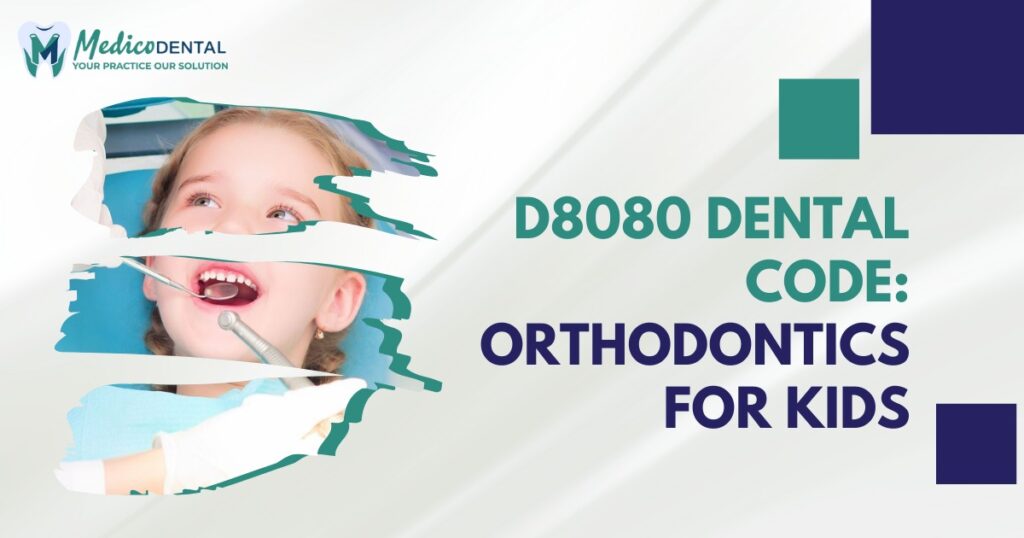
Orthodontic care for children is an essential part of ensuring healthy growth and development of the teeth and jaw. As pediatric dentists and billing professionals, understanding the proper use of dental codes is crucial for accurate billing, reimbursement, and providing the best care. The D8080 dental code, which refers to comprehensive orthodontic treatment for children, plays a pivotal role in pediatric orthodontics. This article will provide an in-depth look at the D8080 dental code, its significance in pediatric orthodontic care, and how to use it effectively for claims and billing.
Overview of the D8080 Dental Code and Its Role in Pediatric Orthodontics
The D8080 dental code is specifically used for comprehensive orthodontic treatment for children, typically involving the correction of malocclusions and other bite issues. Early orthodontic intervention is essential for ensuring proper dental development, and the D8080 code helps pediatric dentists provide and bill for these important services.
Understanding how and when to apply the D8080 code is not only important for treatment but also for insurance reimbursement. For pediatric dentists and billing professionals, knowing the ins and outs of the D8080 code is essential to avoid errors in billing, ensuring timely reimbursement, and providing the best possible care to children in need of orthodontic treatment.
Why Understanding the D8080 Code is Essential for Pediatric Dentists and Billing Professionals
The D8080 code is one of several orthodontic codes used to describe specific types of orthodontic care. For pediatric dentists, correctly identifying the need for comprehensive orthodontic care and using the D8080 code appropriately ensures that patients receive the necessary treatment and that the practice is reimbursed appropriately. For billing professionals, understanding the D8080 code is crucial for navigating the complexities of insurance billing and avoiding potential claim denials or delays.
Additionally, pediatric orthodontics involves early intervention to address developmental issues, making the D8080 code particularly significant in ensuring a child’s long-term oral health.
Brief Overview of the Importance of Early Orthodontic Care for Children
Early orthodontic intervention can significantly improve a child’s dental health and overall well-being. Starting orthodontic treatment at an early age can help address issues such as overcrowding, bite problems, and misalignment before they become more serious, potentially reducing the need for more complex and expensive treatments later on. The D8080 code encompasses this comprehensive treatment, allowing pediatric dentists to provide early care that promotes optimal dental development, better facial aesthetics, and enhanced self-esteem as children grow.
What is the D8080 Dental Code?
Definition of the D8080 Dental Code
The D8080 dental code refers to comprehensive orthodontic treatment for children, which is typically used for individuals in their early teens or children who are still growing. This code is used when a child requires full braces or other orthodontic appliances to correct significant malocclusions (bite problems), misalignment of teeth, or jaw positioning issues.
-
Comprehensive Orthodontic Treatment: Involves a full treatment plan that could last for a year or more, depending on the severity of the dental issues. Treatment with this code includes the initial consultation, diagnostic records (such as X-rays and impressions), placement of appliances, ongoing adjustments, and final retention.
Why the D8080 Code is Used for Kids
The D8080 code is specifically designed for comprehensive orthodontic treatment for children and adolescents. While many adults may require orthodontic care, the timing and nature of treatment for children can be quite different, as their bones and teeth are still growing. This means that treatment can be more effective when started early, often around the ages of 11-15, depending on individual development.
The D8080 code is intended to address conditions such as:
-
Malocclusions: When the teeth don’t fit together properly, causing bite issues like overbites, underbites, or crossbites.
-
Tooth alignment: Crooked or uneven teeth that need straightening to improve function and aesthetics.
-
Jaw alignment issues: Where the upper and lower jaws are not properly aligned, causing bite problems.
This comprehensive approach is designed to address multiple dental issues simultaneously, giving children the best chance for a healthy, functional smile as they grow.
Differentiating the D8080 Code from Other Orthodontic Codes
The D8080 code is one of several orthodontic codes, and it’s important to distinguish it from other related codes to ensure proper billing.
-
D8070: Limited Orthodontic Treatment: This code is used for partial orthodontic treatment, where the focus is typically on a specific part of the mouth (e.g., addressing a single issue like spacing). Unlike D8080, which is comprehensive, D8070 is for limited cases that do not require full treatment.
-
D8090: Comprehensive Orthodontic Treatment for Adults: The D8090 code is used for adults who need full orthodontic treatment. While the goals of treatment are similar to D8080, adult teeth are already fully developed, which can make treatment more complex and sometimes longer in duration. D8090 is used exclusively for adult patients.
What Does Comprehensive Orthodontic Treatment for Kids Entail?
Comprehensive orthodontic treatment for children under the D8080 code typically involves a series of steps:
-
Initial Consultation and Diagnostic Records: The orthodontist will evaluate the child’s dental condition, take X-rays, dental impressions, and photographs to create a personalized treatment plan.
-
Placement of Appliances: Braces or other orthodontic appliances are placed to begin correcting the malocclusion. This phase includes regular check-ups to monitor progress.
-
Ongoing Adjustments: Periodic adjustments are made to ensure that the treatment is progressing as planned. This includes tightening wires, adding or removing bands, and making necessary changes to the appliance.
-
Final Retention Phase: After the teeth are aligned, the final phase involves the use of retainers to ensure that the teeth remain in their corrected position.
The Role of the D8080 Code in Early Intervention
Early orthodontic treatment is critical for addressing developing issues that might worsen as a child grows. The D8080 code is a vital part of early intervention because:
-
Promotes Proper Growth and Development: By intervening early, the orthodontist can guide the growth of the child’s jaw and teeth, minimizing the need for more invasive treatments in the future.
-
Prevents Complex Problems: Early treatment can correct issues like overcrowding, crossbites, and jaw misalignment before they affect the child’s ability to speak, chew, or even breathe properly.
Common Conditions Treated with the D8080 Code
The D8080 code is commonly used to treat a variety of orthodontic issues in children, including:
-
Overcrowding: When there is not enough space in the mouth for all the teeth to align properly.
-
Crossbites: When one or more upper teeth bite inside the lower teeth, which can affect the alignment of the jaw.
-
Underbites: Where the lower teeth protrude beyond the upper teeth, affecting bite function.
-
Overbites: When the upper teeth overlap too much with the lower teeth, causing discomfort and potential dental wear.
The Process of Using the D8080 Dental Code for Pediatric Orthodontic Treatment
Step 1: Evaluating the Child’s Need for Orthodontic Treatment
Before applying the D8080 code, the orthodontist must assess whether a child truly requires comprehensive orthodontic care. This involves:
- Conducting a thorough examination of the child’s teeth and bite.
- Taking diagnostic records, including X-rays and impressions, to evaluate the severity of the dental issues.
- Considering the child’s age and growth patterns, as early intervention can often lead to better long-term results.
Step 2: Selecting the Correct Code for Treatment
If the child requires full orthodontic treatment, the D8080 code is the appropriate choice. However, if only limited orthodontic intervention is needed (such as for a single issue), D8070 should be used instead. Properly selecting the correct code ensures that the treatment is accurately billed.
Step 3: Documenting the Treatment Plan and Progress
Accurate documentation is essential for ensuring that the treatment process is properly recorded for insurance and billing purposes. This includes:
- A detailed treatment plan outlining the specific goals and techniques used.
- Regular progress notes to track the patient’s treatment milestones and any adjustments made.
- Radiographs and photos, particularly when changes are made to the appliance or when significant progress is made.
Step 4: Submitting the Claim with the D8080 Code
Once the treatment has been documented, the next step is submitting the claim. Many practices now submit claims electronically, which is faster and more efficient. Ensure that all necessary details—such as diagnostic records, the treatment plan, and progress reports—are included in the submission.
Insurance Considerations for D8080 Claims
What Insurance Providers Cover the D8080 Dental Code?
Many insurance providers cover the D8080 code as part of comprehensive orthodontic treatment, but coverage varies depending on the patient’s insurance policy. It’s important to verify coverage with each insurer before beginning treatment.
Coverage Limits and Restrictions for Orthodontic Treatment in Children
Orthodontic coverage often has age limits and frequency restrictions. Insurance companies may only cover comprehensive treatment for children within a certain age range (typically ages 11-16). Be sure to check each patient’s plan for specific details on coverage and limitations.
Handling Pre-Authorization for D8080 Claims
Some insurers require pre-authorization before beginning orthodontic treatment. This means that the dentist must submit treatment details for approval before starting the procedure. Pre-authorization ensures that the insurer will cover the cost of the treatment.
Maximizing Reimbursement with the D8080 Dental Code
The D8080 dental code refers to comprehensive orthodontic treatment for children, typically used for patients in their early teens. It is a crucial code for pediatric orthodontists, enabling them to provide essential corrective treatments while ensuring proper reimbursement from insurance providers. Understanding how to use the D8080 code effectively for billing and reimbursement is vital for maximizing payment and ensuring smooth operations. In this section, we’ll explore strategies for maximizing reimbursement, common billing pitfalls to avoid, and how to optimize the claims process with the D8080 code.
How to Ensure Proper Documentation for Full Reimbursement
Proper documentation is the cornerstone of successful reimbursement for orthodontic treatments, including those billed under the D8080 code. Insurers require clear, accurate records to substantiate the necessity of orthodontic treatment and verify that the correct procedure was performed.
What Details to Include in the Treatment Documentation
To ensure that your documentation supports the D8080 claim and maximizes reimbursement, make sure to include the following:
-
Detailed Treatment Plan: Outline the patient’s orthodontic needs, including a diagnosis of the malocclusion (e.g., overbite, underbite, or overcrowding). Describe the treatment goals and how comprehensive care will address these issues. This helps demonstrate the necessity of full orthodontic treatment rather than limited or less invasive options.
-
Pre-Treatment Records: Include diagnostic records such as X-rays, dental impressions, photographs, and any other relevant clinical data. These records provide evidence of the condition being treated and substantiate the need for comprehensive orthodontic care.
-
Ongoing Progress Notes: Document the patient’s progress throughout the treatment. This includes detailing adjustments, consultations, any complications, and milestones in the treatment process. Progress notes help show that the treatment plan is being followed and that adjustments are made as needed.
-
Treatment Timeline: Record the anticipated length of treatment and any delays. Insurers need to know the expected duration of treatment, so they can assess if it fits within their coverage parameters.
By including these elements in your documentation, you not only ensure thorough record-keeping but also improve the likelihood of timely and full reimbursement for orthodontic care.
The Importance of Using Accurate and Complete Codes
One of the most critical aspects of billing for orthodontic treatments is using the correct and complete codes. Using the D8080 code accurately is essential for smooth processing and appropriate reimbursement.
Avoiding Common Billing Mistakes for Faster Reimbursement
-
Misclassifying the Procedure: The D8080 code should only be used for comprehensive orthodontic treatment for children. Avoid using this code for limited treatments (which should be billed under D8070) or adult treatments (which should be billed under D8090). Misclassifying the treatment could lead to denied or delayed claims.
-
Incomplete Coding: Sometimes, the use of additional codes may be required, especially when other dental procedures are performed alongside orthodontic treatment. Ensure that all applicable codes are used, such as those for diagnostic services or post-treatment care, to provide a complete picture of the treatment provided.
-
Incorrect Modifier Use: When multiple procedures are performed, or when treatment complexity necessitates additional billing details, be sure to apply the appropriate modifiers. For example, Modifier 51 might be used if multiple procedures are completed during the same visit. Modifiers help provide more context to the insurer and can optimize reimbursement.
By being diligent about accurate coding and ensuring that all details of the treatment are covered, you can avoid claim rejections and expedite the reimbursement process.
Using Modifier Codes to Optimize Claims
Modifier codes are used to add additional context to a dental claim, indicating situations where something deviates from standard treatment. When submitting a claim under the D8080 code, consider using modifier codes to provide further details that could help with reimbursement.
Common Modifiers That May Apply to the D8080 Code
-
Modifier 51: Multiple Procedures – If the D8080 code is used in conjunction with other procedures, this modifier indicates that multiple procedures were performed during the same visit. It ensures that each service is reimbursed appropriately, even if there are overlapping services.
-
Modifier 22: Increased Procedural Services – If the treatment requires significantly more time or effort than usual (for example, a more complex case of overcrowding or malocclusion), this modifier helps demonstrate that the service was more involved than typical treatments. Insurance providers may reimburse at a higher rate when this modifier is used.
-
Modifier 59: Distinct Procedural Service – If orthodontic treatment requires a distinct service (e.g., separate adjustments or care for different areas of the mouth), this modifier indicates that the services are not part of the same procedure and should be reimbursed separately.
By using modifier codes accurately, you help insurance providers understand the full scope of the treatment, which can lead to more efficient claims processing and proper reimbursement.
Common Mistakes to Avoid When Using the D8080 Dental Code
Incorrectly using the D8080 dental code can lead to billing errors, delayed payments, and potential audits. To ensure successful claims, it’s important to avoid some common mistakes.
Misunderstanding the Scope of Treatment for D8080
How to Avoid Over- or Under-Billing for Orthodontic Treatment
-
Over-Billing: Over-billing occurs when a treatment is classified as more comprehensive than it actually is. For example, using the D8080 code for a limited treatment plan that doesn’t require full orthodontic care is a violation and can result in denied claims. Always ensure the treatment plan justifies the use of D8080.
-
Under-Billing: Under-billing happens when a comprehensive treatment is billed using a more limited code, such as D8070. This could lead to a loss of reimbursement, as the insurer would pay for less than the full treatment performed. Ensure that the D8080 code is only used when comprehensive orthodontic care is actually required.
Inaccurate Documentation or Missing Information
Common Documentation Mistakes That Can Delay Claims
-
Incomplete Treatment Plans: A vague or incomplete treatment plan can result in a claim denial. Be specific about the scope of treatment, including the specific orthodontic appliances used and the estimated treatment timeline.
-
Missing Radiographs or Impressions: Omitting essential diagnostic records can cause insurers to question the necessity of treatment. Ensure that all required records are included to support the D8080 claim.
Submitting Claims for Non-Qualifying Procedures
Identifying When the D8080 Code Shouldn’t Be Used
The D8080 code is reserved for comprehensive orthodontic treatment for children. It should not be used in the following situations:
-
When Only Limited Treatment is Needed: If only a small part of the mouth or a specific bite issue is addressed, use D8070 instead of D8080.
-
For Adult Patients: The D8080 code applies to children, so for adult orthodontic care, you should use D8090.
Resources for Dental Professionals and Billing Specialists
Continuing Education for Pediatric Orthodontics and Billing
To stay current on best practices for pediatric orthodontics and billing, consider enrolling in continuing education programs. Many professional organizations, such as the American Association of Orthodontists (AAO), offer specialized courses on coding and treatment planning for pediatric orthodontics.
Using Online Dental Code Lookup Tools
Online tools, like the ADA’s CDT Code Lookup or other coding platforms, can help ensure the correct code is used. These tools provide the most up-to-date information about dental codes and their application in various treatment scenarios.
Consulting with Experts in Dental Coding and Billing
If your practice encounters complex billing issues or if claims are being denied, consulting with a dental billing expert can provide valuable insights. These specialists can help streamline claims submission and ensure compliance with insurance requirements.
Conclusion
Summary of Key Takeaways for Using the D8080 Dental Code
-
The D8080 code is essential for comprehensive orthodontic treatment for children, but it requires careful documentation and correct coding.
-
Ensure that treatment plans, diagnostic records, and progress notes are thorough to avoid billing errors.
-
Use appropriate modifiers to optimize claims and avoid mistakes that could lead to denied or delayed reimbursement.
Final Tips for Pediatric Orthodontic Billing and Insurance Claims
For smooth processing of orthodontic claims, stay informed about the latest coding changes, verify insurance policies, and ensure that all treatment documentation is accurate and complete. By following these best practices, pediatric orthodontic care will not only be effective for patients but also financially successful for your practice.