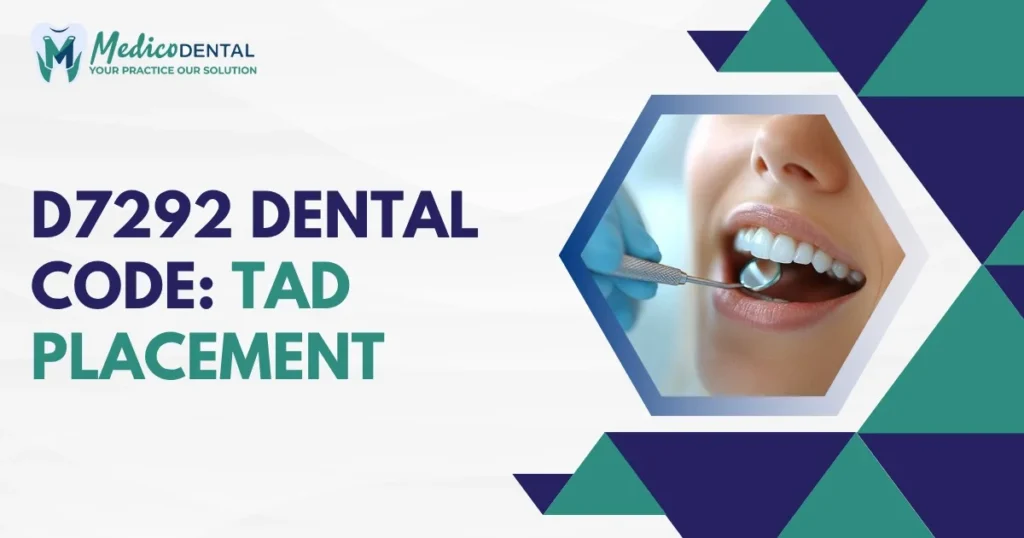
The D7292 dental code is essential for documenting the surgical placement and removal of Temporary Anchorage Devices (TADs) used in orthodontic and surgical treatments. These devices provide temporary skeletal anchorage to aid in tooth movement, particularly in complex orthodontic cases. This code is a part of the American Dental Association’s (ADA) Current Dental Terminology (CDT) and is critical for accurate billing and insurance claims. The code specifically covers procedures where a surgical flap is required to place a screw-retained plate.
Importance of Temporary Anchorage Devices (TAD) in Orthodontics and Surgery
TADs are a pivotal tool in modern orthodontics, enabling controlled tooth movement in areas that traditional braces or other appliances cannot access. They are especially valuable for complex orthodontic cases where precise tooth movement is required. In surgery, TADs can be used to stabilize the jaw, support surgical procedures, and reduce the need for invasive approaches.
What is D7292?
Definition of the D7292 Code
D7292 refers to the code used for the surgical placement of a Temporary Anchorage Device (TAD), which is a screw-retained plate placed in the bone to temporarily anchor teeth during orthodontic treatment. The placement requires surgical access to the bone, typically involving a flap procedure, and may include the removal of the device once the orthodontic goals are achieved.
Detailed Explanation of the Procedure it Covers (TAD Placement and Removal)
This procedure begins with the preparation of the patient for surgery, which includes the administration of local anesthesia or sedation, followed by the surgical flap to access the bone. The TAD is then inserted into the bone, usually in the palate or jaw, and secured with screws. After the desired tooth movement is achieved, the device is carefully removed, and any residual surgical sites are closed. Both the placement and removal are documented under the same code, ensuring that both parts of the procedure are appropriately billed.
When is D7292 Used?
Common Scenarios for the Use of D7292
D7292 is primarily used in the following situations:
- Complex Tooth Movement: When traditional braces and appliances cannot achieve the desired movement, TADs provide a stable anchorage point, allowing for more precise control of tooth movement.
- Surgical Orthodontics: In cases where teeth need to be moved during or after surgical interventions, TADs provide a temporary anchor to achieve specific results, such as in orthognathic surgery.
Indications for Using TADs in Orthodontic Treatment
TADs are indicated when conventional methods fail or are impractical for achieving complex tooth movements, such as:
- Severe Crowding: When there is insufficient space for teeth to move into the correct alignment.
- Skeletal Malocclusion: To assist in aligning the bite by moving teeth in relation to the jawbone.
- Pre-surgical Tooth Movement: TADs are often used before orthognathic surgery to reposition teeth.
Procedure for D7292
Step-by-Step Process of TAD Placement
- Patient Evaluation: The patient is examined to determine the need for a TAD. Diagnostic imaging such as X-rays may be used to assess bone quality and the optimal placement area.
- Anesthesia Administration: Local anesthesia or sedation is given to the patient to ensure they are comfortable during the procedure.
- Surgical Flap Creation: A flap of gum tissue is lifted to expose the bone where the TAD will be inserted.
- TAD Insertion: A screw-retained plate is carefully placed into the bone using specialized tools.
- Closure and Aftercare: Once the TAD is securely in place, the gum tissue is sutured, and the patient is monitored for any immediate complications.
Surgical Requirements (e.g., Flap Procedure, Screw-Retained Plate)
The placement of a TAD is a minimally invasive surgical procedure that requires precise planning and skilled execution. The flap procedure is used to provide access to the underlying bone, ensuring proper placement of the screw-retained plate. The plate itself may vary in design but is typically small, lightweight, and designed to withstand the forces needed to anchor teeth.
Purpose and Benefits of TADs
Why TADs Are Used in Orthodontic Treatment
TADs are used to enhance the efficiency and precision of orthodontic treatment. They provide a stable, temporary anchor to move teeth in a way that traditional braces cannot achieve on their own. For instance, they can be used to:
- Maximize Space: TADs allow for the movement of teeth into spaces that would otherwise be inaccessible with conventional appliances.
- Correct Complex Malocclusions: They help in cases where the teeth need to be repositioned in relation to the jawbone, such as in bite correction.
Benefits of Using TADs Over Traditional Orthodontic Methods
- Better Control of Tooth Movement: TADs provide a fixed point from which teeth can be moved with greater accuracy.
- Reduced Need for Extra Appliances: TADs often eliminate the need for headgear or other bulky orthodontic appliances, making the treatment more comfortable.
- Minimized Treatment Time: By providing a more stable anchor, TADs can reduce the duration of treatment compared to traditional methods.
Key Considerations for Billing D7292
Documentation and Reporting Requirements
Accurate documentation is essential for the proper billing of D7292. The following should be included in the patient’s records:
- Pre-operative Assessment: Document the clinical need for a TAD, including diagnostic images and treatment planning details.
- Surgical Details: Record the exact procedure, including the location of TAD placement, the surgical method used (flap procedure), and the type of TAD inserted.
- Post-operative Care: Include notes on any complications, the removal process, and follow-up visits.
Common Mistakes and How to Avoid Them
- Incorrect Coding: Ensure that both the placement and removal of the TAD are coded correctly, as these are both covered under the same code.
- Inadequate Documentation: Always include comprehensive details about the procedure to avoid claim denials. This includes all surgical steps, aftercare instructions, and follow-up treatments.
- Failure to Justify Medical Necessity: For insurance purposes, clearly outline why the use of a TAD is necessary for the patient’s orthodontic or surgical goals.
Differences Between D7292 and Other Dental Codes
Comparison with Related Codes (e.g., D7291, D7280) for Similar Procedures
The D7292 code is often compared to other dental codes such as D7291 and D7280 because they all involve procedures related to tooth anchorage and surgical interventions. However, there are key differences:
- D7291: This code refers to the placement of a temporary anchorage device (TAD) without the need for a surgical flap. It is a less invasive procedure than D7292, which requires the flap to access the bone. D7292, therefore, involves a higher level of complexity due to the surgical nature of the placement.
- D7280: This code covers the removal of impacted teeth or tooth fragments, which is not directly related to TADs. D7280 focuses on tooth extraction, while D7292 is specifically for anchorage device placement and removal, typically for orthodontic treatment. It’s essential to differentiate these codes to avoid incorrect dental billing.
How D7292 Differs in Terms of Complexity and Coverage
D7292 is more complex than D7291 because it involves a surgical procedure requiring a flap to access the bone. The flap procedure adds a layer of complexity and cost, making it important to accurately document and justify the need for a more invasive approach. Additionally, D7292 covers both the placement and removal of the TAD, whereas D7291 focuses only on placement without surgical intervention.
The D7292 code also applies to surgical orthodontics and complex tooth movements, while D7291 may be used in cases with simpler needs. Thus, when comparing these codes, D7292 is the more comprehensive code, covering both the placement and removal of the device in more complicated cases.
Insurance Coverage and Reimbursement for D7292
Insurance Companies that Cover D7292 and the Criteria for Reimbursement
Coverage for D7292 varies by insurance provider. Most major dental insurance companies, including Delta Dental, Cigna, Blue Cross Blue Shield, and Aetna, typically cover the D7292 code as part of orthodontic and surgical treatment plans. However, the reimbursement criteria can differ:
- Delta Dental: Covers TADs for medically necessary orthodontic procedures, including those related to surgical correction of malocclusions.
- Cigna: Typically reimburses for D7292 if the procedure is deemed essential for achieving specific orthodontic treatment goals that cannot be met by traditional braces.
- Blue Cross Blue Shield: Often covers D7292 for patients undergoing surgical orthodontic treatment or jaw surgery.
Common Issues with Claims and How to Resolve Them
- Incorrect Coding: Ensure both the placement and removal of the TAD are correctly coded under D7292 to avoid denials. If only one part of the procedure is coded, insurers may reject the claim or reduce reimbursement.
- Lack of Medical Necessity Documentation: Insurance companies typically require documentation to justify the need for a TAD, especially in complex orthodontic cases. Ensure that diagnostic imaging, treatment plans, and physician notes are included to demonstrate medical necessity.
- Insufficient Explanation for the Use of TADs: Insurers may question the use of TADs if they are not appropriately linked to the overall orthodontic or surgical plan. A detailed explanation of why traditional methods could not achieve the same results is essential.
To resolve these issues, ensure that all required documentation is submitted, including pre-operative assessments, diagnostic images, and detailed treatment plans. Working closely with the insurance provider can also help clarify specific coverage guidelines.
Aftercare and Follow-up
Post-Surgical Care for TADs
After the D7292 procedure, proper post-surgical care is crucial to ensure healing and avoid complications. Some key aftercare steps include:
- Pain Management: Patients may experience mild to moderate discomfort after the procedure. Pain relievers prescribed by the dentist or orthodontist should be taken as directed.
- Infection Prevention: Patients should be instructed to rinse their mouth with an antibacterial mouthwash to prevent infection around the TAD placement site.
- Oral Hygiene: Special care should be taken when brushing to avoid disturbing the TAD or the surgical site. A soft toothbrush and gentle brushing technique are recommended.
Removal Process and Any Follow-up Care Required After the Procedure
Once the TAD has served its purpose and the teeth have moved into the desired position, the device needs to be removed. The removal process is typically less invasive than the initial placement and may require only local anesthesia. After removal, the following steps are recommended:
Post-removal Care: The surgical site should be monitored for any signs of infection or complications. If the site was sutured, the stitches will typically dissolve within a few weeks.
Follow-up Appointments: A follow-up visit is necessary to ensure proper healing and assess the progress of the orthodontic treatment. The dentist or orthodontist will confirm that the teeth have moved as planned and that no complications have arisen.
Conclusion
In conclusion, the D7292 code plays a vital role in orthodontic and surgical treatments that require Temporary Anchorage Devices for precise tooth movement. By understanding the intricacies of the procedure, its coverage, and the requirements for billing and documentation, dental professionals can ensure accurate coding and smoother reimbursement processes.
The D7292 code allows for the efficient and effective management of complex orthodontic cases, making it a powerful tool in modern dental practice. Proper aftercare and follow-up ensure that patients achieve the best possible results, with minimal risk of complications.
Accurate coding and proper documentation are crucial for both patient care and financial success. By following these guidelines, dental practices can maintain compliance and deliver optimal treatment outcomes.
FAQs
What is the difference between D7292 and D7291?
Ans. D7292 is a more complex procedure involving the surgical placement of a TAD, which requires a flap procedure. D7291 is used for TAD placement without surgery and is less invasive.
Can I bill for both the placement and removal of a TAD using D7292?
Ans. Yes, D7292 covers both the placement and removal of the TAD as part of the same procedure. Be sure to document both steps thoroughly.
Do all insurance companies cover D7292?
Ans. Most major insurance providers, including Delta Dental, Cigna, and Blue Cross Blue Shield, cover D7292 if the procedure is deemed medically necessary for orthodontic or surgical treatment.
What are the most common complications after TAD placement?
Ans. Common complications include infection at the surgical site, discomfort, or improper placement. Ensuring proper aftercare and follow-up visits can help mitigate these risks.
How long do TADs stay in place?
Ans. The duration of TAD placement varies depending on the specific orthodontic needs, but it is typically a few months until the desired tooth movement is achieved.