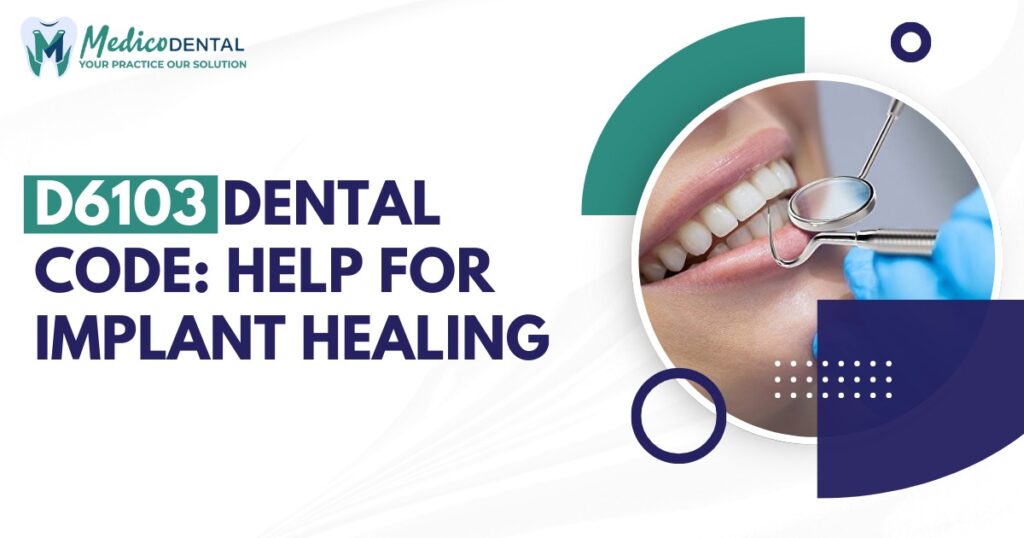
Dental implants are a significant step in restoring lost teeth and improving a patient’s oral health. However, the success of an implant depends on a well managed healing process. The D6103 dental code plays a crucial role in this process by providing a guideline for procedures related to implant healing. Let’s explore the specifics of the D6103 dental code, its importance in implant recovery, and how it impacts the overall success of dental implant procedures.
What is the D6103 Dental Code?
Explanation of D6103 Code
The D6103 dental code is part of the Current Dental Terminology (CDT) system, used by dental professionals to categorize and bill various dental services. Specifically, the D6103 code is associated with implant related procedures that help in the healing of the bone and soft tissue around dental implants. This includes the grafting of tissues or the management of the implant site to ensure proper healing after the implant is placed.
Purpose and Use in Dental Procedures
The purpose of D6103 is to support the healing process after an implant is placed. Dental implants require a period of integration with the jawbone before the prosthetic tooth can be fitted. The healing process is crucial for the long term success of the implant. The D6103 code ensures that proper procedures are followed to promote this healing, which may include bone graft, soft tissue management, and other healing enhancing treatments.
The Role of D6103 in Implant Healing
How D6103 Facilitates Implant Recovery
The D6103 procedure is designed to aid the healing of the gum tissue and bone around the dental implant. After the implant is placed, the body needs to heal around it, forming a secure bond between the implant and the bone. This procedure may involve bone grafting to fill in any gaps and enhance bone growth, ensuring a stable foundation for the implant. The D6103 process also addresses any gum tissue loss, helping restore the natural contour of the gums.
The Importance of Proper Healing for Successful Implants
Without proper healing, the implant could fail due to inadequate support from the bone or gum tissue. Delayed healing can lead to issues such as implant failure or infection, which is why the D6103 procedure is vital. It not only promotes faster recovery but also ensures the implant is placed securely and functions like a natural tooth.
D6103 Procedure Overview
Step by Step Process of D6103 Procedure
Consultation and Assessment
Before performing the D6103 procedure, the dentist or oral surgeon will assess the implant site, the patient’s overall health, and any potential risks.
Grafting or Soft Tissue Management
Depending on the condition of the bone and gum tissue, the dentist may perform bone graft or soft tissue grafting to enhance the healing process.
Healing Period
After the procedure, the patient will enter a recovery phase where the bone and tissue heal around the implant. This may take several months, and follow up appointments will be scheduled to monitor progress.
Final Implant Placement
Once healing is complete, the final prosthetic tooth or crown is placed on the implant, restoring full functionality.
What to Expect During the Healing Process
The healing process can take several months, during which the bone gradually integrates with the implant. Patients may experience mild discomfort, swelling, or bleeding during the recovery period, which is normal. Following the dentist’s care instructions will ensure the best outcome.
When is D6103 Dental Code Used?
Conditions Requiring D6103
D6103 is primarily used when a dental implant procedure requires additional healing assistance. This includes situations where there is insufficient bone density, soft tissue loss, or poor gum health around the implant site. It is commonly recommended for patients with periodontal disease, bone loss, or previous implant failures.
Ideal Candidates for Implant Healing Procedures
The ideal candidates for procedures under the D6103 code are those who have undergone initial implant placement but need assistance in the healing phase. Candidates often include those who:
- Have experienced bone loss due to gum disease or tooth loss.
- Have compromised gum tissue.
- Have had difficulty healing from prior implant surgeries.
Benefits of Using D6103 for Implant Healing
Faster Recovery Times
One of the key benefits of using D6103 is that it significantly accelerates the recovery process. By ensuring that the bone and gum tissue are healthy and integrated around the implant, patients can heal more quickly, reducing the overall time needed for the implant to be fully functional.
Improved Implant Success Rates
With proper healing, the success rate of the dental implant increases dramatically. D6103 plays a crucial role in enhancing bone regeneration and tissue healing, resulting in a stable and functional implant that mimics a natural tooth. This leads to long term success and reduced chances of failure.
Insurance Coverage for D6103
How Insurance Handles D6103 Claims
Insurance coverage for procedures under the D6103 dental code can vary based on the patient’s insurance plan and the specifics of the treatment. Some insurance policies may cover the procedure, while others may require the patient to pay out of pocket. It’s important for patients to check with their insurance provider and understand what is covered under their plan. For those navigating insurance claims, dental billing services can be a helpful resource in ensuring accurate billing and maximizing coverage.
Tips for Understanding Coverage for Implant Healing Procedures
Verify Coverage
Contact your dental insurance provider to confirm if the D6103 procedure is covered, and ask for details on how the procedure will be billed.
Pre authorization
Some insurance companies may require pre authorization for implant related procedures. It’s essential to submit necessary documentation early to avoid delays.
Understand Limits
Be aware of the coverage limits for implant procedures and any out of pocket costs you may incur.
Potential Risks and Considerations with D6103
Possible Complications
While the D6103 procedure is generally safe, as with any surgical procedure, there are potential risks. These can include:
- Infection at the grafting site.
- Delayed healing or failure of the graft.
- Gum recession or other soft tissue complications.
Ensuring Optimal Healing Post Procedure
To reduce the risk of complications, follow the dentist’s aftercare instructions carefully, which may include:
- Avoiding smoking, which can delay healing.
- Maintaining proper oral hygiene to prevent infections.
- Attending follow up appointments to monitor healing progress.
Conclusion
The D6103 dental code is essential for ensuring proper healing following a dental implant procedure. It involves grafting procedures and tissue management that help the implant site heal effectively, promoting faster recovery and improving the success rate of the implant. This procedure is ideal for patients who have insufficient bone density, soft tissue loss, or previous implant challenges.
Before opting for D6103, it’s essential to discuss with your dentist whether you’re a suitable candidate and understand the full scope of the procedure, including potential risks and insurance coverage. If you are looking for a solution to support the healing of your dental implant, D6103 could be a key step toward achieving lasting implant success.
FAQs
What does the D6103 dental code cover?
Ans. D6103 covers procedures related to implant healing, including bone grafting and soft tissue management to support the successful integration of dental implants.
How long does the healing process take after a D6103 procedure?
Ans. The healing process can take several months, depending on the individual’s health and the extent of the procedure.
Is the D6103 procedure covered by insurance
Ans. Insurance coverage for the D6103 procedure varies, so it’s important to check with your insurance provider for details on coverage and pre authorization requirements.
What are the risks associated with D6103?
Ans. Potential risks include infection, delayed healing, and complications with the gum tissue or bone graft.
Who is an ideal candidate for the D6103 procedure?
Ans. Ideal candidates are those who have experienced bone loss, soft tissue issues, or have had difficulty healing from prior dental implant procedures.