Dental billing codes are an essential part of the modern dental practice. They allow for streamlined communication between dental professionals, insurance companies, and patients, ensuring that treatments are properly documented and reimbursed. One such important dental code is the D6097, which plays a key role in the classification and billing of titanium implant crowns. Understanding the D6097 code, its significance, and how it relates to titanium implants is crucial for dental professionals, patients, and insurance providers alike.
What is D6097 Dental Code?
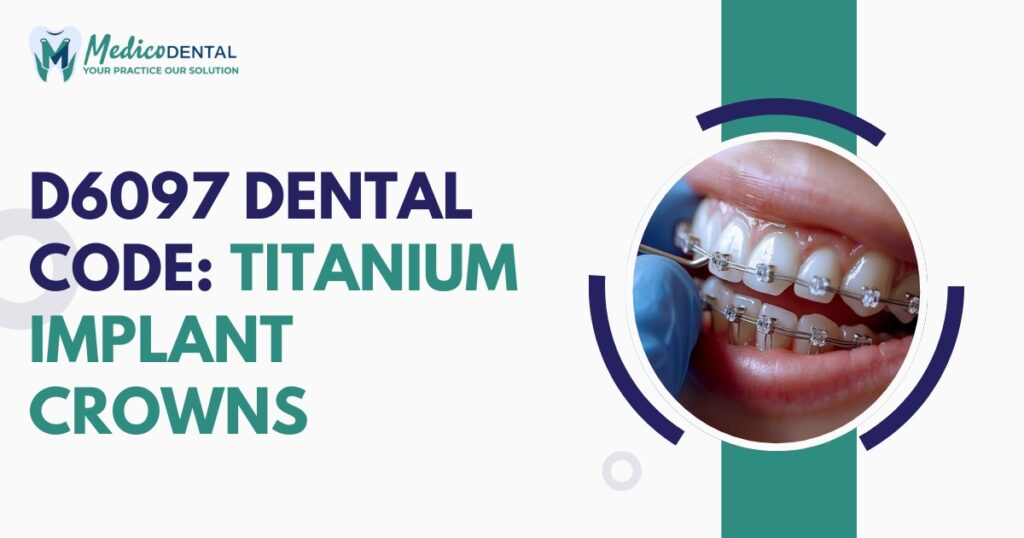
The D6097 dental code is part of the Current Dental Terminology (CDT) system, used by dental professionals to report services and procedures for insurance purposes. Specifically, D6097 refers to the placement of a titanium implant crown, a procedure commonly performed after a dental implant has been placed and healed. This code is used to signify that the implant has successfully integrated with the jawbone and that a permanent crown has been affixed to restore function and appearance.
In simpler terms, the D6097 code is used when a dentist places a titanium crown on a dental implant. It helps ensure that the procedure is correctly billed and covered under insurance plans, allowing patients to receive proper reimbursement for the treatment.
Importance of D6097 in Dental Billing
The D6097 code is crucial for dental billing because it allows for accurate documentation of a specific type of procedure. It helps streamline the process between the dentist and the insurance provider, ensuring that the correct treatment is linked to the proper billing code. This is essential for:
Reimbursement
Dental insurance providers need precise codes to process claims. If the correct code is used, the likelihood of getting reimbursed promptly is higher.
Treatment Documentation
The D6097 code ensures that the procedure is documented in the patient’s treatment record, which can be useful for future treatments or case reviews.
Insurance Communication
The dental office can clearly communicate the treatment provided to the insurance provider. This reduces the chance of miscommunication, which can result in claim rejections.
Understanding Titanium Implant Crowns
Titanium implant crowns are among the most reliable and effective solutions for replacing missing teeth. They combine the strength and durability of titanium with the functionality and aesthetic appearance of a natural tooth. To better understand their relevance, let’s break down what these crowns are and why they are so beneficial in dentistry.
What Are Titanium Implant Crowns?
Titanium implant crowns are a type of dental crown that is placed over a dental implant. A dental implant is a small titanium post inserted into the jawbone to replace a missing tooth’s root. Once the implant is integrated into the bone, a crown, typically made of durable titanium or porcelain fused to metal, is attached to restore the tooth’s function and appearance.
The titanium implant itself serves as a replacement for the root of the tooth, while the titanium crown mimics the shape and function of a natural tooth. This creates a permanent, stable, and functional tooth replacement that can last for many years, if not a lifetime, with proper care.
Benefits of Titanium Implant Crowns in Dentistry
Titanium implant crowns offer a variety of benefits, making them one of the most popular choices for tooth replacement:
Durability
Titanium is highly resistant to corrosion, ensuring that the crown can withstand the pressures of chewing and biting over time.
Biocompatibility
Titanium is well tolerated by the human body and integrates seamlessly with bone, making it an ideal material for dental implants.
Aesthetic Appeal
Titanium crowns can be made to match the color and shape of natural teeth, offering a highly aesthetic solution for patients who need a tooth replacement.
Long Lasting:
With proper care, titanium implant crowns can last decades, providing a permanent solution to missing teeth.
Improved Functionality:
Since titanium implants fuse with the bone (a process called osseointegration), they offer a stable foundation for the crown, restoring both function and appearance of the lost tooth.
How D6097 Relates to Titanium Implant Crowns
The D6097 code is directly associated with the procedure of placing a titanium crown on a dental implant. Understanding this connection helps both dental professionals and patients navigate the treatment and billing processes.
Overview of the Procedure
The procedure for placing a titanium implant crown typically involves multiple stages:
Implant Placement
First, the dental implant (titanium post) is surgically placed into the jawbone to replace the missing tooth root.
Healing Period
After the implant is placed, the bone needs time to heal and integrate with the implant (osseointegration), which can take several months.
Crown Placement
Once healing is complete, the dentist attaches the titanium crown to the implant using a special abutment. The crown restores the appearance and function of the missing tooth.
Final Adjustments
The dentist makes any necessary adjustments to ensure that the crown fits comfortably and aligns with the patient’s bite.
The D6097 dental code is applied during the final step of this process, when the titanium crown is placed and attached to the implant, completing the restoration.
D6097 Code in Treatment Plans
In treatment plans, the D6097 code will be used to document the final stage of implant restoration. This helps ensure that the procedure is clearly recorded for both clinical and billing purposes. When a patient is undergoing treatment for a dental implant, their treatment plan will often include multiple CDT codes, with D6097 specifically designating the placement of the titanium crown on the implant.
For example, a treatment plan may look like this:
- D7230: Removal of impacted tooth (if needed before implant placement)
- D6010: Surgical placement of dental implant
- D6097: Placement of titanium implant crown
This sequence clearly outlines the steps taken and ensures that the dental office can appropriately bill for each service rendered.
The Role of D6097 in Insurance and Billing
The D6097 code is not only a critical tool for dental professionals but also for insurance providers. Proper coding ensures that patients receive the maximum benefits from their insurance plans and that practices get reimbursed for the services provided.
How D6097 is Used in Dental Billing Codes
In dental billing, D6097 is used to indicate the placement of a titanium implant crown, which is a high cost procedure. When submitting claims for reimbursement, it is important to use the correct codes, as insurance companies may not cover the procedure if the code is incorrect or missing. Proper use of the D6097 code helps:
Clarify the Service
Insurance providers can quickly identify the procedure and determine if it’s covered under the patient’s policy.
Accurate Reimbursement
By using the correct code, dental offices reduce the chance of billing errors, which could delay payment or result in claim denials.
Billing Transparency
The code provides transparency for both the patient and the insurance provider regarding the services rendered and their costs.
Insurance Coverage for Titanium Implant Crowns
Insurance coverage for titanium implant crowns can vary depending on the patient’s plan. Some dental insurance policies fully cover the procedure, while others may only cover a portion of the cost or not cover it at all. The D6097 code is key in determining whether the procedure is eligible for reimbursement.
To maximize the chances of insurance coverage, patients and dental offices should:
Verify Coverage
Before proceeding with treatment, it’s important to verify with the insurance provider whether the implant crown will be covered.
Pre authorization
In some cases, insurance companies may require pre authorization for the placement of a titanium implant crown. The D6097 code can be included in the pre authorization request to ensure the procedure is covered.
Consider Alternative Options
If the titanium crown is not covered, the patient and dentist may need to explore other options, such as porcelain crowns or other materials that might be covered by the insurance policy.
Ultimately, the D6097 code is a vital element in ensuring that both the dental office and the patient are on the same page when it comes to billing and insurance coverage for titanium implant crowns.
D6097 Code and Its Application in Different Scenarios
The D6097 dental code plays an essential role in the dental billing process, particularly when dealing with titanium implant crowns. However, understanding when to use this code and its potential misunderstandings can help avoid complications in both treatment planning and insurance reimbursement. Let’s explore the different scenarios in which the D6097 code applies.
When to Use D6097 Code for Implant Crowns
The D6097 code should be used when a titanium crown is being placed on a dental implant after the implant has successfully integrated with the jawbone. Here’s when to apply the code:
Final Stage of Implant Restoration
The D6097 code is used at the final stage when the titanium crown is placed over a fully integrated dental implant. This means the implant has had adequate time to fuse with the bone (osseointegration), and now the dental crown is ready to restore both function and aesthetics.
Single Tooth Restoration
This code is typically used when a single titanium crown is placed on an implant to replace one missing tooth. If there are multiple implants involved, the procedure for each individual implant crown would be billed separately, using the D6097 code for each one.
As Part of Comprehensive Treatment Plans
Often, D6097 is used in the broader context of implant treatment. For example, if a patient needs a full arch of implant crowns, each one will be billed with D6097. It is applied as part of a complete restoration plan that may involve other codes for implant placement (e.g., D6010 for implant surgery) or abutment placement (e.g., D6056 for abutment).
Replacement Crowns
If a previously placed implant crown is being replaced due to damage or wear, D6097 is again used, as long as the new crown is titanium and placed on an existing implant.
In all these situations, ensuring the right application of the D6097 code ensures accurate billing and smooth insurance claims processing.
Common Misunderstandings About D6097 Code
Despite its clear definition, there are some common misconceptions regarding the D6097 code. Understanding these can help prevent confusion and ensure smooth processes in both clinical practice and billing:
Confusing Implant Placement with Crown Placement
One common misunderstanding is confusing the implant placement with the placement of the crown itself. D6097 refers specifically to the crown placement on a dental implant, not the implant insertion. For implant surgery (placement of the titanium post into the jawbone), the correct code would be D6010 or another appropriate code for the surgical procedure.
Misuse for Non Titanium Crowns
The D6097 code is specifically for titanium crowns. Using this code for crowns made from other materials, such as porcelain or zirconia, would be incorrect and could lead to billing errors or insurance claim denials.
Assuming All Crowns on Implants Are Covered
While D6097 is a valid code, not all insurance policies will cover titanium implant crowns. Some plans may only cover a portion of the costs or may not cover implants at all, depending on the type of plan. A common mistake is assuming coverage based solely on the presence of the D6097 code. Pre authorization or verification of insurance benefits is necessary to ensure coverage.
Using the Code for Temporary Crowns
D6097 applies to permanent crowns placed on dental implants. Temporary crowns that may be placed during the healing process or as a placeholder while the permanent crown is fabricated should not be billed under this code.
By understanding and avoiding these misunderstandings, dental practices can ensure accurate billing and reduce the chance of insurance issues or claim rejections.
Advantages of Titanium Implants and Crowns
Titanium implants and crowns have become one of the most reliable and preferred options in restorative dentistry. Not only do they provide functional and aesthetic benefits, but they also offer long term durability and compatibility with the human body. Let’s take a closer look at some of the key advantages of titanium implants and crowns.
Durability and Strength of Titanium Crowns
One of the standout features of titanium implants and crowns is their incredible durability. Titanium is known for its high strength to weight ratio, which makes it an excellent material for dental implants and crowns. Here’s why:
Long Lasting
Titanium implants are highly resistant to wear and tear, meaning they can withstand the daily pressures of chewing and biting for many years without cracking or breaking.
Resistance to Corrosion
Titanium is immune to corrosion and staining, making it highly resistant to the oral environment, where moisture, acids, and bacteria can weaken other materials over time.
Bone Integration
Titanium’s ability to fuse with bone (osseointegration) is unmatched by any other material. This ensures that the implant remains stable and secure within the jawbone, providing a solid foundation for the crown. As a result, titanium implants are highly reliable for long term tooth replacement.
Strength
Titanium is a material that can handle high forces, which is critical when placing a crown on an implant. The combination of the titanium implant and titanium crown ensures that the replacement tooth will not fail under normal functional stresses.
Aesthetic Benefits of Titanium Implants
While titanium is often valued for its durability and strength, it also offers aesthetic benefits in dental restoration. Here’s why titanium implants, paired with crowns, are an excellent choice for patients seeking a natural looking smile:
Natural Appearance
Though titanium itself is metallic in appearance, the crowns placed on titanium implants are usually made from porcelain or a porcelain fused to metal design. These crowns can be color matched to the surrounding teeth, making them virtually indistinguishable from natural teeth.
Preservation of Jawbone
Unlike other dental restoration methods, titanium implants help preserve the natural jawbone structure. The titanium post stimulates the bone, preventing bone resorption that typically occurs when a tooth is missing. This helps maintain facial structure, avoiding the sunken appearance that can come with missing teeth.
No Metal Visibility
With titanium implants, there’s no visible metal at the gum line, which can be a concern with some older implant designs. Modern titanium implants offer a more discreet and aesthetically pleasing result.
Improved Confidence
With a durable and natural looking restoration, patients can smile, speak, and eat with confidence, knowing their implant crown will function just like a natural tooth.
Conclusion
The D6097 code is an integral part of dental treatment and billing when it comes to titanium implant crowns. By understanding the code’s proper use and application, both dental professionals and patients can ensure accurate billing, efficient insurance processing, and optimal treatment outcomes.
Titanium implants and crowns offer remarkable benefits, from their strength and durability to their aesthetic appeal and long lasting results. When combined with the correct application of the D6097 code, they provide an excellent solution for patients looking to restore function and beauty to their smiles.
By keeping these key points in mind, dental practices can provide high quality care, while patients benefit from cutting edge treatments and accurate insurance processing. Whether you’re a dentist or a patient, understanding the D6097 code and its connection to titanium implants is essential for a smooth dental experience.
FAQs
What is the D6097 dental code used for?
Ans. The D6097 dental code is used to bill for the placement of a titanium implant crown on a dental implant.
When should the D6097 code be applied?
Ans. The D6097 code should be applied when a permanent titanium crown is placed on a dental implant after it has integrated with the jawbone.
Does the D6097 code apply to all types of crowns?
Ans. No, D6097 specifically applies to titanium crowns placed on dental implants, not to crowns made from other materials like porcelain or zirconia.
Is insurance coverage guaranteed for D6097 procedures?
Ans. Insurance coverage for D6097 can vary depending on the patient’s dental plan, so it’s important to verify coverage beforehand.
What are the benefits of titanium implant crowns?
Ans. Titanium implant crowns offer exceptional durability, strength, corrosion resistance, and aesthetic appeal, mimicking natural teeth while ensuring long term stability.