In the world of dentistry, understanding the various codes used for procedures is essential for both professionals and patients. One such code, D6056, plays a crucial role in dental implant procedures, specifically in relation to prefabricated abutments. This article will explore the D6056 dental code in depth, explaining its significance, its connection to implants, and the role of prefabricated abutments in enhancing dental procedures. Understanding these concepts will help ensure accurate billing and optimal treatment planning.
What is the D6056 Dental Code?
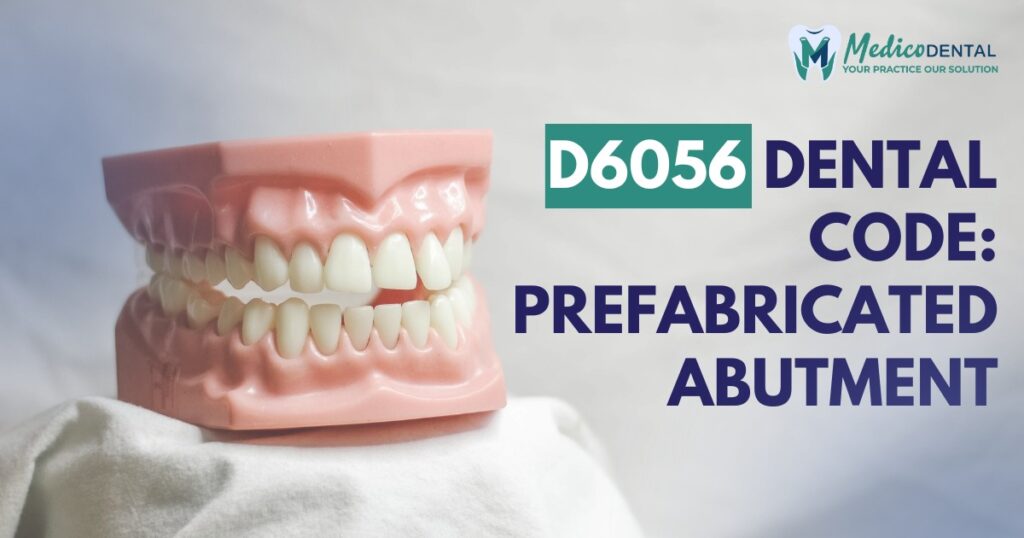
The D6056 dental code refers to a specific type of procedure in the realm of dental implants. It is used to describe the placement of a prefabricated abutment that is designed for a dental implant. A dental abutment is a connector piece that links the dental implant to the artificial tooth or crown. The D6056 code covers the use of prefabricated abutments, which are pre made and customized to fit a patient’s specific implant requirements. These abutments are chosen based on the size, shape, and fit needed for each individual case.
Understanding Prefabricated Abutments
What is a Prefabricated Abutment?
A prefabricated abutment is a pre made connector designed to attach a dental crown or prosthesis to an implant. Unlike custom abutments, which are created specifically for a patient’s unique dental anatomy, prefabricated abutments are produced in standardized sizes and shapes by manufacturers. They can be further customized to fit the patient’s needs through adjustments during the procedure, ensuring a reliable fit and functionality.
Benefits of Using Prefabricated Abutments in Dental Procedures
Prefabricated abutments offer several advantages in dental implant procedures. First, they reduce the time and complexity of the procedure, as they are readily available and require less customization. Additionally, they are often more cost effective than custom abutments due to mass production. These abutments also provide consistency and reliability, which can improve the overall success rate of dental implant procedures.
How D6056 Relates to Dental Implants
Role of the D6056 Code in Implant Procedures
The D6056 code is essential in documenting and billing the use of prefabricated abutments during dental implants procedures. When an implant is placed in a patient’s jaw, the abutment serves as the link between the implant and the artificial tooth. The D6056 code ensures that the use of the prefabricated abutment is properly accounted for, facilitating accurate insurance claims and billing processes. Its role is crucial in implant dentistry, helping to streamline treatment and reimbursement.
Connection Between Abutments and Implants
Abutments are a vital component in the success of dental implants. They help in securing the crown or prosthesis in place, offering both aesthetic and functional benefits to the patient. The D6056 code specifically addresses the prefabricated abutment, which is a convenient and effective solution for many implants procedures. By using prefabricated abutments, dental professionals can ensure that the implant process is completed with a high degree of precision and efficiency, ultimately leading to better outcomes for patients.
D6056 Code Billing and Insurance Implications
How to Properly Bill for a D6056 Procedure
Billing for the D6056 code requires an understanding of both the dental procedure and the correct coding practices. To ensure accurate billing, dental professionals should include the D6056 code on the claim form when a prefabricated abutment is used during the implant procedure. This code should be listed along with the other relevant codes for the implant placement and crown restoration. It’s important to document all details of the procedure, including the use of the prefabricated abutment, to avoid any errors or confusion during the reimbursement process.
Additionally, the D6056 code should be accompanied by the appropriate diagnostic codes and the corresponding procedure codes for the implant and any other services rendered. Properly itemizing the procedure ensures that both the dentist and patient are protected in terms of reimbursement, and that the insurance company processes the claim correctly.
Insurance Coverage and Reimbursement for D6056
Insurance coverage for the D6056 code can vary depending on the patient’s plan and the specifics of the procedure. Many dental insurance plans cover dental implants, including abutments, but there may be limitations based on factors such as the patient’s medical history, the reason for the implant, or whether the procedure is deemed medically necessary. The D6056 code typically covers the cost of the prefabricated abutment, but it’s crucial to verify coverage before beginning treatment.
Dental practices should work with patients to understand their insurance benefits and discuss potential out of pocket costs. Insurance companies may reimburse the procedure based on the codes used, so it is essential for dental professionals to ensure that the correct coding is applied. In some cases, insurers may require pre authorization before proceeding with the treatment, so it is beneficial to verify this step before starting the procedure to avoid billing surprises.
Clinical Applications of D6056 Dental Code
Common Situations for Using D6056
The D6056 code is primarily used in implant dentistry where a prefabricated abutment is chosen to connect the implant to the crown. Common situations for using this code include:
Single Tooth Implants
When a patient requires a single tooth replacement, a prefabricated abutment may be selected for a straightforward implant placement.
Multiple Tooth Replacements
For patients requiring multiple implants in a row or across the mouth, prefabricated abutments are often used due to their efficiency and cost effectiveness.
Full Arch Implant Restorations
In cases where patients need a full set of replacement teeth on an implant supported prosthesis, prefabricated abutments can provide a quicker and more predictable solution compared to custom abutments.
Case Studies or Examples of D6056 Usage
A common clinical example of D6056 usage might involve a patient who has lost a molar due to decay or trauma. After the dental implant is placed into the jawbone, a prefabricated abutment is used to connect the implant to the crown. This process is completed using the D6056 code, and the patient benefits from a streamlined procedure that requires minimal customization while still ensuring a functional and aesthetically pleasing result.
Another case may involve a patient requiring full arch implants due to severe tooth loss. The D6056 code applies here for the prefabricated abutments used to anchor the prosthetic teeth. The benefits of prefabricated abutments in such cases are clear, as they reduce time and cost while maintaining the integrity and success of the treatment.
Comparison: D6056 vs. Other Dental Codes
How D6056 Differs from Other Abutment Codes
The D6056 code is specifically designated for prefabricated abutments in dental implant procedures. While other abutment related codes exist, such as D6057 for custom abutments or D6080 for an abutment used for a crown or fixed partial prosthesis, the D6056 code applies only to prefabricated, non custom abutments.
The main difference between the D6056 and other abutment codes is that D6056 applies to pre-manufactured abutments that are often ready to use with minimal adjustments. In contrast, custom abutments (e.g., D6057) are specifically tailored to fit a patient’s individual anatomical needs, which may take longer to produce and often come at a higher cost.
Advantages of Using D6056 Over Alternatives
Prefabricated abutments covered under the D6056 code offer several advantages over custom alternatives:
Cost Effectiveness
Prefabricated abutments are typically more affordable than custom made ones, making them an attractive option for patients looking for quality treatment at a lower cost.
Time Efficiency
Since prefabricated abutments are ready made, they can be used in implant procedures without the need for additional lab work or customization, leading to a quicker turnaround for patients.
Predictable Results
With mass production, prefabricated abutments offer consistency and reliability. The manufacturing process ensures that these abutments are uniform in shape and size, reducing the risk of fitting issues.
Wider Availability
As prefabricated abutments are readily available, they can be used in a wide range of implant procedures, providing flexibility for dentists and patients alike.
Conclusion
The D6056 dental code plays an essential role in ensuring that prefabricated abutments used in dental implant procedures are properly billed and reimbursed. This code covers a specific and practical solution for many implant cases, providing both cost effective and time efficient options for dental professionals. Understanding the use of D6056 can help streamline treatment planning and ensure accurate insurance billing, benefiting both dentists and patients.
Prefabricated abutments, as represented by the D6056 code, offer significant advantages in dental implant procedures, including affordability, consistency, and speed. While custom abutments are necessary in some cases, prefabricated options provide an ideal solution for many situations, making them a crucial tool in modern implant dentistry. By utilizing the D6056 code properly, dental practices can provide patients with high quality, reliable treatment while maintaining efficient and accurate billing practices.
FAQs
What does the D6056 dental code cover?
Ans. The D6056 code covers the use of prefabricated abutments in dental implant procedures.
What is the difference between D6056 and custom abutment codes?
Ans. D6056 refers to prefabricated abutments, while custom abutment codes (like D6057) are for abutments tailored to a patient’s specific needs.
Does insurance cover the D6056 code?
Ans. Insurance coverage for D6056 can vary, but many plans do cover dental implants and abutments, depending on medical necessity and the patient’s plan.
What are the benefits of using a prefabricated abutment?
Ans. Prefabricated abutments are cost effective, time efficient, and offer predictable, reliable results.
Can D6056 be used for full arch implant procedures?
Ans. Yes, D6056 is commonly used for full arch implant restorations when prefabricated abutments are suitable.