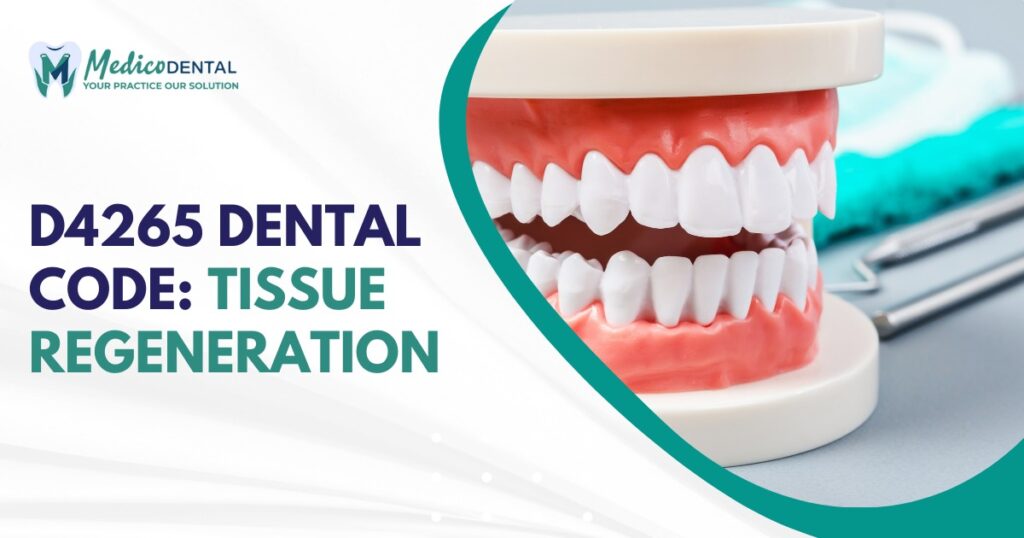
The D4265 dental code is used to identify and bill for specific procedures related to tissue regeneration in dental treatments. As part of the system of dental procedure codes developed by the American Dental Association (ADA), D4265 serves to document and categorize the process of regenerating lost periodontal tissues, such as bone and soft tissues, to restore and maintain a patient’s oral health. In particular, it is associated with periodontal regenerative procedures.
This code is critical for dental professionals and administrative staff to understand because it influences both the clinical approach and the financial aspects of patient care. Proper usage of the D4265 code ensures that patients receive appropriate treatment and that the procedures are adequately covered by insurance plans.
What is the D4265 Dental Code?
D4265 refers to a specific code in the ADA’s Current Dental Terminology (CDT) system that stands for “Pediatric/Adult Regeneration of Bone and/or Soft Tissue.” The code is primarily associated with surgical procedures that aim to regenerate lost tissues due to periodontal disease or other oral health issues. This includes both bone regeneration and the regeneration of other tissues like the gums and connective tissues that may have been damaged due to infection or trauma.
In simpler terms, when a patient undergoes a regenerative procedure, such as bone grafting or the use of a regenerative membrane in the periodontal pocket, the procedure is billed under the D4265 code. This ensures that both the procedure itself and its associated materials are appropriately documented and reimbursed by insurance providers.
Why is D4265 Important in Dental Procedures?
The D4265 code is important because it clearly categorizes regenerative procedures, making it easier for dental professionals to communicate with insurers and ensure that proper coverage is provided for the patient. Moreover, it provides a way for clinicians to document that a regenerative approach was chosen over other treatments, such as traditional fillings or non-surgical options.
For patients, the D4265 code is essential for insurance purposes, as it helps ensure that the treatment is covered appropriately. As tissue regeneration procedures can be expensive, proper coding ensures that the financial aspect of care does not pose an unnecessary barrier to receiving vital treatment.
Understanding Tissue Regeneration in Dentistry
Tissue regeneration in dentistry involves the restoration of damaged periodontal tissues, including bone and soft tissues, that have been compromised due to periodontal disease or other factors. Periodontal disease, for instance, causes the breakdown of the gums, bone, and ligaments surrounding the teeth. Regenerative procedures aim to restore these tissues, improving both the function and aesthetics of the patient’s oral cavity.
These procedures are typically performed in patients who exhibit signs of advanced periodontal disease, where conventional treatments like cleaning or scaling are no longer sufficient. By stimulating the body’s natural healing processes, tissue regeneration procedures can help regenerate lost bone, improve the stability of the teeth, and reduce the risk of tooth loss.
The Role of Tissue Regeneration in Dental Health
Tissue regeneration plays a critical role in improving the overall health of the mouth, especially in cases of periodontitis and other conditions that cause damage to the gums and bone. Some of the key roles tissue regeneration plays in dental health include:
-
Preventing Tooth Loss: By regenerating lost bone and soft tissues, regenerative procedures help prevent the progression of gum disease, which can lead to tooth loss.
-
Improving Aesthetics: Regenerating the gum tissue can also help restore a more natural appearance, especially in areas where the gums have receded.
-
Restoring Functionality: Tissue regeneration ensures that the tissues around the teeth are strong enough to support chewing and speaking, improving overall oral function.
Different Types of Tissue Regeneration Techniques
There are several types of tissue regeneration techniques commonly used in dentistry:
-
Bone Grafting: This technique involves adding bone material (either from the patient or a donor) to areas where the bone has been lost. Over time, the grafted bone integrates with the existing bone, helping restore the natural structure.
-
Guided Tissue Regeneration (GTR): A technique where a barrier membrane is placed over the affected area to protect the area from unwanted tissue growth, allowing bone and tissue to regenerate naturally beneath it.
-
Soft Tissue Grafting: This technique is typically used to restore gum tissue that has receded due to periodontal disease. It involves taking tissue from another part of the mouth or using synthetic materials to regenerate gum tissue.
-
Platelet-Rich Plasma (PRP) Therapy: This involves using the patient’s own blood to promote tissue regeneration. The PRP is applied to the affected area to stimulate the healing of bone and soft tissues.
How Tissue Regeneration Benefits Patients
Tissue regeneration offers several benefits for patients undergoing periodontal or other dental procedures. These include:
-
Improved Oral Health: By regenerating lost tissue, patients can regain the structural integrity of their teeth and gums, improving overall oral health.
-
Prevention of Further Damage: Regenerative procedures can help stop the progression of periodontal disease, reducing the risk of further tissue loss or tooth loss.
-
Better Aesthetic Outcomes: Tissue regeneration can also restore a more natural-looking smile, particularly in cases where gum recession has occurred.
Overview of the D4265 Code in Dental Billing and Coding
The D4265 code is part of the dental procedure coding system and is used to help dental professionals communicate with insurance companies about regenerative procedures. When a dentist performs tissue regeneration as part of a periodontal treatment plan, they will use the D4265 code for billing and reimbursement purposes.
The inclusion of the D4265 code in the billing system ensures that the procedure is properly documented and that insurance companies can correctly process the claim for reimbursement. It also ensures that patients have access to coverage for essential treatments.
What Does the D4265 Code Represent in Dental Billing?
The D4265 code represents a specific dental procedure for regenerative treatment, which could involve both soft tissue and bone regeneration. It is used for billing purposes to indicate that the dental practice has performed a regenerative treatment on the patient’s gums or bone. This could include procedures such as bone grafts or guided tissue regeneration (GTR).
By using this code, the dental office ensures they are reimbursed by the insurance company for the cost of the materials, labor, and expertise involved in the procedure.
When Should D4265 Be Used in Dental Procedures?
The D4265 code should be used when the dentist performs a tissue regeneration procedure as part of the treatment plan for a patient with periodontal disease or other conditions that have led to the loss of bone or soft tissue. Some common situations where the D4265 code would be appropriate include:
-
Treatment of moderate to advanced periodontal disease.
-
Regenerating bone or gum tissue following the removal of severely infected or decayed tissue.
-
Rebuilding the area around a lost or damaged tooth to prevent further complications.
Common Procedures Associated with the D4265 Code
Procedures that are commonly associated with the D4265 code include:
-
Bone Grafting: Adding bone material to the jaw to regenerate bone lost due to periodontal disease.
-
Guided Tissue Regeneration (GTR): Using membranes to guide the growth of new bone and soft tissue.
-
Soft Tissue Grafting: Regenerating gum tissue through grafts.
-
Platelet-Rich Plasma (PRP) Therapy: Using the patient’s own platelets to promote healing.
How the D4265 Code Impacts Treatment and Reimbursement
The use of the D4265 code plays a key role in treatment planning as it helps to identify when a regenerative approach is necessary. Additionally, it affects reimbursement because it ensures that insurance providers can accurately assess and cover the costs of the procedures. If the correct code is used, there is less likelihood of claim denial, ensuring that patients receive the coverage they need.
Treatment Planning for Tissue Regeneration Using D4265
When planning treatment for a patient needing tissue regeneration, the D4265 code helps structure the treatment approach by highlighting the necessity for specific regenerative procedures. It also ensures that any necessary consultations with insurance providers regarding coverage are more straightforward.
The dentist and their team will need to document the condition of the patient’s periodontal health, the specific regenerative procedure chosen, and the expected outcomes, all of which are essential for proper billing under the D4265 code.
Understanding Insurance Reimbursement for D4265 Procedures
Insurance companies will assess claims based on the appropriate usage of codes like D4265. When this code is used for regenerative procedures, insurers will evaluate whether the procedure is medically necessary, whether the treatment is part of the patient’s coverage, and if any limitations or exclusions apply.
How D4265 Code Affects Treatment Costs
The D4265 code has a direct effect on the cost structure of regenerative procedures. Insurance coverage may partially or fully offset the cost of materials used in procedures like bone grafting, guided tissue regeneration, or soft tissue grafting. Patients should always check with their insurance provider about coverage specifics and limitations to ensure they understand any out-of-pocket expenses associated with the procedure.
Clinical Applications of the D4265 Dental Code
The D4265 dental code plays a pivotal role in the field of periodontal treatment, especially when it comes to tissue regeneration procedures. As part of the dental billing system, it ensures that regenerative treatments for bone and soft tissue are accurately documented and reimbursed. This allows dental professionals to provide essential care while navigating the complexities of treatment costs and insurance coverage.
D4265 in Periodontal Treatment: A Case Study
A common scenario in which the D4265 code is utilized involves a patient with advanced periodontal disease who has experienced significant bone loss around one or more teeth. In such cases, regenerative procedures are necessary to restore both bone and soft tissue health.
For example, consider a patient who presents with a deep periodontal pocket and substantial bone loss around a molar. The dentist may decide to perform a bone grafting procedure in combination with a guided tissue regeneration (GTR) technique. This procedure aims to stimulate the growth of new bone and tissue to restore the natural anatomy of the periodontal structure.
The D4265 code would be used to document this regenerative treatment, including the bone graft material, any membranes used, and the overall technique employed. Not only does this ensure proper treatment planning, but it also allows for appropriate insurance billing, ensuring that the patient receives the necessary financial coverage for the procedure.
How D4265 Code is Used in Bone Grafting Procedures
In bone grafting procedures, the D4265 code is frequently applied when the dentist seeks to regenerate lost bone tissue in the jaw. Bone graft is essential for patients suffering from bone resorption caused by periodontal disease, trauma, or other factors. The bone grafting material, which could be synthetic, allograft (from a donor), or autograft (from the patient), is placed into the affected areas of the jawbone to stimulate new bone growth.
This regenerative process helps create a more stable environment for existing teeth and may also aid in preparing the jaw for dental implants. By using the D4265 code, the dental office ensures that all aspects of the procedure, including the graft material, the surgical process, and the associated membranes or barriers, are properly documented for billing and insurance reimbursement.
Role of D4265 in Soft Tissue Management
The D4265 code is also essential in soft tissue management, particularly when there is significant gum recession. In cases where gum tissue has receded due to periodontal disease, trauma, or aging, regenerative procedures are used to restore lost soft tissue. Soft tissue grafting can help cover exposed tooth roots, improve aesthetics, and reduce the risk of further recession.
The D4265 dental code allows dental professionals to document the use of various soft tissue grafting techniques, such as connective tissue grafts or acellular dermal matrix grafts. These techniques aim to restore a more natural gumline, which not only improves appearance but also protects the health of the teeth and underlying bone.
Benefits of Using D4265 in Tissue Regeneration Procedures
The benefits of using the D4265 dental code in tissue regeneration are numerous, both for dental professionals and patients. These include:
-
Accurate Billing and Reimbursement: The D4265 dental code ensures that dental practices are reimbursed for the materials and procedures associated with tissue regeneration, which can be expensive.
-
Clear Documentation: By using this code, the dental practice creates clear and standardized documentation for the treatment provided, which can be useful for future care and patient records.
-
Access to Advanced Treatments: The use of this code facilitates access to cutting-edge regenerative treatments that can save teeth, improve oral health, and prevent the need for more invasive procedures like tooth extraction.
-
Improved Patient Outcomes: By addressing the underlying issues of bone and tissue loss, D4265 procedures offer a higher chance of preserving teeth and restoring function to the mouth.
Enhancing Healing with the D4265 Code
The D4265 dental code is often associated with advanced healing techniques designed to enhance tissue regeneration. For example, platelet-rich plasma (PRP) therapy is frequently used in conjunction with D4265 procedures to promote faster healing and tissue regeneration. PRP, derived from the patient’s own blood, is rich in growth factors that encourage the body’s natural healing processes.
By utilizing the D4265 dental code for procedures that incorporate PRP or similar therapies, dental professionals can document the enhanced healing process, which may improve both the clinical outcome and the patient’s recovery time. This approach leads to better patient satisfaction and may reduce the need for follow-up procedures.
How D4265 Code Improves Treatment Outcomes
The D4265 dental code directly impacts treatment outcomes by ensuring that the appropriate regenerative procedures are performed and documented. It helps dental professionals choose the most effective treatment options, whether it’s a bone graft, soft tissue graft, or a combination of both. Proper documentation and billing under this code ensure that the full range of materials, such as membranes and grafting materials, are accounted for, which optimizes the treatment plan.
The proper application of the D4265 dental code also facilitates communication between the dental office and the insurance company. This increases the likelihood that the treatment will be covered, allowing patients to access the necessary procedures to restore their oral health.
Patient Benefits from Tissue Regeneration Using D4265
Patients benefit significantly from tissue regeneration procedures performed under the D4265 dental code, including:
-
Restored Functionality: Regenerative treatments help restore function to teeth and gums, allowing patients to chew, speak, and smile with confidence.
-
Prevention of Tooth Loss: Regeneration procedures can prevent further bone loss and gum recession, reducing the likelihood of tooth loss.
-
Aesthetic Improvement: Tissue regeneration can enhance the appearance of the gums and teeth, giving patients a more natural smile and improving their overall self-esteem.
-
Reduced Pain and Discomfort: By regenerating tissue, patients experience less pain and discomfort over time compared to having to extract a tooth or undergo other more invasive treatments.
Conclusion
The D4265 dental code plays an integral role in the accurate billing and reimbursement of tissue regeneration procedures in periodontal care. It allows dental professionals to use advanced techniques like bone grafting, guided tissue regeneration, and soft tissue grafting while ensuring that the costs are appropriately covered by insurance providers.
As dental technology continues to evolve, the scope of regenerative procedures is likely to expand. This may lead to more advanced treatments that incorporate new materials or techniques. The D4265 code will continue to serve as an essential tool for documenting and reimbursing these procedures, ensuring that patients have access to cutting-edge dental care.
The D4265 dental code is a vital part of modern dentistry, especially in periodontal care. It ensures that regenerative procedures are accurately billed and reimbursed, which allows dental professionals to provide advanced treatments that improve patient outcomes. As tissue regeneration techniques become more refined, the D4265 code will remain essential for maintaining the quality and accessibility of these important dental services.
FAQs
What is the Difference Between D4265 and Other Dental Codes?
Ans. The D4265 code specifically covers regenerative procedures for bone and soft tissue, particularly in periodontal treatment. Other dental codes, such as D4260 or D4270, may refer to different types of periodontal surgeries or non-regenerative treatments. It’s important to select the correct code to ensure proper billing and reimbursement.
Is the D4265 Code Covered by Insurance?
Ans. Insurance coverage for procedures billed under the D4265 dental code varies by provider and plan. Typically, insurance companies will cover tissue regeneration procedures if they are deemed medically necessary, though patients should check with their insurer for specific coverage details.
How to Ensure Accurate Billing with the D4265 Code
Ans. To ensure accurate billing, dental professionals should meticulously document the procedures performed, the materials used, and the specific techniques employed. Clear communication with the insurance provider and an understanding of the patient’s benefits will help prevent claim denials and ensure timely reimbursement.