Dental codes are an essential part of modern dentistry, playing a crucial role in organizing procedures, ensuring accurate billing, and facilitating communication between dental professionals and insurance companies. One such code, the D2980, specifically relates to dental crown procedures. This detailed guide will take you through everything you need to know about the D2980 dental code, from its definition to its importance in insurance claims and its role in restorative dentistry.
Introduction to Dental Codes
Dental codes, primarily part of the Current Dental Terminology (CDT) system, are used to standardize and categorize dental procedures. These codes help ensure clear communication between dental offices and insurance companies, ensuring that both parties are on the same page regarding the services provided. The D2980 code is one of these essential dental codes and is specifically used for a particular procedure: the repair or restoration of dental crowns.
What Are Dental Codes and Why Are They Important?
Dental codes are a system of standardized numbers and terms used to describe dental procedures. They are important because:
- Clear Communication: They enable effective communication between dental professionals, insurance companies, and patients. Everyone knows exactly what is being performed.
- Accurate Billing: These codes help ensure accurate billing for dental procedures, ensuring dental professionals get reimbursed for the services provided.
- Insurance Processing: Dental codes allow insurance companies to assess claims quickly and efficiently, ensuring timely and appropriate reimbursement.
- Regulatory Compliance: Using the correct dental codes ensures that dental practices comply with insurance and healthcare regulations.
Role of Dental Codes in Insurance and Billing
Dental codes, including the D2980 code, play an essential role in the insurance process. Here’s why:
- Insurance Validation: When a dental office submits a claim to an insurance company, they include the correct dental code for the procedure performed. The insurance company uses these codes to verify the treatment and decide how much to reimburse.
- Efficient Reimbursement: Dental codes streamline the process of reimbursement. Using the right code, such as D2980, ensures that insurance claims are processed smoothly and accurately.
- Accurate Payment: Dental offices rely on codes to be paid accurately for their services. Without these codes, there could be confusion or delays in payment.
Understanding the D2980 Dental Code
The D2980 code is part of the CDT system and specifically refers to procedures related to the restoration and repair of dental crowns. Understanding this code is essential for both dentists and patients involved in restorative dental care.
What is the D2980 Dental Code?
The D2980 code is used for crown restorations or repairs, where a dentist needs to restore or fix a damaged crown. The code specifically relates to crowns that are being repaired, rather than replaced entirely. This code is used for services that repair crowns to ensure they function properly and restore the appearance of a patient’s teeth.
When Should the D2980 Code Be Used?
The D2980 code should be used when:
- Repairing a Broken or Damaged Crown: If a crown is damaged due to physical trauma, wear and tear, or other reasons, the D2980 code can be used when repairing the crown to restore its form and function.
- Replacing the Core or Foundation of the Crown: If the underlying structure of the crown (the core) needs to be replaced due to decay or damage, the D2980 code may be used.
- Crown Re-contouring: This code can also be used when adjustments to the shape or size of an existing crown are required to fit a patient’s dental needs.
Key Features of the D2980 Code
The D2980 dental code comes with key features that make it distinct:
- Restorative Purpose: This code is used for restorative dental procedures, focusing on improving the functionality and appearance of crowns.
- Non-Replacement: Unlike a full crown replacement, the D2980 code is for repairing or adjusting an existing crown, not replacing it entirely.
- Versatile: The code can be applied to a variety of crowns, including porcelain, metal, or composite crowns, depending on the issue at hand.
How the D2980 Dental Code Relates to Crowns
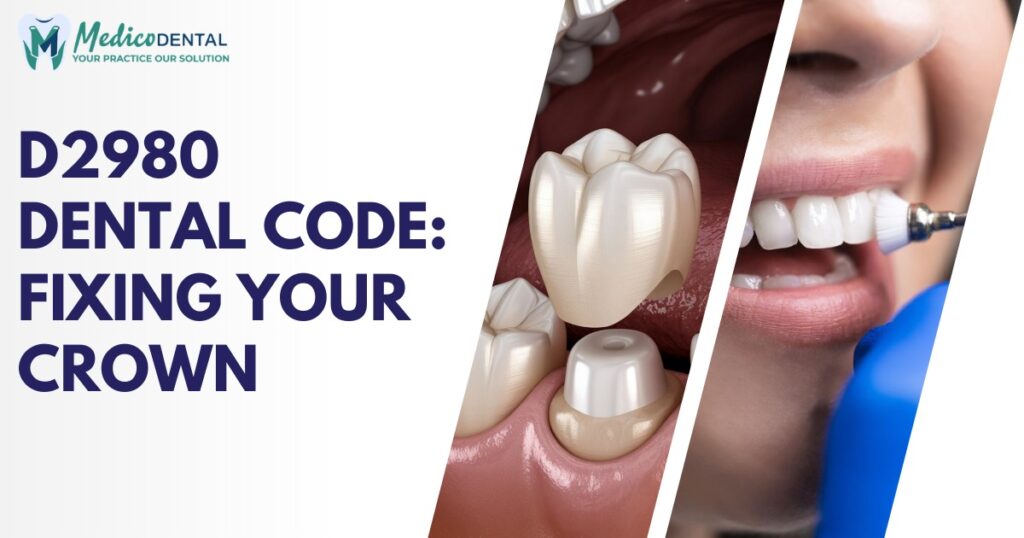
Crowns are one of the most common dental restorations used to repair or replace teeth. They are typically made of porcelain, metal, or a combination of both and are used when a tooth is too damaged for a filling. Crowns restore the tooth’s shape, size, and strength, and they can also improve the tooth’s appearance.
The D2980 code is specifically linked to procedures that focus on repairing or restoring crowns. This means it is not used for new crown placements but rather for fixing issues with existing crowns.
What Is a Crown in Dentistry?
A dental crown is a tooth-shaped cap that is placed over a damaged or decayed tooth. It serves to restore the tooth’s original shape, size, and function. Crowns are typically recommended when a tooth has been extensively damaged, whether by decay, trauma, or wear.
Types of Dental Crowns and Their Applications
There are several types of crowns, each serving different needs:
- Porcelain Crowns: These crowns are often used for their aesthetic appeal as they blend well with natural teeth. They are most commonly used on visible teeth.
- Metal Crowns: These are more durable and are often used for back teeth where strength is needed more than appearance.
- Porcelain-Fused-to-Metal Crowns: These offer the best of both worlds, combining durability with a natural appearance.
- Resin Crowns: Typically used for a more affordable option, resin crowns are ideal for smaller cavities or temporary use.
The Role of D2980 in Fixing and Replacing Crowns
The D2980 code plays a crucial role in restoring and maintaining crowns. It ensures that crowns continue to function effectively, whether through repairs or adjustments. For instance, when a crown becomes loose or the underlying structure becomes compromised, the D2980 code is used to address these issues and restore the crown’s stability and function.
The Procedure for Using the D2980 Code
Here’s an overview of the procedure when applying the D2980 code:
- Examine the Existing Crown: The dentist first examines the existing crown to determine whether it can be repaired or if it needs to be replaced entirely.
- Remove the Old Crown if Necessary: If the crown is severely damaged, it may need to be removed. This step also involves cleaning the underlying tooth to ensure it’s in good condition.
- Prepare the Tooth for the New Crown or Restoration: The dentist will prepare the tooth by ensuring it’s properly cleaned and shaped. If a new foundation is needed, the dentist will apply the necessary material to rebuild the core.
- Reposition or Place the Crown: Once the tooth is ready, the dentist will place the repaired or new crown over the tooth.
Step-by-Step Process of Applying D2980
- Step 1: Conduct a thorough examination of the existing crown.
- Step 2: Decide whether the crown needs full replacement or can be repaired.
- Step 3: Prepare the tooth by removing decay or damage.
- Step 4: Rebuild the core or base, if needed.
- Step 5: Position the repaired crown and ensure it fits properly.
Common Mistakes to Avoid When Using D2980 Code
Some common mistakes dentists make when using the D2980 code include:
- Incorrect Diagnosis: Sometimes, dentists may mistakenly use the D2980 code when a crown requires a complete replacement rather than repair.
- Improper Preparation: Failing to properly prepare the underlying tooth or crown can result in issues with the fit or function of the crown.
- Not Confirming with Insurance: It’s essential to confirm with insurance companies about coverage before using the D2980 code.
D2980 Dental Code in Restorative Dentistry
The D2980 code is a vital part of restorative dentistry. It helps dental professionals restore damaged or worn-out crowns, ensuring that they continue to serve their purpose of protecting teeth and improving the patient’s smile.
Importance of D2980 in Restorative Dentistry Practices
The D2980 code is integral to restorative practices because it allows dentists to make essential repairs to crowns, extending their lifespan and ensuring that the patient’s teeth remain functional and aesthetically pleasing.
How D2980 Helps in Restoring Damaged Teeth
By using the D2980 code, dentists can address various issues with crowns, such as breakage, loosening, or wear. This helps restore the tooth’s function and prevents further damage to the underlying tooth structure.
D2980 Dental Code and Insurance Claims
The D2980 code is essential when submitting insurance claims for crown repairs or restorations. Insurance companies rely on these codes to determine the reimbursement amounts and validate the procedures performed.
How Insurance Companies Process Claims with D2980
Insurance companies use the D2980 code to verify whether the procedure is covered under the patient’s dental plan. It helps ensure that the services provided are in line with the patient’s coverage.
Understanding Reimbursement Trends for the D2980 Dental Code
Understanding how the D2980 code is reimbursed by insurance companies is crucial. As dental technologies evolve, so do the reimbursement policies. Staying updated on these trends ensures that dental offices receive appropriate compensation.
Tips for Ensuring Smooth Insurance Reimbursement
-
Submit Proper Documentation: Always ensure that the correct code is used and that all relevant documentation is provided.
-
Stay Updated on Policies: Insurance policies may change, so keeping up with the latest reimbursement rules for the D2980 code is important.
-
Communicate with Patients: Keep patients informed about what is covered under their insurance and what they might need to pay out-of-pocket.
D2980 Dental Code vs. Other Crown Codes: A Detailed Comparison
The D2980 code is an essential part of dental billing and documentation for procedures involving crowns. Understanding how it compares to other crown codes, such as the D2750, can help dental professionals accurately apply these codes and ensure proper billing and insurance claims. In this detailed guide, we will break down the key differences, best practices, and common questions related to the D2980 dental code.
D2980 vs. D2750: Understanding the Differences in Crowns
The D2980 code is used specifically for the crowns requiring extensive repairs, while the D2750 code is typically reserved for crown procedures on existing crowns when a permanent crown is placed over a pre-existing one.
Key Differences:
- D2980 is designed for use when there is a substantial amount of crown repair needed.
- D2750, on the other hand, refers to permanent crowns used in cases where the restoration of a tooth requires a high-quality, all-metal or porcelain crown.
When to Use D2980 Over Other Crown Codes
The D2980 code should be used when a dentist needs to repair an existing crown due to damage or significant wear. This can apply to multiple situations, such as fractures, wear from grinding, or crown failure. It’s crucial to differentiate between cases where a full restoration is necessary (D2750) and when a repair will suffice (D2980).
Accurate Billing with the D2980 Dental Code
To ensure accuracy in billing, it’s essential to:
- Clearly document the need for repair: Use detailed patient records to justify the repair, including imaging and notes on crown condition.
- Ensure the code matches the procedure: D2980 is for repairs. If the procedure involves a full crown replacement, D2750 should be used instead.
Best Practices for Using the D2980 Code in Billing
- Verify Patient Eligibility: Confirm the patient’s dental insurance policy covers repairs under the D2980 code.
- Use Specific Descriptions: Always use the correct ICD codes for the repair and specify the type of damage the crown has sustained (e.g., fractures, decay).
Documenting and Keeping Records for D2980 Claims
Thorough documentation is crucial for the D2980 claim process. This includes:
- Pre- and post-procedure images to show the condition of the crown.
- Notes on the patient’s symptoms or the reason for crown failure (e.g., wear and tear, trauma).
- Treatment plans that outline the need for repair and the process involved.
Updates and Changes to the D2980 Code
The D2980 code, like many dental codes, evolves to reflect changes in treatment practices and insurance requirements. It’s important for dental professionals to stay informed about any updates to ensure compliance and proper billing.
Recent Updates to the D2980 Code and What You Need to Know
- Changes in repair thresholds: Over time, insurance companies have updated the threshold for crown repairs, and some might require additional documentation before approving repairs under D2980.
- More specific repair categories: Some updates now categorize repairs based on the type of crown material (e.g., porcelain vs. all-metal) and the extent of the damage.
How to Stay Informed on Changes to the D2980 Dental Code
- Monitor ADA updates: The American Dental Association (ADA) regularly updates its coding guidelines, and subscribing to their newsletters or visiting their website is a good way to stay informed.
- Consult with insurance providers: Insurance companies often release updates on billing codes and requirements, which can directly impact how the D2980 code is used.
The Impact of the D2980 Code on Your Dental Practice
By mastering the use of the D2980 code, dentists can streamline crown repair procedures, improve billing accuracy, and ensure timely reimbursements. Proper application of this code can also enhance patient satisfaction by ensuring that repairs are done efficiently and accurately.
How to Leverage D2980 for Increased Efficiency
To leverage the D2980 code effectively, it’s essential to:
- Train dental staff to recognize the need for crown repairs and accurately document the damage.
- Implement standardized billing procedures to prevent errors and ensure that D2980 is applied appropriately.
Streamlining Crown Procedures with D2980 Code
Efficient use of the D2980 code not only helps streamline procedures but also ensures that practices are compensated correctly for repairs. This is especially true in environments where multiple crown repairs are performed regularly.
Conclusion
In summary, the D2980 code plays a critical role in crown repairs, offering a clear way to distinguish between restorative treatments and full replacements. By understanding its application, staying updated on changes, and following best practices for documentation, dental professionals can improve their workflow, billing accuracy, and patient outcomes.
Key Takeaways for Dentists Using D2980
- Document everything: Accurate documentation is key to successful claims.
- Stay informed: Regularly check for updates to the code to avoid mistakes.
- Use the code appropriately: The D2980 code is for repairs, not replacements.
Final Tips for Streamlining Your Crown Procedures and Billing
By following these guidelines, you can streamline your practice’s crown repair processes, ensure you are using the D2980 code correctly, and ultimately improve both your efficiency and profitability.
FAQs
How does the D2980 code apply to crown repairs?
Ans. The D2980 code applies when a dentist is performing repair work on an existing crown that is damaged or compromised. This includes restoring the crown to its original state or replacing sections of the crown.
Can D2980 be used for all types of crowns?
Ans. No, the D2980 code is generally used for crowns that require repair due to damage. It is not used for initial placement or total replacements of crowns. For initial crown placements, the D2750 code is typically used.