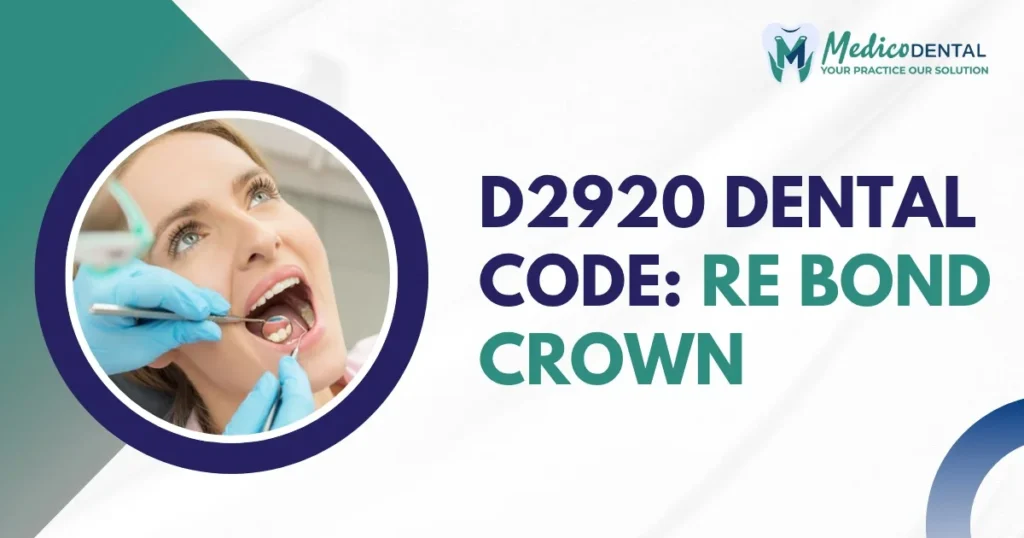
The D2920 Dental Code is part of the Current Dental Terminology (CDT) codes, which are used for dental billing and coding purposes. Specifically, D2920 refers to the procedure for re-cementing or re-bonding a dental crown that has become loose or dislodged but remains in good condition. This code is utilized when a crown is not damaged beyond repair, and instead of replacing the crown entirely, it can be reattached to restore the tooth’s function and aesthetics.
Importance in Dental Procedures
Understanding and utilizing the D2920 code is essential for both dentists and dental billers, as it streamlines the process for insurance reimbursement and ensures that the procedure is correctly documented. Re-bonding a crown with the D2920 code is a cost-effective solution for both the patient and the dental practice. It saves time, avoids unnecessary procedures, and provides patients with a quick fix when their crown has loosened but is still in functional condition.
What is the D2920 Dental Code?
Definition and Purpose
The D2920 code refers to the process of re cementing or re bonding a crown that has become loose or fallen off. The crown is inspected to ensure it is still in good condition and can be reused. If the crown is still intact, the dentist will clean it and reattach it using fresh cement. This is different from the installation of a new crown or replacing one that is broken or decayed.
The primary purpose of D2920 is to reattach crowns that have become loose, preventing the need for a more expensive and invasive procedure such as crown replacement.
Explanation of Re cementing or Re bonding a Crown
Re-cementing or re-bonding a crown involves cleaning the crown and the underlying tooth to ensure no debris or old cement remains. Once the surfaces are prepped, a new layer of dental cement is applied, and the crown is carefully placed back on the tooth. Excess cement is removed, and the bite is adjusted to ensure proper alignment.
When to Use the D2920 Dental Code
Indications for D2920 Usage
D2920 is typically used when the following conditions are met:
-
The crown has become loose or dislodged, but it remains in good condition.
-
The tooth underneath the crown is still healthy, without decay or other damage.
-
The crown does not need to be replaced but can be re cemented to restore tooth function and appearance.
Scenarios Where Re bonding is Appropriate
Some common scenarios where re-bonding is appropriate include:
-
Accidental loosening of the crown, often due to trauma or the natural wear of cement over time.
-
A patient’s crown falls off, but the crown is undamaged and can be reattached.
-
Post-treatment crowns that have loosened due to changes in the patient’s bite or gum recession but are still in a condition to be salvaged.
When NOT to Use the D2920 Dental Code
Situations Where D2920 is Not Applicable
While D2920 is an effective procedure for re-cementing loose crowns, there are certain situations where it should not be used:
-
For a new crown installation: If the tooth does not have a crown or needs a new one, D2920 is not applicable.
-
For a crown that is damaged or decayed: If the crown is cracked, broken, or the tooth beneath it has decay, a different procedure is required, such as crown replacement or root canal therapy.
-
For implant-supported crowns: Implant-supported crowns require separate coding and cannot be re-cemented using D2920.
Common Misconceptions
One common misconception is that D2920 can be used for any loose crown. It’s important to clarify that the crown must still be in good condition, and the underlying tooth must be healthy. If either the crown or the tooth is compromised, a different dental code will apply.
Procedure Details for D2920: Re cementing a Crown
Step by Step Process
The process for re-cementing a crown using D2920 typically involves several key steps:
Assessment: The dentist evaluates the crown and the tooth to ensure the crown is intact and the tooth underneath is in good condition.
Cleaning: The dentist thoroughly cleans both the crown and the tooth to remove any old cement, plaque, or debris.
Cementing: A new dental cement is applied to the inside of the crown, and it is carefully repositioned over the tooth.
Adjustment: The dentist ensures that the crown is properly aligned with the bite, removing any excess cement that may affect the patient’s comfort.
Final Check: The dentist checks for proper alignment and ensures the crown is securely in place before the patient leaves.
Tools and Materials Involved
The tools and materials typically used during the procedure include:
-
Dental cement: A strong bonding agent used to reattach the crown.
-
Crown cleaning materials: Tools such as hand instruments and air-water syringes to clean the crown and tooth.
-
Bite adjustment tools: To ensure the crown is positioned properly for the patient’s bite.
-
Dental mirror and probe: Used to inspect the tooth and crown thoroughly.
Benefits of Using D2920
Restoring Tooth Function and Aesthetics
The primary benefit of using the D2920 code is that it helps restore both the function and appearance of the tooth without the need for a new crown. Re cementing a crown can save patients both time and money, as it avoids the need for more invasive procedures, while still ensuring that the tooth is protected and functional.
Cost Effectiveness of Re cementing vs. Replacing the Crown
Re cementing a crown is much more affordable than replacing the entire crown. For patients with a functional crown that has simply come loose, re bonding offers a cost-effective solution. Additionally, the procedure is typically quicker, reducing the overall treatment time for patients, and is less expensive for insurance companies, making it a win-win situation.
Risks and Considerations
Possible Complications During the Procedure
While the D2920 code is generally a straightforward procedure for re cementing a crown, there are some potential risks and complications to be aware of:
-
Crown Failure: If the crown is not re bonded securely or if the cement used is insufficient, the crown may come loose again, requiring further intervention or even crown replacement.
-
Damage to the Tooth: In rare cases, the underlying tooth may be damaged during the cleaning process, especially if there is extensive wear or decay not initially visible.
-
Sensitivity: After the procedure, patients might experience temporary tooth sensitivity, particularly to hot or cold stimuli, which can be uncomfortable but typically subsides over time.
-
Infection: Though uncommon, there is a slight risk of infection if bacteria are trapped between the crown and the tooth during the re-cementing process. Proper cleaning and sterilization are crucial to reduce this risk.
-
Improper Fit: If the crown does not align correctly with the surrounding teeth or bite after re-cementing, the patient might experience discomfort, and additional adjustments may be needed.
Considerations Before Opting for D2920
Before proceeding with the D2920 code, both patients and dental professionals should consider the following:
-
Crown Condition: The crown must be in good condition. If it is cracked, chipped, or shows signs of wear, re-cementing may not be a viable option. It is essential to assess whether the crown is strong enough to continue serving its purpose.
-
Tooth Health: The tooth beneath the crown must be free of decay or damage. If there is any underlying issue, such as a cavity or infection, re cementing may not be appropriate, and a more comprehensive dental procedure, like root canal therapy or crown replacement, may be needed.
-
Long-Term Viability: While re-cementing may offer a temporary fix, patients should discuss with their dentist whether it is the best long term solution or if they should consider replacing the crown altogether for better durability and function.
Comparison with Other Dental Codes
D2920 vs. Codes for Crown Replacement
The D2920 code is specifically for re-cementing a crown that is still in good condition, whereas codes for crown replacement (such as D2750 or D2740) are used when a crown is no longer viable due to damage, wear, or decay. Re-cementing a crown is less expensive and less invasive than crown replacement, but it is only suitable when the crown itself is intact and the underlying tooth remains healthy.
Key differences:
-
Crown Replacement: Involves removing the old crown, cleaning and preparing the tooth, and then placing a new crown.
-
Re cementing (D2920): Involves cleaning the existing crown and tooth, then reattaching the crown with fresh cement.
Crown replacement may be necessary if the crown is significantly damaged or the fit is compromised, whereas D2920 is a more conservative approach that maintains the existing restoration.
D2920 vs. Implant Supported Crowns
Implant supported crowns are used when a tooth has been lost and replaced with a dental implant. These crowns are held in place by the implant rather than a natural tooth. The D2920 code does not apply to implant-supported crowns, as those require different procedures and codes. Implant-supported crowns have a distinct billing code and procedure that involves implant placement, healing time, and eventual crown placement.
Key differences:
-
Implant Supported Crowns: Require surgical placement of a titanium implant into the jawbone, followed by crown attachment.
-
Re cementing (D2920): A non-invasive procedure for reattaching an existing crown to a healthy tooth.
It is important to note that implant supported crowns cannot be re-cemented with D2920; a completely different set of codes and procedures applies in these cases.
How D2920 Affects Insurance and Billing
Coverage for D2920 Under Dental Insurance
Most dental insurance plans provide coverage for D2920 when the procedure is medically necessary. This typically means that the crown must be in good condition and the re cementing is a reasonable and cost-effective way to restore function to the tooth. However, coverage can vary based on the specific plan, the insurer’s policies, and whether the patient has met their deductible or coverage limits.
Insurance companies may also limit the number of times a crown can be re-cemented before a full replacement is necessary, and they may require documentation or pre-authorization for certain procedures. It’s important for dental offices to verify coverage with the insurance provider before proceeding with the procedure to avoid billing complications.
How to Bill for D2920
Dental Billing for D2920 typically follows these steps:
-
Use the Correct Code: Ensure that D2920 is the correct code for the procedure, as misusing dental codes can result in rejected claims.
-
Document the Procedure: Proper documentation is essential for insurance claims. Include details such as the crown’s condition, the reason for re-cementing, and any other relevant patient information.
-
Submit the Claim: Once the procedure is completed, submit the claim to the insurance provider using the D2920 code, along with the necessary documentation.
-
Check for Pre Authorization: Some insurance plans may require pre-authorization before proceeding with the procedure, especially if the patient has previously had the crown re-cemented in the past.
Dental offices should work closely with their patients and insurers to ensure all steps are followed, and patients are not unexpectedly billed for procedures that insurance might cover.
Clarifications Regarding D2920 Code Use
The D2920 code is only used for crowns that are in good condition. If the crown is cracked, chipped, or showing signs of decay, the dentist will likely need to consider a different treatment option, such as crown replacement. D2920 is specifically for situations where the crown can be salvaged and reattached.
Conclusion
The D2920 code is a valuable tool for reattaching loose or dislodged crowns that are still in good condition. It offers a cost-effective, non-invasive solution to restore the function and appearance of a tooth without the need for more complex procedures like crown replacement.
D2920 is ideal for patients with functional crowns that have become loose or fallen off. It provides an affordable alternative to full crown replacement when the crown and tooth are both still in good condition. However, patients should consult with their dentist to ensure that re-cementing is the best solution for their specific situation. Regular follow-up care is important to ensure the crown remains securely in place, and if issues persist, further treatment may be necessary.
FAQs
What happens if my crown falls off again after re-cementing?
Ans. If the crown falls off again, it may need to be replaced or re cemented again depending on the crown’s condition. If the issue persists, further evaluation may be required.
How long will the re-cemented crown last?
Ans. The longevity of a re cemented crown depends on the condition of both the crown and the tooth. Generally, it should last until the crown naturally wears out or the underlying tooth develops an issue.
Will the re-cementing hurt?
Ans. Re cementing is a relatively non-invasive procedure. Some patients may experience temporary sensitivity or discomfort, but it should not be painful.