Orthodontic treatment relies on accurate diagnosis and treatment planning, and part of that process involves using specific dental codes to ensure proper documentation and billing. The D0470 dental code is a key part of this system, used primarily for orthodontic models and diagnostic records. Understanding this code is essential for orthodontic practitioners, as it impacts both treatment planning and insurance reimbursement. In this guide, we will explore the D0470 code, its importance, and how it plays a vital role in orthodontic practices.
What is the D0470 Dental Code?
Definition and Description of D0470
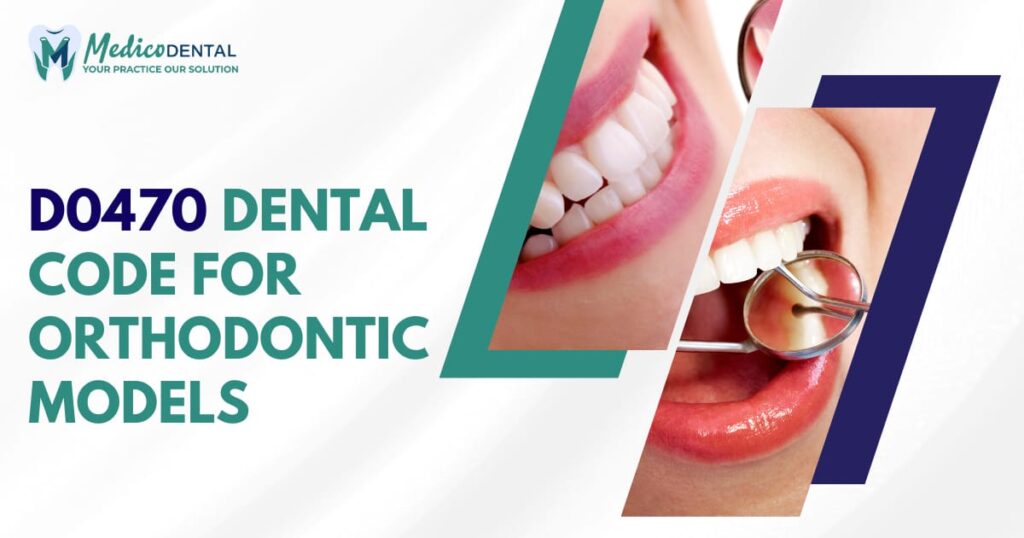
The D0470 dental code is defined as the procedure for “diagnostic casts” or “models” used in orthodontic treatment. These models are three-dimensional representations of a patient’s teeth and oral structures, typically created from impressions or digital scans. The D0470 code is used when orthodontists or dental professionals need to bill for these models as part of the initial assessment or ongoing treatment process.
Purpose of D0470 in Orthodontic Treatment
The purpose of using the D0470 code is to document the detailed structure of a patient’s teeth, jaw alignment, and bite. These models are invaluable for creating customized treatment plans, particularly for braces, retainers, and other orthodontic appliances. Additionally, they help orthodontists monitor progress throughout the course of treatment, ensuring that changes are being made as planned.
The Role of D0470 in Orthodontic Models
How D0470 Is Used in Orthodontic Diagnosis and Treatment Planning
Orthodontic models coded under D0470 serve as a critical diagnostic tool. They are used to analyze the alignment of a patient’s teeth, the relationship between the upper and lower jaws, and to identify any malocclusions or bite issues. These models guide the orthodontist in creating an individualized treatment plan, whether it’s for braces, clear aligners, or other corrective appliances.
Significance of Accurate Models in Orthodontics
Accurate models are essential in orthodontics because they provide a detailed snapshot of a patient’s oral structures, which serves as a baseline for treatment. With precise models, the orthodontist can predict future tooth movements, prepare for any challenges that may arise, and ensure that the patient receives the best possible care. Poorly constructed models can lead to incorrect diagnoses and, ultimately, suboptimal treatment outcomes.
When is D0470 Used?
Common Scenarios and Applications
D0470 is most commonly used during the initial consultation when an orthodontist needs to assess a patient’s oral structures in detail. It may also be used when there is a change in the treatment plan or when follow-up models are necessary to monitor progress. In terms of dental billing, common scenarios include cases where a patient requires braces, Invisalign, or other corrective treatments, as accurate billing for diagnostic models is essential for proper reimbursement.
Types of Cases Requiring Orthodontic Models
Orthodontic models are needed in various situations, including malocclusion (misalignment of teeth), crowded teeth, overbite, underbite, crossbite, or any other alignment issues. In some instances, the models may be necessary before certain procedures can be done, such as tooth extractions, or even for preparation for surgery if orthodontic intervention is required as part of a larger treatment plan.
How to Bill and Report D0470
Understanding Billing Procedures for D0470
When billing for the D0470 code, orthodontists must ensure that the procedure aligns with the correct diagnostic and treatment codes based on the patient’s needs. Typically, this code is used at the start of treatment or when new models are created to monitor progress. The billing process requires clear documentation that justifies the need for the models, and it should be submitted along with other necessary treatment codes.
Reporting D0470 for Insurance Reimbursement
Insurance reimbursement for D0470 will depend on the patient’s specific plan and whether the procedure is deemed medically necessary. Insurance companies may require additional documentation, such as a letter of medical necessity or detailed treatment plans. Orthodontists should ensure that all information is properly documented and that any communication with insurance providers is thorough to avoid delays or denials of reimbursement.
Common Mistakes to Avoid with D0470 Dental Code
Potential Errors in Coding and Documentation
One of the most common mistakes when using the D0470 code is inaccurate or incomplete documentation. The models must be clearly justified in the patient’s treatment plan, and if this is not adequately explained, it can lead to problems with reimbursement or claims denials. Another mistake is failing to properly match the D0470 code with the corresponding orthodontic treatment codes.
Best Practices for Accurate Use of D0470
To avoid errors, orthodontists should ensure that all relevant information is documented when submitting the D0470 code. This includes detailed notes on the purpose of the models, any issues identified during the diagnosis, and a thorough treatment plan. Additionally, maintaining clear communication with insurance providers and keeping up with dental billing and coding changes is crucial for minimizing mistakes and ensuring proper reimbursement.
D0470 Dental Code and Insurance Coverage
What Insurance Plans Cover D0470
Insurance coverage for D0470 can vary widely between providers and policies. Some dental insurance plans include orthodontic models under their coverage, while others may only cover them under specific conditions, such as when they are deemed medically necessary. It’s important to verify coverage before proceeding with billing.
How D0470 Affects Patient Billing
The use of D0470 can impact patient billing in several ways. Some plans will cover the cost of diagnostic models in full, while others may require patients to pay a portion of the cost. In cases where models are needed for ongoing treatment, it’s important to confirm how frequently they can be billed and what the patient’s financial responsibility will be. Orthodontists should provide clear and transparent pricing to avoid any confusion for the patient.
Conclusion
In summary, the D0470 dental code plays an important role in orthodontic practices, particularly in the documentation and billing of diagnostic models. Accurate use of this code ensures proper treatment planning, insurance reimbursement, and ultimately, better patient care.
The D0470 dental code is crucial for both the diagnostic and treatment phases of orthodontics. By understanding when and how to use this code, orthodontists can improve their practice’s efficiency and reduce billing issues. Proper application of D0470 can lead to more effective treatments and smoother patient experiences throughout the course of orthodontic care.
FAQs
What is the D0470 dental code?
Ans. The D0470 dental code refers to the use of diagnostic models or casts in orthodontic treatment to assess a patient’s oral structures.
When is D0470 used in orthodontics?
Ans. D0470 is used when creating or updating orthodontic models for diagnosis, treatment planning, or progress monitoring.
Does insurance cover the D0470 dental code?
Ans. Insurance coverage for D0470 varies by plan, with some covering it fully and others requiring specific conditions for reimbursement.
How do I bill for D0470?
Ans. To bill for D0470, ensure that the diagnostic models are properly documented and submitted alongside the relevant orthodontic treatment codes.
Can D0470 be used multiple times during treatment?
Ans. Yes, D0470 can be billed multiple times, particularly when follow-up models are needed throughout the treatment process.