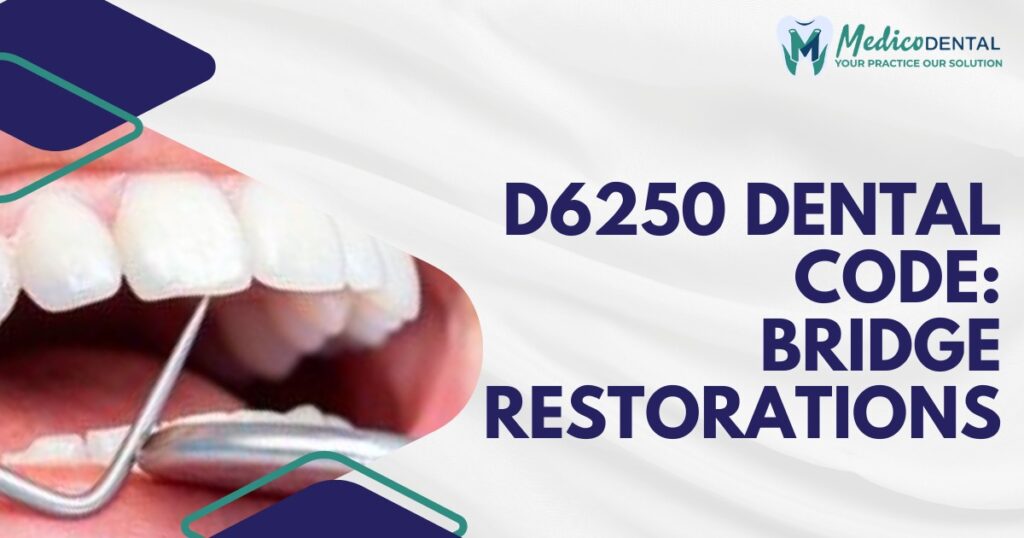
When it comes to dental treatments, bridge restorations play a crucial role in restoring a patient’s smile and improving oral function. The D6250 Dental Code specifically refers to a bridge restoration that includes the Pontic and Abutments and is essential for patients who are missing one or more teeth. The restoration helps bridge the gap and provides both functional and aesthetic benefits. If you’re someone who is exploring dental bridge options, understanding the D6250 code and its role in treatment can help guide your decision-making process.
What is the D6250 Dental Code?
The D6250 code refers to a specific dental restoration procedure for a bridge. It is a code used by dentists and insurance companies to describe a fixed partial denture that replaces one or more missing teeth. The D6250 code specifically applies to bridge restorations where the pontic (the artificial tooth) is fabricated using ceramic material and attached to the remaining natural teeth or dental implants (the abutments).
Understanding Bridge Restorations
A dental bridge is a prosthetic device used to replace one or more missing teeth. It’s anchored onto the natural teeth or implants on either side of the gap and spans the space left by the missing tooth. There are several types of dental bridges, but those covered under the D6250 code are typically made from ceramic materials, which offer a natural look and feel, ideal for patients concerned about aesthetics.
How does a Bridge Restoration Work?
The bridge restoration process involves several steps, from initial consultation and diagnosis to the final fitting of the bridge. Here’s an overview of how it works:
- Initial Consultation and Evaluation: During your visit, the dentist will evaluate your dental health and the condition of the surrounding teeth to determine if you are a good candidate for a bridge restoration.
- Preparation of Abutment Teeth: The abutment teeth, which are the natural teeth or implants adjacent to the gap, will be prepared by filing them down to fit the bridge. In some cases, a crown may be placed on the abutment teeth for extra strength and stability.
- Impressions: Once the abutment teeth are prepared, impressions are taken of your mouth to create a custom bridge. These impressions are sent to a dental lab, where the permanent bridge is crafted.
- Temporary Bridge: While the permanent bridge is being made, a temporary bridge is placed to protect your teeth and gums.
- Fitting the Permanent Bridge: After the lab finishes making the bridge, the dentist will place it and make adjustments for a proper fit. Once the bridge is securely in place, it will restore both function and aesthetics to your smile.
- Final Adjustments: After the bridge has been cemented, your dentist will make any necessary adjustments to ensure comfort and proper bite alignment.
Types of Dental Bridges Under the D6250 Code
Under the D6250 code, the bridge restorations typically fall into the ceramic category, which offers high durability, aesthetic appeal, and a natural-looking finish. Some common types of ceramic bridges include:
- Traditional Bridges: These are the most common type and involve creating a crown for the abutment teeth with a pontic in between.
- Cantilever Bridges: Used when there are natural teeth on only one side of the missing tooth.
- Maryland Bridges: These involve a metal or porcelain framework that attaches to the back of the abutment teeth.
Benefits of D6250 Bridge Restorations
- Improved Appearance: The ceramic material used for D6250 bridges mimics the look of natural teeth, making it ideal for those who want an aesthetically pleasing solution for missing teeth.
- Restored Functionality: A dental bridge allows you to chew and speak properly, eliminating the challenges posed by missing teeth.
- Durability: With proper care, ceramic bridges can last for many years. They are durable and can withstand the pressure of chewing.
- Prevents Tooth Shifting: Missing teeth can cause the remaining teeth to shift out of place. A bridge helps prevent this by filling in the gap and maintaining the alignment of surrounding teeth.
- Confidence Boost: A dental bridge restores the appearance of your smile and gives you the confidence to smile and speak freely without the fear of gaps.
Candidacy for D6250 Bridge Restorations
Patients who are suitable candidates for the D6250 bridge restoration typically meet the following criteria:
- Good oral health: The surrounding teeth must be healthy enough to support a bridge.
- Strong abutment teeth: The abutment teeth must be strong enough to anchor the bridge securely.
- No active gum disease: Any gum disease should be treated before proceeding with a dental bridge restoration.
- Desire for an aesthetic solution: If you are looking for a natural-looking restoration, ceramic bridges are an excellent choice.
Insurance and Reimbursement for D6250
When it comes to insurance, many dental plans will cover part or all of the cost of a D6250 bridge restoration. However, coverage can vary, so it’s important to check with your provider to understand what is included in your plan. The D6250 code is often used to categorize dental bridge procedures, making it easier for patients to know what to expect in terms of treatment and cost.
Potential Risks and Considerations
While dental bridge restorations are generally safe and effective, there are some considerations to keep in mind:
- Possible Damage to Abutment Teeth: In some cases, preparing the abutment teeth can weaken them, making them more vulnerable to decay or damage in the future.
- Bridge Failure: If not properly maintained, bridges can become loose or fall out. Regular dental checkups are essential to ensure the bridge remains secure.
Maintenance and Care for Your Bridge
To ensure your D6250 dental bridge lasts as long as possible, follow these tips for maintenance:
- Brush your teeth twice a day and floss regularly, especially around the bridge area.
- Avoid hard or sticky foods that can damage the bridge.
- Visit your dentist regularly for checkups and professional cleanings.
Conclusion
If you are missing teeth and are considering a dental bridge as a solution, D6250 bridge restorations provide an excellent option. Not only do they restore your ability to eat, speak, and smile confidently, but they also offer a natural aesthetic appearance. Whether you’re looking to restore a single tooth or multiple teeth, a ceramic bridge under the D6250 code is a highly effective, durable, and aesthetically pleasing option. Consult with your dentist to see if this treatment is right for you and take the first step toward restoring your smile today.