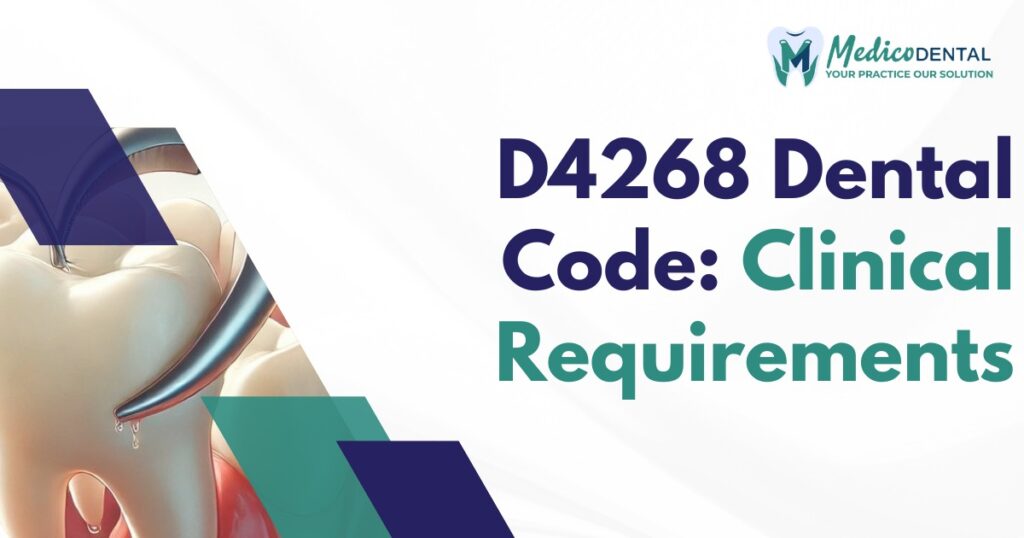
Dental coding is a critical aspect of modern dental practice, allowing accurate documentation, proper insurance claims, and effective communication between dental professionals and payers. Among the many codes in the American Dental Association’s (ADA) coding system, D4268 Dental Code plays a significant role in the treatment of periodontal conditions. Understanding the clinical requirements, procedural details, and documentation standards for D4268 is essential for dental practitioners, insurance coordinators, and anyone involved in dental billing.
Understanding D4268 Dental Code
D4268 Dental Code refers to a specific periodontal procedure that is recognized and standardized by the American Dental Association (ADA). This code is used primarily for the treatment of advanced periodontal disease and requires precise clinical evaluation to ensure appropriate use. It serves as a formal designation in dental billing systems, enabling dental offices to claim reimbursement from insurance providers for procedures that meet the defined criteria.
The ADA maintains and updates dental codes, ensuring uniformity and accuracy across dental practices nationwide. By adhering to these standardized codes, dentists can minimize errors, reduce claim denials, and maintain compliance with insurance regulations. D4268 Dental Code is especially important in periodontal care, where treatment planning and patient outcomes are closely monitored.
What Procedures Fall Under D4268
D4268 Dental Code is typically applied to specialized periodontal procedures, particularly those aimed at addressing moderate to severe periodontitis that cannot be managed with basic scaling and root planing alone. The clinical scenarios for this code often involve complex cases requiring meticulous surgical or non-surgical intervention to restore periodontal health.
This code is distinct from other periodontal procedures, such as D4210 or D4341, in that it may cover comprehensive procedures on multiple teeth or quadrants, involving advanced instrumentation or specific surgical techniques. Dentists use D4268 Dental Code when standard procedures are insufficient, and careful clinical judgment is required to ensure patient safety and treatment efficacy.
Clinical Requirements for D4268
Patient Evaluation and Diagnosis
Before any procedure billed under D4268 Dental Code can be performed, a thorough patient evaluation is necessary. This involves taking a detailed medical and dental history, identifying risk factors such as smoking or systemic conditions, and determining the severity of periodontal disease. Accurate diagnosis is the foundation for treatment planning and justifying the use of D4268 in billing.
Periodontal Charting and Assessment
Periodontal charting is a critical step in documenting the extent of periodontal disease. Dentists must record probing depths, attachment loss, bleeding on probing, and other clinical indicators to support the need for D4268 procedures. Proper assessment ensures that the treatment is targeted and meets the clinical requirements set by the ADA and insurance providers.
Pre-Procedure Preparations
Patients undergoing procedures covered by D4268 Dental Code often require pre-procedure preparations to optimize outcomes. This may include prophylactic cleaning, antibiotic coverage for patients with systemic conditions, and patient education about post-procedure care. Ensuring proper preparation reduces the risk of complications and improves the likelihood of successful treatment.
Procedure Steps and Techniques
The actual procedure under D4268 Dental Code involves meticulous techniques tailored to the patient’s periodontal condition. Depending on the case, this may include flap surgery, debridement, and localized antimicrobial treatment. Dentists must follow established clinical protocols, using precise instruments and techniques to achieve the desired therapeutic effect. Skillful execution is essential not only for patient health but also to meet insurance documentation standards.
Documentation and Compliance
Accurate documentation is a cornerstone of dental billing for D4268 Dental Code. Dental offices must maintain comprehensive patient records, including pre-procedure evaluations, periodontal charting, operative notes, and post-procedure follow-ups. These records serve as proof of medical necessity and ensure that insurance claims are processed without unnecessary delays.
Operative notes should detail the procedure steps, materials used, and any complications or modifications. Charting should reflect all clinical observations and interventions to justify the billing of D4268. Compliance with dental insurance policies is critical; improper documentation or coding errors can result in claim denials or audits. By maintaining thorough records, dental professionals demonstrate adherence to both clinical and administrative standards.
D4268 Billing Guidelines
Billing for D4268 Dental Code requires attention to detail to ensure claims are processed smoothly by insurance providers. Correct submission of claims begins with proper documentation of the procedure, including pre-procedure assessments, periodontal charting, and operative notes. Claims must clearly demonstrate the medical necessity of the treatment, the extent of periodontal involvement, and any specialized techniques employed during the procedure.
Common billing errors can lead to claim denials or delayed reimbursement. These errors include coding D4268 for procedures that do not meet its clinical criteria, failing to document pre-procedure evaluations, or submitting incomplete operative notes. Billing staff must also ensure that the number of quadrants or teeth treated aligns with what the insurance plan allows under this code.
Another consideration is the setting of care. Facility-based procedures, such as those performed in a hospital or surgical center, may have different billing requirements compared to non-facility settings like private dental offices. Understanding these distinctions helps ensure compliance with payer guidelines and avoids unnecessary denials or adjustments.
D4268 vs Related Dental Codes
Differences from D4260, D4270, and Other Periodontal Codes
D4268 Dental Code is often compared with other periodontal codes, such as D4260 and D4270, which also address scaling and root planing or periodontal surgical procedures. The key difference lies in the complexity and extent of the procedure. D4268 is typically used for advanced periodontal conditions where multiple teeth or quadrants require specialized care that goes beyond standard scaling or routine periodontal surgery.
While D4260 may cover a single quadrant with less severe disease and D4270 is used for osseous surgery on individual quadrants, D4268 represents a more comprehensive approach that may combine multiple procedural steps, making it appropriate only when these clinical requirements are met.
When to Use D4268 Instead of Alternative Codes
Dentists should choose D4268 Dental Code over other codes when the patient presents with widespread periodontal involvement that cannot be addressed through simpler procedures. Accurate code selection is critical not only for clinical justification but also for insurance reimbursement. Misuse of D4268 in place of D4260 or D4270 can result in claim rejection and compliance issues, highlighting the importance of careful evaluation and documentation.
Insurance and Reimbursement Considerations
Insurance coverage for D4268 Dental Code varies depending on the patient’s plan and the documented necessity of the procedure. Many dental insurance plans recognize this code for advanced periodontal treatment, but coverage may be limited to specific conditions or require prior authorization.
Several factors can affect reimbursement, including the documented severity of periodontal disease, the number of quadrants treated, patient history, and adherence to payer protocols. Providing detailed operative notes, pre-procedure assessments, and periodontal charting can significantly increase the likelihood of claim approval.
To optimize reimbursement, dental offices should submit claims with complete documentation, double-check coding for accuracy, and follow up with payers as needed. Educating patients about their coverage and potential out-of-pocket costs can also help prevent surprises and ensure a smoother treatment experience.
Patient Outcomes and Post-Procedure Care
Procedures billed under D4268 Dental Code are designed to improve periodontal health, prevent further disease progression, and enhance overall oral function. Recovery expectations vary depending on the complexity of the procedure and the patient’s overall health, but most patients can anticipate mild swelling, discomfort, or sensitivity for a few days following treatment.
Potential risks include infection, delayed healing, or temporary tooth sensitivity. Dentists must provide thorough post-procedure instructions, including oral hygiene guidance, the use of antimicrobial rinses, and any prescribed medications. Follow-up appointments are critical to monitor healing, assess treatment effectiveness, and make adjustments if necessary. Proper post-procedure care not only improves patient outcomes but also strengthens documentation for insurance and compliance purposes.
Conclusion
D4268 Dental Code represents a crucial element of periodontal care, bridging the gap between routine scaling procedures and more advanced surgical interventions. Understanding the clinical requirements, proper billing practices, and insurance considerations ensures that dental professionals provide effective treatment while maintaining compliance and maximizing reimbursement.
Accurate documentation, thoughtful code selection, and careful post-procedure follow-up are essential for success. By adhering to these guidelines, dentists and billing staff can deliver high-quality care, protect their practice financially, and enhance patient outcomes, all while using D4268 Dental Code responsibly and effectively.