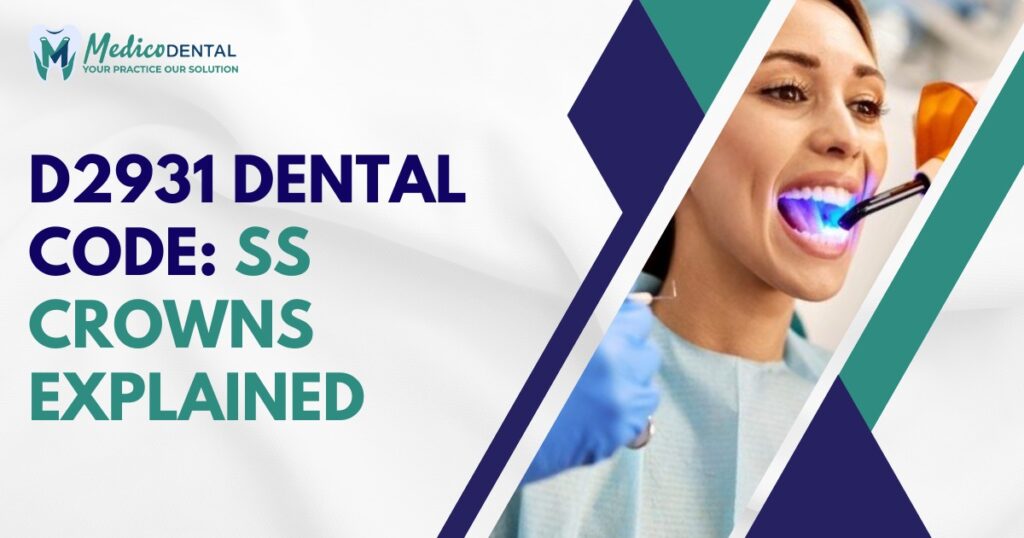
When you visit the dentist and undergo a procedure that involves dental crowns, there’s a specific dental code associated with the treatment that helps the dental office and insurance companies keep track of what’s being done. One such code is D2931, which refers to a specific type of crown called a stainless steel (SS) crown. Understanding this code, when it’s used, and why it’s commonly used in certain situations can help both patients and dental professionals make informed decisions about dental care.
In this guide, we’ll break down the D2931 Dental Code in simple terms, explain the importance of stainless steel crowns in dentistry, and dive into when and why this code is commonly used.
What the D2931 Dental Code Means in Simple Terms
In basic terms, D2931 is a dental procedure code that represents the placement of a stainless steel crown on a tooth. Stainless steel crowns are prefabricated caps that cover a decayed or damaged tooth. The D2931 code is used by dentists when they decide to use this particular type of crown for either children or adult patients under specific conditions.
Stainless steel crowns are made of metal and are typically used as a more affordable and durable option compared to porcelain or ceramic crowns. Their primary purpose is to restore a tooth’s function and protect it from further damage.
Why Stainless Steel Crowns (SS Crowns) Are Commonly Used in Dentistry
Stainless steel crowns are a staple in dentistry for several reasons:
-
Durability: Stainless steel is tough and durable, making it a reliable choice for restoring teeth that need long-term protection from chewing forces.
-
Cost-Effective: They are more affordable than other crown options like porcelain or ceramic crowns.
-
Quick and Easy: Stainless steel crowns are pre-made and don’t require custom molding, which makes the procedure quicker compared to other crown types.
-
Versatility: SS crowns are especially useful in situations where long-term durability is needed, such as in pediatric dentistry, where children are more likely to face issues like tooth decay or broken teeth.
This combination of strength, cost-effectiveness, and ease of application is why SS crowns are commonly used, particularly in pediatric dentistry.
Who This Guide Is For: Patients, Parents, and Dental Professionals
This guide is intended for anyone seeking a deeper understanding of the D2931 Dental Code. Whether you’re a patient curious about the specifics of a dental procedure, a parent wondering about the types of crowns used for children’s teeth, or a dental professional looking for a reference on D2931, this guide will help you understand when and why this dental code is used.
What Is the D2931 Dental Code?
Official ADA Definition of D2931
The American Dental Association (ADA) defines D2931 as “Stainless Steel Crown—Primary Tooth.” This dental code is specifically used to describe a stainless steel crown that is placed on a primary (baby) tooth to restore it after damage or decay.
Breakdown of the Code: What It Covers and What It Doesn’t
The D2931 code is limited to the use of stainless steel crowns for primary teeth. These crowns are often placed on teeth that are too damaged to be restored with other dental treatments like fillings. The code does not cover crowns for permanent adult teeth, which have separate codes like D2740 for porcelain crowns or D2790 for full cast metal crowns.
The D2931 code specifically refers to crowns made of stainless steel and does not include other materials like porcelain, composite, or zirconia crowns.
When Dentists Typically Use the D2931 Dental Code
Dentists use the D2931 code primarily in cases where primary teeth need restorative treatment. Primary teeth, or baby teeth, are temporary and eventually fall out as children grow. The D2931 code comes into play when these teeth are damaged or decayed and need a durable and cost-effective solution. It is particularly common in pediatric dentistry, where kids are more prone to cavities and tooth damage.
What Are Stainless Steel (SS) Crowns?
What SS Crowns Are Made Of
Stainless steel crowns are made from a strong, durable alloy of steel, chromium, nickel, and other materials. The metal composition ensures that the crown can withstand the pressure from chewing while protecting the underlying tooth. While not as aesthetically pleasing as porcelain crowns, stainless steel crowns are effective in restoring the function and health of a tooth.
How Stainless Steel Crowns Differ from Other Dental Crowns
SS crowns differ from other types of crowns mainly in terms of material. Other crown materials, like porcelain, ceramic, and porcelain-fused-to-metal (PFM), are designed to blend in with the natural color of teeth, making them ideal for visible areas of the mouth. However, these crowns can be more expensive and might not offer the same durability for molars or teeth that experience significant wear.
Stainless steel crowns are primarily used in the back teeth where aesthetics are less of a concern, and durability is the priority. They are also much more affordable than porcelain or ceramic crowns, making them a popular choice for children who need temporary restorations that will fall out once their adult teeth come in.
Why SS Crowns Are Widely Used in Pediatric and Restorative Dentistry
Stainless steel crowns are widely used in pediatric dentistry because they provide a long-lasting solution for children with extensive tooth decay or damage. Given that children’s teeth are more susceptible to cavities, SS crowns offer an efficient, low-cost solution that prevents further damage and helps maintain the tooth until it naturally falls out.
SS crowns are also a great option for restorative dentistry, where the primary goal is to restore a tooth’s function without worrying about aesthetics.
When Is the D2931 Dental Code Used?
Common Clinical Situations Requiring SS Crowns
The D2931 dental code is often used in the following clinical situations:
-
Severely Decayed Teeth: When a tooth is too damaged by decay to be restored with a filling, a stainless steel crown is a great option to restore function.
-
Teeth After Pulpotomy or Pulpectomy: These are procedures performed when the pulp of the tooth is damaged. SS crowns are used to seal the tooth and prevent further infection.
-
High-Risk Cavities in Children: For children who are prone to cavities, SS crowns are often used to protect the tooth and maintain its function until the permanent tooth erupts.
D2931 Dental Code in Pediatric Dentistry
In pediatric dentistry, SS crowns are often used for children who have primary (baby) teeth with severe decay. These crowns are quick and easy to place, and they last for several years. They also help avoid the need for more complex procedures in the future.
The durability of stainless steel crowns ensures that children can continue eating and speaking normally, and the crowns can handle the wear and tear of daily use. This makes them an ideal choice for kids’ teeth, which are more vulnerable to cavities due to habits like frequent snacking and sugary drinks.
D2931 Dental Code for Adult Patients
While the D2931 code is primarily used for children’s teeth, there are limited but valid adult use cases. For example, SS crowns may be used for temporary restorations or in cases where aesthetic concerns are minimal, such as molars that will be covered by other dental procedures later.
D2931 vs Other Dental Crown Codes
How D2931 Compares to Other Codes
Here’s how D2931 stacks up against other dental crown codes:
-
D2740 (Porcelain Crown): A porcelain crown is typically used for teeth that are visible when smiling, offering a more natural appearance.
-
D2750 (Porcelain-Fused-to-Metal Crown): This type combines the strength of metal with the aesthetics of porcelain, and is often used for molars or visible teeth.
-
D2790 (Full Cast Metal Crown): This is a metal crown that is fully cast, ideal for teeth that endure heavy chewing forces, but it’s more noticeable than porcelain crowns.
Why Dentists Choose D2931 Over Other Codes
-
Cost Considerations: Stainless steel crowns are significantly cheaper than porcelain and porcelain-fused-to-metal crowns, making them a cost-effective choice for many patients, especially children.
-
Tooth Location and Function: SS crowns are ideal for teeth in the back of the mouth (molars) that need protection and can endure more pressure without concern for aesthetics.
-
Patient Age and Oral Health: For children with primary teeth, SS crowns provide a solution that helps maintain tooth function and health while waiting for the permanent tooth.
Cost of D2931 Dental Code (SS Crown)
Average Cost with and without Insurance
The cost of a D2931 dental procedure can vary based on location, dentist, and whether you have dental insurance. Typically, the cost ranges from $200 to $700 per crown. If you have insurance, the cost may be partially covered, though you will likely need to pay a portion of the bill out of pocket.
Regional Cost Variations
Costs can vary widely depending on where you live. For example, dental procedures in large metropolitan areas tend to be more expensive than in rural regions. The quality of the dental office, the experience of the dentist, and local demand all contribute to the pricing.
Factors That Influence Pricing
-
Location: Dental costs differ between states and regions.
-
Dentist’s Expertise: A more experienced dentist might charge a higher fee for the procedure.
-
Insurance: Whether the procedure is covered and the specifics of your insurance plan can greatly affect the out-of-pocket costs.
Is D2931 Covered by Dental Insurance?
Typical Insurance Coverage Policies
Many dental insurance plans cover stainless steel crowns, especially for children’s primary teeth. Coverage typically includes a significant portion of the cost, but out-of-pocket costs may still apply.
Frequency Limitations
Insurance companies often have restrictions on how frequently SS crowns can be placed. They may only cover one crown per year, or they might have restrictions based on age or specific dental needs. Always check with your insurer to understand your plan’s coverage.
How the D2931 Dental Procedure Works
The D2931 dental procedure, which refers to the placement of a stainless steel (SS) crown on a primary tooth, is a common and effective treatment used to restore a tooth that has been severely damaged or decayed. It is primarily used in pediatric dentistry, but can also be used for adults under certain circumstances. In this section, we’ll walk you through how the procedure works, what to expect during your visit, and how long the procedure typically takes.
Step-by-Step Explanation of Placing an SS Crown
-
Initial Examination:
Before placing the crown, the dentist will conduct a thorough examination of the tooth to assess the extent of the damage or decay. X-rays may be taken to get a better view of the tooth and surrounding structures. -
Tooth Preparation:
The decayed part of the tooth will be removed. If necessary, the dentist may perform a procedure like a pulpotomy (removing the infected pulp) or pulpectomy (removing all pulp material) if the decay has reached the pulp. -
Fitting the Crown:
Stainless steel crowns are pre-made and come in various sizes. Once the tooth is prepared, the dentist will choose the appropriate size crown and place it over the tooth to ensure it fits snugly. The dentist may trim the crown slightly to make sure it fits correctly. -
Cementing the Crown:
Once the crown fits properly, the dentist will apply a special dental cement to bond the crown to the tooth. The cement hardens quickly, securing the crown in place. -
Final Adjustments:
The dentist will check the fit and bite of the crown to ensure it doesn’t interfere with the patient’s ability to chew or speak. Any final adjustments will be made.
What Patients Can Expect During the Visit
The entire procedure typically takes 30 to 60 minutes. For children, the visit may feel like a routine dental check-up, and parents should prepare their child for the sounds and sensations associated with dental procedures.
If you’re an adult receiving an SS crown, the process will feel fairly straightforward as well, but be prepared for the tooth to be shaped and cleaned thoroughly before the crown is placed.
Time Required for the Procedure
As mentioned, the placement of a D2931 SS crown usually takes about 30 to 60 minutes. In most cases, the procedure is completed in a single visit, which makes it an efficient way to restore a tooth.
Does the D2931 Procedure Hurt?
Pain Management and Anesthesia
Most patients experience minimal discomfort during the D2931 procedure, thanks to modern pain management techniques. For children, the dentist will likely apply a local anesthetic to numb the area around the tooth to prevent pain during the procedure. For adults, the same local anesthetic is typically used, ensuring a painless experience during the tooth preparation and crown placement process.
If the tooth being treated is particularly sensitive or if a pulpotomy or pulpectomy is required, your dentist may offer additional numbing or sedation options.
Post-Procedure Comfort
Once the procedure is complete, there may be some mild discomfort as the anesthesia wears off, but it should not be painful. Over-the-counter pain relievers, such as ibuprofen or acetaminophen, can help manage any lingering soreness.
Most patients are able to return to their regular activities immediately after the procedure. Children may feel some mild discomfort, but they usually adjust quickly to their new crown.
Benefits of Using the D2931 Dental Code
Durability and Strength
One of the primary benefits of stainless steel crowns is their durability. Stainless steel is strong enough to withstand the pressure of chewing and grinding, making it ideal for restoring back teeth (molars). These crowns are particularly useful for children, whose baby teeth often experience more wear and tear than adult teeth.
Cost-Effectiveness
Stainless steel crowns are typically more cost-effective than other crown options like porcelain or ceramic crowns. They provide a budget-friendly solution to restoring a tooth’s function without sacrificing strength or durability. This makes them an excellent choice for families looking to manage dental expenses, especially when multiple crowns are needed for a child.
Protection for Weakened Teeth
SS crowns offer comprehensive protection for teeth that are severely decayed or damaged. Once the crown is placed, it completely encapsulates the tooth, providing a barrier that prevents further decay and damage. This is especially important for children, whose teeth are still developing and more prone to further issues if not properly protected.
Pros and Cons of Stainless Steel Crowns
Advantages vs. Limitations
Advantages:
-
Long-lasting: Stainless steel crowns are highly durable and can last for several years.
-
Quick and easy application: Unlike custom-made crowns, SS crowns come pre-fabricated and are easy to fit in one appointment.
-
Affordable: They are a more affordable option compared to porcelain or ceramic crowns.
-
Ideal for molars: The strength of stainless steel makes them the best option for back teeth that endure heavy chewing forces.
Limitations:
-
Aesthetics: Stainless steel crowns are metal-colored and are not as visually pleasing as porcelain crowns, which can be a concern for adults or children who have visible teeth affected.
-
Temporary solution for primary teeth: Stainless steel crowns are typically used for primary (baby) teeth, which eventually fall out, so they are not a long-term solution for adult teeth.
Aftercare and Longevity of SS Crowns (D2931)
How Long SS Crowns Last
A stainless steel crown can last anywhere from 5 to 10 years, depending on factors such as the location of the crown, the patient’s oral hygiene habits, and how much wear the crown experiences. For children, the crown usually stays in place until the primary tooth falls out and is replaced by a permanent tooth.
Oral Hygiene Tips
To maintain the longevity of your SS crown, it’s important to follow good oral hygiene practices:
- Brush your teeth twice a day using a fluoride toothpaste.
- Floss around the crown daily to prevent plaque buildup.
- Avoid chewing hard foods or objects (like ice or hard candy) that could potentially damage the crown.
Regular dental check-ups are essential to monitor the condition of the crown and ensure there is no decay around the edges of the crown.
When Replacement May Be Needed
If the SS crown becomes loose or shows signs of damage (such as cracks or wear), it may need to be replaced. If the tooth underneath the crown develops decay, the crown may need to be removed and replaced with a new one.
D2931 Dental Code Billing and Documentation Tips
How Dentists Submit D2931 Claims
When submitting a claim for the D2931 procedure, dentists must include accurate documentation of the procedure performed, including the patient’s diagnosis, treatment plan, and any necessary X-rays or photos. The use of D2931 should be clearly noted to ensure proper reimbursement.
Common Billing Errors to Avoid
-
Incorrect tooth numbering: Ensure that the correct tooth number is listed.
-
Failure to provide supporting documentation: Including X-rays or dental notes can help avoid claim denials.
-
Using the wrong code: Double-check that D2931 is the correct coding for stainless steel crowns, as other crowns require different codes.
Tips for Smoother Insurance Approval
- Verify coverage before the procedure to ensure that your plan covers SS crowns.
- Submit detailed documentation to support the claim, including the reason for the crown and any treatments leading up to it.
- Be aware of frequency limitations: Some plans may limit how often SS crowns can be placed.
Conclusion
Key Takeaways for Patients and Parents
The D2931 dental code represents the placement of a stainless steel crown on a primary tooth, which is a common and effective treatment for restoring damaged or decayed teeth in children. These crowns offer strength, durability, and cost-effectiveness, making them an excellent option for pediatric dentistry.
When to Discuss SS Crowns with Your Dentist
If your child is experiencing severe decay or damage to their primary teeth, discuss the option of a stainless steel crown with your dentist. For adult patients, SS crowns may be a temporary solution in specific cases.
Encouragement to Verify Coverage and Treatment Options
Before proceeding with the treatment, it’s always a good idea to verify your dental insurance coverage to ensure that the D2931 procedure is covered, and to understand any potential out-of-pocket costs.
FAQs
What Does D2931 Mean on My Dental Bill?
Ans. If you see D2931 on your dental bill, it means that a stainless steel crown was placed on a primary tooth, likely due to decay or damage.
Is D2931 a Permanent Crown?
Ans. No, D2931 refers to a stainless steel crown, which is typically used for primary (baby) teeth. These crowns are considered temporary because they will eventually be replaced by permanent adult teeth.
Can SS Crowns Fall Off?
Ans. While SS crowns are durable, they can sometimes come loose if they were not properly cemented or if the tooth underneath the crown has decayed. If your crown falls off, contact your dentist for advice on how to proceed.
Is D2931 Safe for Children?
Ans. Yes, D2931 is safe for children. Stainless steel crowns are commonly used in pediatric dentistry to restore decayed or damaged teeth in children, offering a safe and effective solution.