The D6095 dental code is a specific code used in the field of dentistry to describe procedures related to the repair of implant abutments. This code is part of the Current Dental Terminology (CDT) system, a coding system developed by the American Dental Association (ADA) to standardize dental procedures for billing, documentation, and insurance purposes.
Implants have revolutionized restorative dentistry, providing patients with a reliable and long-lasting solution to missing teeth. However, like all dental treatments, implants may require maintenance or repair over time. The D6095 code is essential for documenting and billing repairs to implant abutments, a critical component of implant-supported prostheses. Understanding the purpose and applications of D6095 is crucial for both dental professionals and patients, as it ensures proper treatment protocols are followed and that services are accurately billed.
What is D6095 Dental Code?
Detailed Explanation of the Code
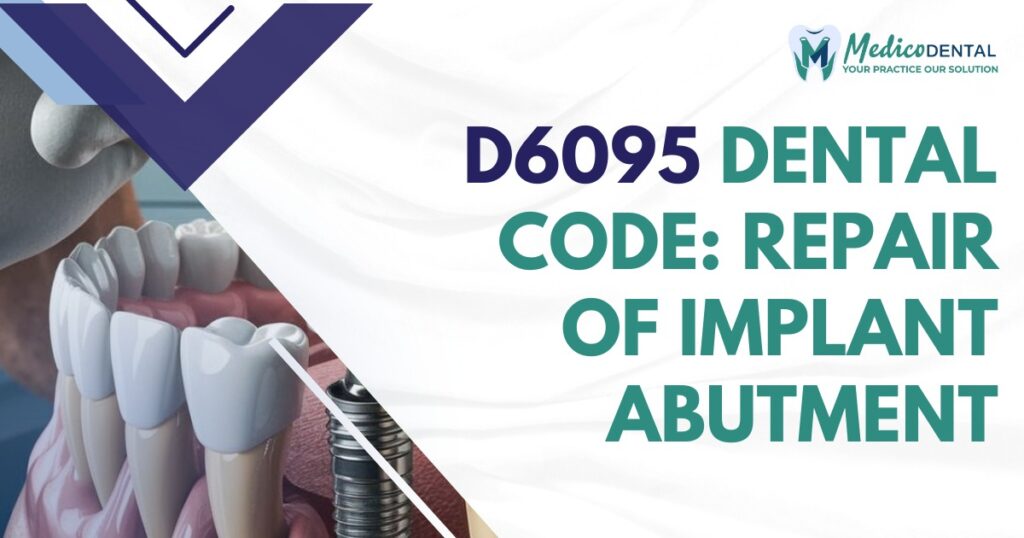
The D6095 dental code is used specifically for the repair of an implant abutment. An implant abutment is the connector between the dental implant (which is placed into the jawbone) and the crown (the visible part of the tooth). If an abutment becomes damaged, worn out, or needs modification, D6095 is used to describe the procedure for its repair. This repair could involve various tasks, including but not limited to, adjusting the abutment’s fit, restoring its function, or replacing it entirely with a new one.
It’s important to note that D6095 does not cover the insertion of a new implant or abutment, but strictly refers to the repair or adjustment of an existing one. When an abutment repair is needed, the code is used to properly document and bill the procedure.
When and Why It’s Used
The D6095 code is applied when an implant abutment, which is typically made of materials like titanium, zirconia, or other biocompatible materials, has failed or become damaged. This could occur due to factors like mechanical wear, fracture, loosening, or misalignment. In such cases, the repair ensures the implant system continues to function effectively and maintain the health of the surrounding tissues.
For example, if a patient’s crown is not fitting properly or has become loose because the abutment has shifted, a dentist would use D6095 to document the repair process, which could involve re-tightening or adjusting the abutment to restore proper function.
The Repair of Implant Abutment: A Breakdown
Understanding Implant Abutments
An implant abutment is a key element in a dental implant system. It connects the dental implant (the post inserted into the jawbone) to the prosthetic crown that replaces the missing tooth. Abutments come in various shapes, sizes, and materials to suit different clinical situations and patient needs. In most cases, the abutment is designed to be permanent, but just like any other dental restoration, it may encounter problems over time due to normal wear and tear, poor fitting, or fractures.
The Role of D6095 in Abutment Repair
When an implant abutment fails or requires modification, the D6095 code comes into play. Dentists will use this code when they perform repairs such as:
-
Re-tightening loose abutments: Over time, the screws or connections that hold the abutment in place can loosen due to normal chewing and biting forces. Re-tightening ensures a secure fit.
-
Replacing a broken or damaged abutment: If an abutment fractures or becomes damaged beyond repair, it may need to be replaced entirely.
-
Re-aligning misaligned abutments: Sometimes, an abutment may shift slightly out of alignment. Adjustments can restore its original position to ensure a proper fit.
In all these cases, the D6095 code is used to document that the dentist has performed a repair to the abutment, rather than replacing it entirely.
Indications for Using D6095 Dental Code
Situations Requiring Abutment Repair
There are various scenarios in which D6095 would be used to repair an implant abutment. The following are some of the most common situations:
-
Abutment loosening: The abutment may become loose due to wear, improper seating, or insufficient torque during initial placement. This may lead to a loose crown or discomfort for the patient. D6095 is used when the abutment is re-tightened or replaced.
-
Fractured abutment: While abutments are designed to be durable, they can break or fracture under extreme pressure or trauma. A fractured abutment needs to be replaced or repaired, with the procedure billed under D6095.
-
Wear and tear: Over time, abutments may undergo wear from everyday use. If the abutment shows signs of deterioration, such as corrosion or excessive wear, it may need to be repaired or replaced to prevent further complications.
-
Implant failure: In rare cases, the implant itself may fail, and the abutment must be adjusted or repaired to maintain the prosthesis while the underlying issues are addressed.
Common Issues Addressed by D6095
The most common issues addressed by D6095 include:
-
Loosening or misalignment of the abutment
-
Abutment screw failure or fracture
-
Cosmetic concerns, such as the appearance of the abutment after wear or damage
-
Functional issues, such as problems with the crown fitting onto the abutment
Procedure for Repairing an Implant Abutment
Step-by-Step Guide to the Repair Process
The repair of an implant abutment typically involves several key steps, which vary depending on the nature of the problem. Below is a general guide to the repair process:
-
Initial Consultation and Examination: The dentist will begin by thoroughly examining the implant site, taking X-rays if necessary to assess the condition of the abutment, implant, and surrounding tissues.
-
Assessment and Diagnosis: The dentist will determine whether the abutment is loose, damaged, or misaligned. If the abutment is loose, the dentist will likely check the screw and seating. If it’s damaged, they will evaluate the extent of the damage and whether a replacement is necessary.
-
Preparation of the Site: If the abutment needs to be removed or replaced, the dentist will use special tools to remove the abutment without disturbing the surrounding tissues or the implant itself.
-
Repair or Replacement: In the case of a loose abutment, the dentist may simply tighten the screws and ensure proper alignment. For damaged or fractured abutments, the dentist may replace the component or restore it using specialized techniques.
-
Reattachment and Adjustment: After the abutment is repaired or replaced, the dentist will reattach the crown to the abutment and make any necessary adjustments to ensure a proper fit and function.
-
Post-Repair Care: After the procedure, the dentist will provide the patient with instructions on how to care for the repaired abutment and schedule any follow-up visits if necessary.
Tools and Materials Used
The tools and materials required for repairing an implant abutment typically include:
- Torque wrenches to ensure the abutment is tightened to the correct specifications
- Abutment screws (in cases where screws need to be replaced)
- Dental instruments such as extraction tools, picks, and tweezers for precise removal and placement of the abutment
- X-ray equipment to assess the implant site and surrounding structures
By following these steps, the dentist can effectively repair or replace an implant abutment, restoring both function and aesthetics to the patient’s implant-supported prosthesis.
Benefits of Using D6095 Dental Code
Advantages for Patients and Dentists
The D6095 dental code is used to describe the repair of a dental implant abutment. This procedure involves the adjustment, repair, or replacement of the abutment part of an implant, which connects the dental implant to the crown or prosthesis. This code is essential because it enables dentists to address issues with existing implants while maintaining the function and aesthetic appeal of the patient’s smile.
For patients, the benefits of using the D6095 code are significant. Since implant failures are rare but possible due to wear and tear, damage, or misalignment, being able to repair an existing implant abutment rather than replacing the entire implant offers several advantages:
-
Cost Savings: Repairing an abutment is typically less expensive than replacing an entire implant system. This reduces the financial burden on patients, making dental care more accessible.
-
Minimized Discomfort and Recovery Time: Replacing the entire implant system would require a more invasive procedure and a longer recovery period. With the D6095 code, only the abutment needs repair, allowing patients to avoid a lengthy recovery and minimize discomfort.
-
Preservation of Implant Longevity: Repairing the abutment instead of removing the entire implant ensures that the original implant remains functional, extending its life and protecting the underlying bone structure.
For dentists, using the D6095 code to perform an abutment repair helps with efficient resource utilization. The code enables practitioners to provide high-quality, cost-effective solutions for their patients. By having the right coding in place, dentists also ensure that insurance claims are processed correctly, reducing the potential for disputes or denied claims. Additionally, repairs via D6095 ensure that dentists maintain patient satisfaction by addressing issues promptly without unnecessary procedures.
Impact on Treatment Outcomes
Using the D6095 code to repair the implant abutment leads to positive treatment outcomes, including:
-
Improved Functionality: A repaired abutment restores the proper fit between the implant and the prosthetic, ensuring better function, such as improved chewing efficiency and better stability.
-
Aesthetic Preservation: Since only the abutment is repaired rather than replacing the entire system, the overall appearance of the implant remains intact. The patient’s smile and the aesthetics of the dental restoration are preserved.
-
Reduced Risk of Further Complications: By addressing issues early through repair, the risk of more serious complications (such as implant failure or bone loss) is minimized. This is especially important for maintaining the health of surrounding tissues and the integrity of the implant.
How to Bill for D6095 Dental Code
Insurance and Billing Considerations
Billing for the D6095 code requires a clear understanding of the procedures involved and the correct coding practices. It’s essential for dental practices to follow insurance guidelines to ensure claims are processed correctly. Here’s a step-by-step approach to billing for the D6095 code:
-
Confirm the Need for the Procedure: Before proceeding with the repair, ensure that the patient’s implant is eligible for repair under the D6095 code, and that no more complex procedures, like full replacement, are required.
-
Submit Proper Documentation: Ensure the patient’s dental record reflects the need for abutment repair. Detailed documentation should include the reason for the repair, such as damage or wear, as well as any diagnostic images, like X-rays, to support the procedure.
-
Check Insurance Coverage: Different insurance providers may have varying policies on covering implant-related services. Be sure to confirm whether the patient’s insurance covers the D6095 code, and verify if there are any specific limitations or requirements for coverage.
Common Billing Mistakes to Avoid
When billing for D6095, there are several common mistakes that dental offices should avoid:
-
Incorrect Code Use: Always ensure that the D6095 code is used specifically for abutment repair and not for other implant procedures, such as implant placement or complete abutment replacement.
-
Insufficient Documentation: Failing to document the need for the abutment repair can lead to claim denials. Detailed clinical notes, X-rays, and a clear explanation of the procedure are necessary.
-
Assuming Insurance Coverage: Not all insurance plans cover implant procedures, especially for repairs. Double-check with the insurance provider to confirm if the D6095 procedure is covered under the patient’s plan.
-
Not Obtaining Pre-Authorization: Some insurance plans may require pre-authorization for implant-related services, including abutment repairs. Ensure pre-authorization is obtained to avoid billing issues later.
Conclusion
Recap of D6095’s Role in Implant Abutment Repair
The D6095 dental code is an essential tool in modern dental practice, offering a practical solution for repairing damaged or worn implant abutments. This procedure allows dentists to extend the life of existing implants, provide cost-effective care, and achieve better outcomes for patients.
Final Thoughts on Its Use in Dental Practice
The D6095 code is a crucial part of the dental implant workflow, offering significant advantages for both patients and dental professionals. By facilitating a less invasive, more affordable, and efficient repair process, this code helps ensure that implant patients can maintain their oral health and aesthetics without unnecessary complications. Dentists should be aware of the proper billing and documentation practices to avoid errors and ensure successful insurance claims. With the growing popularity of dental implants, understanding and using the D6095 code appropriately will continue to benefit patients and practices alike.
FAQs
What is the D6095 dental code used for?
Ans. The D6095 code is used to describe the repair of a dental implant abutment. This involves fixing or adjusting the abutment that connects the implant to the crown or prosthetic.
Does D6095 apply to the full replacement of an implant abutment?
Ans. No, the D6095 code is specifically for repairs, not replacements. If an abutment needs to be entirely replaced, a different code may apply.
Will my insurance cover D6095 for an implant repair?
Ans. Coverage varies depending on the insurance provider and plan. Some plans may cover abutment repairs under certain conditions, while others may not. It’s best to verify with the insurance company before proceeding.
How long does it take to perform an abutment repair using D6095?
Ans. The time required for the procedure can vary based on the complexity of the repair, but it generally takes less time than a full implant replacement, typically around 30-60 minutes.
Is the D6095 procedure painful?
Ans. The procedure is minimally invasive and typically causes less discomfort than full implant replacements. Most patients experience only mild discomfort afterward, which can be managed with over-the-counter pain medications.