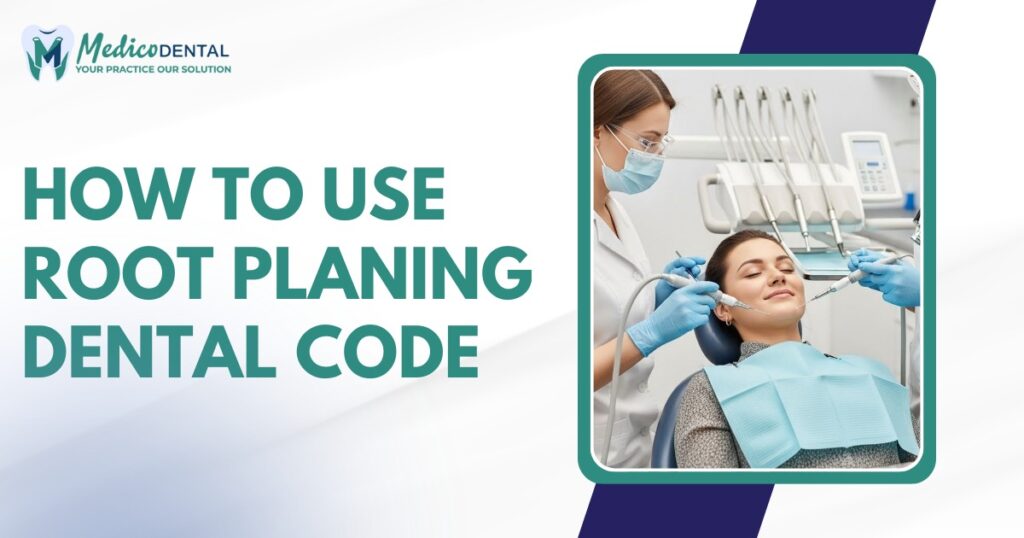
Root planing is a crucial procedure in the treatment of periodontal disease, often used to clean the root surfaces of teeth affected by plaque and calculus build-up. Just like any other dental procedure, root planing requires precise documentation and coding for accurate billing, insurance claims, and clinical records. For dental professionals, understanding the Root Planing Dental Code is vital for ensuring that treatments are appropriately recorded and reimbursed. This guide delves into the importance of root planing, the specific dental codes associated with it, and best practices for accurate coding.
Overview of Root Planing in Dentistry
What Root Planing Is and Why It’s Essential for Periodontal Health
Root planing is a deep cleaning technique performed to remove plaque, tartar (calculus), and bacteria from the roots of teeth below the gumline. This procedure smooths the surfaces of the roots to prevent bacteria from reattaching, promoting healthy gums and teeth. Root planing is often done as part of periodontal therapy to treat gum disease or inflammation.
Root planing is essential for periodontal health because it helps:
-
Remove hardened plaque (calculus) that can cause gum inflammation and infection.
-
Prevent further progression of gum disease (periodontitis).
-
Allow the gums to heal and reattach to the teeth.
In cases of moderate to severe gum disease, root planing can be an effective way to control infection and restore the health of the gums and supporting structures of the teeth.
The Role of Proper Coding in Dental Procedures
Dental procedures, including root planing, require proper coding for accurate billing and insurance claims. The correct use of dental codes ensures that treatments are well-documented, insurance companies process claims correctly, and dental practices receive reimbursement for the services they provide.
The Root Planing Dental Code plays a significant role in ensuring that root planing procedures are coded properly, avoiding claim denials or underpayment. It is essential for dental professionals to be familiar with these codes to maintain the financial health of their practice and ensure patients receive the coverage they need.
Importance of Understanding Root Planing Dental Code
For dental professionals, understanding the root planing dental code is crucial for several reasons:
-
Accurate Billing: Proper coding helps ensure that the procedure is billed correctly and in accordance with the treatment provided.
-
Insurance Reimbursement: Insurance companies rely on accurate coding to process claims and determine coverage. Incorrect coding can result in claim rejections or underpayments.
-
Clinical Documentation: The use of proper codes ensures that the root planing procedure is documented appropriately in the patient’s records, which is important for future treatments and patient history.
What is Root Planing and Why is it Done?
Definition of Root Planing
Root planing is a non-surgical procedure in which a dental professional removes plaque, tartar, and bacteria from the root surfaces of teeth. The goal is to smooth the tooth roots, allowing the gums to heal and reattach to the teeth, reducing inflammation and improving overall oral health.
When is Root Planing Necessary?
Root planing is typically necessary when a patient exhibits signs of periodontal disease, such as gum bleeding, pocket formation between the teeth and gums, or deep calculus build-up. The procedure is often recommended when a patient:
-
Has gum disease (gingivitis or periodontitis) that has advanced beyond basic cleaning.
-
Shows signs of calculus build-up below the gumline that cannot be removed with regular scaling.
-
Experiences gum recession, which exposes more of the tooth root and can lead to sensitivity or tooth loss.
Root planing is an essential part of non-surgical periodontal therapy, helping to halt the progression of periodontal disease and improve gum health.
Difference Between Root Planing and Scaling
While scaling and root planing are often performed together, they are distinct procedures:
-
Scaling: The process of removing plaque and tartar (calculus) from the tooth surface, usually above the gumline. It is typically part of a regular cleaning.
-
Root Planing: A deeper procedure that targets the surfaces of the roots beneath the gumline. It involves smoothing the root surfaces to help the gums reattach to the teeth and prevent further bacterial growth.
In simple terms, scaling addresses the visible surface of the teeth, while root planing focuses on the root areas, where gum disease is more often present.
Root Planing Dental Code: An Overview
What is the Root Planing Dental Code?
The Root Planing Dental Code is a set of standardized codes used to categorize and document root planing procedures. These codes are part of the Current Dental Terminology (CDT) system developed by the American Dental Association (ADA) and are used by dental professionals for accurate billing and insurance claims. The most common codes for root planing are:
-
D4341: Periodontal scaling and root planing, per quadrant.
-
D4342: Periodontal scaling and root planing, one to three teeth per quadrant.
These codes allow dental professionals to document the procedure accurately and communicate effectively with insurance providers.
Why Accurate Coding Matters for Root Planing
Correct coding for root planing is essential for:
-
Insurance Claims: Accurate codes ensure that insurance companies can process claims without issues, reducing the chances of rejections or delays in reimbursement.
-
Proper Documentation: Using the right codes ensures that the procedure is documented in the patient’s records, which is important for tracking treatment progress and providing future care.
-
Maximizing Reimbursement: Correctly coded procedures can help dental practices receive appropriate payment for the services they provide.
Common Dental Codes for Root Planing
Root Planing and Scaling Codes (e.g., D4341, D4342)
The most frequently used codes for root planing are:
-
D4341: This code is used for periodontal scaling and root planing in a quadrant when more extensive cleaning is needed (e.g., for moderate to severe periodontal disease).
-
D4342: This code is used for periodontal scaling and root planing when only one to three teeth in a quadrant require treatment (e.g., for mild cases of gum disease).
These codes are used based on the number of teeth involved in the procedure. A quadrant-based code (D4341) is used when a large area of the gums requires treatment, while D4342 is used when only a few teeth are affected in a quadrant.
Differences Between Codes for Quadrant and Full Mouth Planing
-
Quadrant Codes: For patients with localized periodontal disease, root planing may only be necessary in one or two quadrants of the mouth. In these cases, the appropriate code would be D4341 or D4342, depending on the number of teeth treated.
-
Full Mouth Planing: For patients with more widespread periodontal disease, full-mouth scaling and root planing may be required. The codes used for this procedure are often based on quadrants, but a dentist may need to submit multiple claims for treatment across different quadrants or provide documentation for the entire mouth.
How to Use Root Planing Dental Code Correctly
Step-by-Step Process for Coding Root Planing
-
Assess the Patient’s Condition: Determine the severity of the periodontal disease (mild, moderate, or severe). This will influence whether the procedure is done on one or more quadrants and whether it requires a full-mouth approach.
-
Select the Correct Code:
-
Use D4341 for scaling and root planing of a quadrant (for more severe cases).
-
Use D4342 for scaling and root planing of one to three teeth in a quadrant (for milder cases).
-
-
Document the Procedure: Ensure that the details of the procedure (number of quadrants treated, severity of periodontal disease) are properly recorded in the patient’s clinical notes.
-
Submit the Code for Reimbursement: When billing insurance, use the correct code(s) based on the quadrant(s) treated and the severity of the condition.
How to Code for Root Planing Based on Patient Condition
-
Mild Periodontal Disease: If a patient only has mild signs of gum disease, root planing may be required on a single quadrant, so D4342 would be appropriate.
-
Moderate to Severe Periodontal Disease: For more extensive cases, where multiple quadrants require treatment, D4341 should be used. If the entire mouth requires scaling and root planing, the codes for each quadrant will need to be used to represent the entire treatment.
Billing and Coding for Root Planing: Best Practices
Understanding the Billing Process for Root Planing
The billing process for root planing starts with selecting the correct dental code based on the patient’s condition and the extent of the treatment required. Accurate coding is crucial not only for maintaining proper clinical documentation but also for ensuring the procedure is reimbursed correctly.
Here’s an overview of how to properly bill for root planing:
-
Evaluate the Condition: Determine the severity of the periodontal disease. Is it localized, requiring one quadrant to be treated, or is it more extensive, requiring multiple quadrants or even a full-mouth approach?
-
Assign the Correct Code:
-
D4341: For full quadrant root planing (more severe cases).
-
D4342: For treatment of one to three teeth in a quadrant (milder cases).
-
-
Document the Procedure: Ensure that you clearly note the number of quadrants treated and whether additional procedures were required. Accurate clinical records will support your billing and insurance claims.
-
Submit the Insurance Claim: Once the correct code is assigned, submit the claim to the insurance company with all supporting documentation. This includes the treatment notes, a summary of services provided, and, if applicable, preauthorization documents.
Common Errors in Root Planing Coding and How to Avoid Them
Billing errors can result in claim rejections or delays in payment. Some common mistakes to avoid include:
-
Incorrect Use of Codes:
-
Mixing up D4341 (quadrant-based) and D4342 (one-to-three teeth-based) is a frequent issue. Ensure you are using the right code based on the number of teeth treated.
-
-
Failure to Separate Quadrant-Based Codes:
-
If multiple quadrants are treated, submit each quadrant separately using the appropriate codes. A full-mouth scaling and root planing procedure may require multiple claims depending on insurance policies.
-
-
Underbilling or Overbilling:
-
Underbilling might result in underpayment, while overbilling can lead to insurance fraud accusations or claims denials. Always ensure the procedure documented matches the treatment provided.
-
Tips for Avoiding Mistakes:
-
Review Clinical Notes Carefully: Ensure the number of teeth treated and the areas affected are accurately reflected in the patient’s chart.
-
Verify with Insurance: Before submitting claims, double-check the insurance company’s requirements for coding root planing procedures.
-
Use Code Lookup Tools: To avoid errors, make use of available Current Dental Terminology (CDT) lookup tools, which help confirm the correct codes for specific procedures.
Root Planing Dental Code and Insurance Reimbursement
How Root Planing Dental Code Affects Insurance Claims
The root planing procedure is typically covered under periodontal services in many dental insurance plans. However, accurate coding is crucial to ensure proper reimbursement. Insurance companies rely on the dental codes to determine whether the treatment was covered under the patient’s plan.
In some cases, insurance companies may require preauthorization or detailed treatment documentation for more expensive or extensive procedures like full-mouth root planing.
Insurance reimbursement for root planing depends on:
-
Correct Code Use: Using D4341 and D4342 ensures the insurer can correctly identify the type and scope of treatment provided.
-
Justification of Need: If the treatment is for advanced periodontal disease, you may need to submit additional supporting documentation or diagnostic images, such as X-rays, to demonstrate the severity of the condition.
-
Insurance Plan Limitations: Some insurance plans have limits on how often root planing can be covered, such as allowing it only once every few years or requiring patients to pay a portion of the costs.
Maximizing Reimbursement for Root Planing Procedures
To ensure that you are reimbursed correctly and fully for root planing, here are some strategies:
-
Submit Preauthorization Requests: If you anticipate that a root planing procedure may exceed the patient’s insurance coverage limits or if it involves multiple quadrants, submitting a preauthorization request can help secure payment upfront.
-
Provide Detailed Documentation: Including comprehensive treatment notes, periodontal charting, and X-rays can help justify the need for the procedure and prevent claim denials.
-
Use Multiple Claims for Full Mouth Treatment: If root planing is required for the entire mouth, submit individual claims for each quadrant treated. Many insurance plans reimburse based on the quadrant, not the entire mouth, so multiple claims may be necessary.
-
Stay Updated on Coverage Limits: Check the patient’s benefits before starting treatment. Ensure you are aware of any frequency limitations or coverage caps on periodontal treatments.
Advanced Root Planing and Periodontal Procedures: Additional Codes
Root Planing with Additional Periodontal Treatments
In some cases, root planing is combined with other periodontal treatments, such as pocket reduction surgery or soft tissue grafting. These additional procedures are coded separately and require different CDT codes.
Common codes for additional periodontal treatments include:
-
D4260: Osseous surgery (pocket reduction).
-
D4270: Soft tissue grafting for recession.
-
D4265: Biologic materials used in periodontal regeneration.
These codes are used when a more advanced treatment plan is necessary to address extensive periodontal issues in addition to root planing. It’s important to differentiate between these procedures to avoid coding errors and ensure accurate billing.
When to Use Additional Codes for Complex Cases
For complex cases that require root planing and additional procedures, the following guidelines should be followed:
-
Assess the Extent of the Disease: If the patient has deep pockets or extensive bone loss, additional procedures may be required. For example, pocket reduction surgery may be necessary if the pockets are too deep for root planing to be effective.
-
Use the Correct Codes: Assign the appropriate codes for both the scaling/root planing and the additional surgical treatments.
-
Communicate with the Insurance: Provide documentation explaining why additional procedures are needed, as they may have separate requirements for approval and reimbursement.
Updates and Changes to Root Planing Dental Code
Recent Updates in Root Planing Coding
As with other areas of healthcare, dental coding is periodically updated to reflect new treatments and advancements. Recent updates in root planing codes include refinements to existing codes to better represent the scope of treatment. For example:
-
New codes were introduced to reflect the combination of root planing with additional surgical procedures like osseous surgery or soft tissue grafting.
-
Periodontal maintenance codes were clarified to reflect ongoing care following root planing procedures.
How to Stay Updated on Root Planing Dental Code Changes
Staying current with the latest dental coding changes is essential to avoid mistakes and ensure proper reimbursement. To stay informed:
-
Consult the ADA’s CDT Manual: The ADA regularly publishes updates and changes to the Current Dental Terminology (CDT) codes, which include root planing procedures.
-
Use Coding Software: Many dental practices use coding software that integrates the latest CDT updates, making it easier to find and apply the most recent codes.
-
Attend Professional Development Seminars: Many dental associations offer seminars or webinars that focus on coding, billing, and reimbursement to help professionals stay on top of any changes.
Conclusion
Summary of Key Points for Root Planing Dental Code
-
Root planing is a critical procedure for treating periodontal disease, and proper dental coding is essential for accurate billing and reimbursement.
-
D4341 and D4342 are the key codes used for root planing, depending on the severity of the condition and the number of quadrants treated.
-
Accurate billing ensures that dental practices can receive appropriate reimbursement for root planing procedures, which is critical for maintaining business efficiency.
-
Avoiding common coding errors and submitting comprehensive documentation can help prevent claim rejections and maximize insurance reimbursement.
Final Thoughts on Root Planing and Insurance Coding
Mastering the root planing dental code is essential for every dental professional involved in periodontal care. Correct coding not only ensures that treatments are reimbursed accurately but also helps streamline the billing process and maintain effective clinical documentation. By following best practices for billing, staying updated on coding changes, and understanding insurance requirements, dental professionals can enhance their practice’s financial health while providing the best care to their patients.