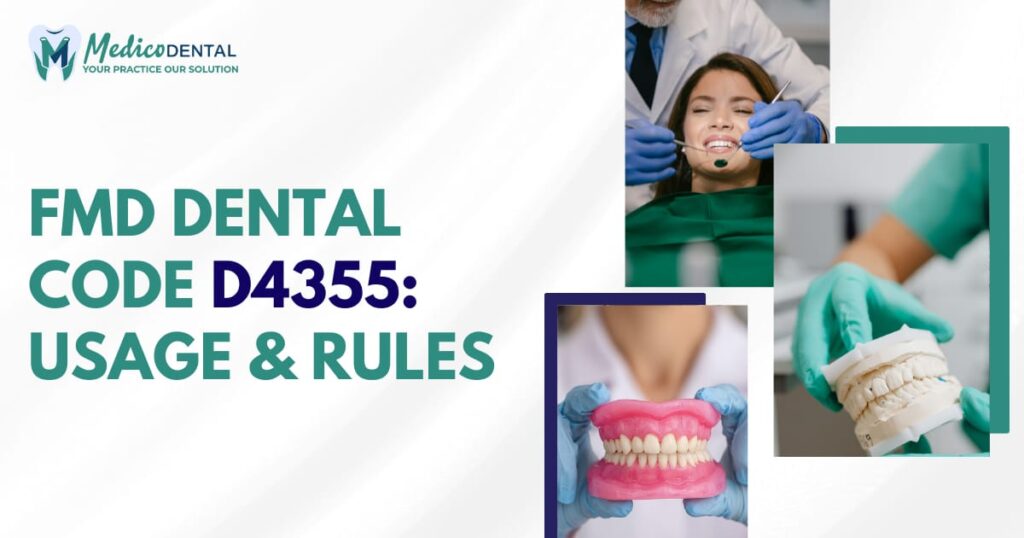
FMD Dental Code D4355 is an important code within the field of periodontics, specifically related to periodontal maintenance and treatment of patients with significant periodontal disease. Understanding the details of this code, when to apply it, and how to document and bill correctly is essential for dental professionals seeking to provide accurate care while ensuring proper reimbursement.
What is FMD Dental Code D4355?
FMD Dental Code D4355 is used to describe “full-mouth debridement to enable comprehensive evaluation and diagnosis,” a periodontal procedure aimed at removing plaque, tartar, and other debris from the teeth and gums to facilitate a more thorough examination of the patient’s oral health. The code is typically used when a patient’s periodontal condition is so severe that it obstructs the dentist’s ability to conduct a full evaluation or diagnosis of periodontal disease.
This debridement is often performed on patients with advanced gum disease (periodontitis) where conventional cleaning is insufficient to allow for an accurate examination. D4355 provides a pathway to remove obstructing material and evaluate the extent of damage more effectively.
Importance of FMD Dental Code D4355 in Periodontal Procedures
FMD Dental Code D4355 plays a crucial role in enabling proper diagnosis and treatment planning for patients with heavy plaque and tartar buildup. It’s particularly important in cases where the periodontal condition may have progressed to the point where traditional diagnostic procedures are challenging, or the clinician cannot assess the full extent of the disease due to excessive debris.
By using this code, dental professionals ensure that the appropriate cleaning procedures are performed before continuing with any further diagnostic or treatment steps. This is not just for the health of the patient, but also for billing and insurance purposes to ensure that all stages of the treatment are covered and properly documented.
Understanding FMD Dental Code D4355: A Closer Look at Its Purpose
What Does FMD Dental Code D4355 Cover?
FMD Dental Code D4355 covers the process of full-mouth debridement, which is the removal of plaque, calculus (tartar), and debris from both above and below the gumline of the teeth. This procedure is specifically done to clear the dental surfaces in a way that allows for a comprehensive examination of the underlying periodontal tissues, which would otherwise be obscured by heavy buildup.
Unlike a routine cleaning (prophylaxis), which focuses on removing minimal plaque and tartar, D4355 addresses more severe cases of dental neglect or existing periodontal disease. The full-mouth debridement procedure often requires more time and resources than standard cleanings and is critical for patients whose condition requires a deeper and more thorough intervention.
Key Procedures and Treatments Associated with FMD Dental Code D4355
Some procedures and treatments commonly associated with D4355 include:
-
Initial Scaling and Root Planing: Often performed after the debridement to smooth out the root surfaces and help remove any remaining infected tissue.
-
Comprehensive Periodontal Evaluation: Following the debridement, a more thorough evaluation of the patient’s gums, bone level, and overall periodontal health is conducted.
-
X-rays and Imaging: After debridement, X-rays may be necessary to assess the bone structure, look for signs of advanced disease, and determine the next steps in treatment.
-
Periodontal Maintenance: Patients who have undergone D4355 may require ongoing periodontal maintenance (using codes such as D4910) to manage their disease and prevent it from progressing.
How FMD Dental Code D4355 Relates to Other Periodontal Codes
FMD Dental Code D4355 is closely linked to other periodontal procedures, including:
-
D4341 and D4342 (Scaling and Root Planing): These codes are used for the deep cleaning of the gums, typically after debridement, to remove bacterial buildup and smooth the surfaces of the roots.
-
D4910 (Periodontal Maintenance): Following the full-mouth debridement and scaling, ongoing periodontal maintenance is necessary to monitor and maintain the health of the gums and teeth.
Understanding the relationship between D4355 and these other codes helps dental professionals provide comprehensive care and ensures that all treatments are properly coded for insurance and billing purposes.
When to Use FMD Dental Code D4355
Appropriate Conditions for Billing FMD Dental Code D4355
FMD Dental Code D4355 should be used when a patient presents with excessive buildup of plaque and tartar that is obstructing the dentist’s ability to conduct a comprehensive periodontal examination. It is appropriate in the following scenarios:
-
Advanced Periodontal Disease: When a patient has not received proper periodontal care and there is heavy accumulation of plaque and calculus, preventing a clear diagnosis.
-
Severe Gingivitis or Periodontitis: In cases of severe gum disease where the buildup has led to visible inflammation or significant damage.
-
Poor Oral Hygiene: When a patient has failed to maintain regular cleanings or has neglected oral health, leading to difficult-to-remove deposits.
Indications for FMD Dental Code D4355 in Periodontal Maintenance
FMD Dental Code D4355 is typically used in conjunction with other periodontal procedures, and not as a standalone treatment. It should be part of a comprehensive treatment plan for patients who have not received regular professional cleanings, particularly those with signs of periodontal disease that necessitate more intensive care.
-
Initial Cleanings for New Patients: If a patient has not been seen for a long time and presents with heavy debris, D4355 is often used as an initial step.
-
Following Initial Treatment for Severe Periodontal Disease: After scaling and root planing (D4341/D4342), a full-mouth debridement may be necessary if there is excessive tartar remaining.
How to Determine If FMD Dental Code D4355 Is the Right Code for Your Procedure
Before using D4355, ensure that the patient’s condition matches the criteria for full-mouth debridement. It is not a routine cleaning, so it’s essential to evaluate:
-
The extent of plaque, tartar, or debris buildup.
-
The patient’s periodontal condition, including visible signs of gum disease or difficulty in assessing the health of the gums.
-
Any underlying medical conditions that might contribute to more severe periodontal issues (e.g., diabetes, smoking).
Rules and Guidelines for Using FMD Dental Code D4355
Official Rules for FMD Dental Code D4355 Billing
The American Dental Association (ADA) and insurance companies have specific guidelines for billing FMD Dental Code D4355. Here are the key rules:
-
Eligibility for Billing: D4355 is billable only when the patient’s periodontal condition requires full-mouth debridement for diagnostic purposes. It cannot be used for routine cleanings.
-
Frequency Limitations: This code is typically used once per year per patient, unless there are exceptional circumstances that warrant more frequent debridement.
-
Time Requirements: Full-mouth debridement often takes longer than a standard cleaning. Ensure that the time spent is accurately documented for insurance purposes.
Documentation Requirements for FMD Dental Code D4355
To ensure proper billing for FMD Dental Code D4355:
-
Document the patient’s periodontal condition and the specific reason for needing full-mouth debridement.
-
Include details about any scaling or root planing that was performed as part of the procedure.
-
Record the duration of the treatment to demonstrate that it meets the time requirements set by insurance payers.
Common Pitfalls to Avoid When Using FMD Dental Code D4355
-
Using D4355 for Routine Cleanings: This code should not be used for regular prophylaxis or cleanings in patients without significant periodontal issues.
-
Insufficient Documentation: Without proper documentation linking the procedure to a clear need for debridement, insurance claims may be denied.
-
Misunderstanding Frequency Limits: Be aware of how often D4355 can be billed and avoid submitting claims too frequently.
How FMD Dental Code D4355 Affects Dental Practice and Billing
FMD Dental Code D4355 and Insurance Reimbursement
Proper use of D4355 ensures appropriate reimbursement, especially in cases where periodontal disease or excessive buildup prevents a full evaluation. Insurers typically reimburse for this procedure when the patient’s condition justifies the need for a comprehensive evaluation.
How Proper Use of FMD Dental Code D4355 Can Streamline Your Billing Process
By correctly using D4355, dental offices can streamline their billing and ensure that each step of the periodontal treatment process is properly documented. Accurate use of this code avoids claim denials, reduces administrative work, and improves cash flow by ensuring that all services provided are reimbursed appropriately.
Impact of Accurate FMD Dental Code D4355 Usage on Practice Revenue
Accurate billing of D4355 ensures that your practice is reimbursed for the complex procedures performed. By documenting the procedure thoroughly and following payer guidelines, you can improve the revenue cycle, reduce denials, and ensure timely payments.
Modifiers and Adjustments for FMD Dental Code D4355
How to Use Modifiers with FMD Dental Code D4355
Modifiers can be used with FMD Dental Code D4355 to indicate additional complexities or circumstances. For example:
-
Modifier 25: Used if the full-mouth debridement is performed alongside other services in a single visit.
-
Modifier 59: Used if the procedure is distinct or separate from other treatments performed on the same day.
Common Modifiers That Pair with FMD Dental Code D4355
-
Modifier 22: Indicates an unusually complex or lengthy procedure, if the debridement required more time than usual.
-
Modifier 51: Indicates that multiple procedures were performed during the same visit.
Adjusting Billing for Complex Cases Involving FMD Dental Code D4355
For more complicated cases involving severe periodontal disease or additional treatments, it is crucial to adjust billing accordingly using modifiers to ensure that the extra services are accounted for and reimbursed.
FMD Dental Code D4355 plays a crucial role in the billing and treatment of patients with significant periodontal disease. This code covers full-mouth debridement procedures that allow for comprehensive evaluations and diagnoses, especially when excessive plaque and tartar buildup prevent proper assessment. Understanding the best practices for documentation, frequency limitations, reimbursement strategies, common billing errors, and payer-specific requirements is essential for streamlining your practice’s billing process, ensuring compliance, and maximizing revenue.
Best Practices for Billing FMD Dental Code D4355
Tips for Accurate Documentation When Using FMD Dental Code D4355
Accurate documentation is key to ensuring that FMD Dental Code D4355 is billed correctly and reimbursement is received without issues. Follow these tips to ensure your documentation is thorough:
-
Clear Patient Diagnosis: Include detailed patient history and current diagnosis of periodontal disease. Be sure to document the severity of the plaque and tartar buildup and the necessity for a full-mouth debridement to enable further diagnosis.
-
Specific Procedure Notes: Specify that a full-mouth debridement was performed, highlighting how it differed from routine prophylaxis or scaling procedures. Record the method used for debridement (manual scaling, ultrasonic cleaning, etc.).
-
Time Spent on Procedure: Ensure that you record the exact time spent performing the procedure. This can help justify the complexity and length of the treatment, especially if you are required to bill multiple units.
-
Post-Procedure Assessment: Document any subsequent examination or findings after the debridement, such as the presence of significant periodontal pockets or signs of advanced disease, which would require further treatments.
How to Ensure Compliance with FMD Dental Code D4355 Billing Guidelines
To stay compliant with the guidelines for FMD Dental Code D4355:
-
Follow Payer-Specific Guidelines: Different insurance carriers may have specific requirements for billing this code. Familiarize yourself with these guidelines by consulting payer manuals or speaking with representatives to ensure you are following their instructions.
-
Adhere to Frequency Limits: FMD Dental Code D4355 can only be used once a year, except in extraordinary circumstances. Overuse or improper billing frequency could lead to denials.
-
Code Correctly: Ensure that you use the appropriate procedure code in conjunction with D4355. For example, if scaling and root planing (D4341 or D4342) are performed, they should be properly coded along with the debridement.
Avoiding Errors in FMD Dental Code D4355 Submission
To avoid errors when submitting claims for FMD Dental Code D4355, take the following precautions:
-
Verify the Need for Full-Mouth Debridement: Ensure that full-mouth debridement is medically necessary. It should only be used when a patient’s condition prevents a complete periodontal examination due to severe plaque or calculus buildup.
-
Document the Procedure Thoroughly: Inadequate documentation is a common reason for claim denials. Be specific about the procedure performed, the patient’s condition, and any follow-up treatments or evaluations.
-
Check for Frequency Limits: As mentioned, FMD Dental Code D4355 can generally be billed once per year. Billing it more frequently than allowed could lead to claim rejections or audits.
FMD Dental Code D4355: Frequency and Limitations
How Often Can FMD Dental Code D4355 Be Billed?
FMD Dental Code D4355 is subject to specific frequency limitations:
-
Once Per Year: Typically, D4355 can only be billed once within a 12-month period for a given patient. This limitation is due to the nature of the procedure, which is used to address severe cases of periodontal disease that require substantial intervention.
-
Exceptional Cases: In some instances, insurance may allow the procedure to be performed more than once a year if there are specific, medically justifiable circumstances. However, these cases should be well-documented to avoid claim denials.
Restrictions and Limits on Using FMD Dental Code D4355
The primary restrictions on using FMD Dental Code D4355 include:
-
Not for Routine Cleanings: This code is not appropriate for routine dental cleanings. It should only be used when there is substantial plaque and tartar buildup that requires full-mouth debridement to facilitate an accurate periodontal evaluation.
-
Not Used for Minor Periodontal Issues: If a patient has only mild gingivitis or minor plaque buildup, this code is not applicable. It is reserved for more severe periodontal cases.
What to Do When a Procedure Does Not Qualify for FMD Dental Code D4355
If a patient’s condition does not meet the criteria for FMD Dental Code D4355:
-
Use Alternative Codes: Consider using other appropriate periodontal or prophylaxis codes, such as D1110 (adult prophylaxis) or D4341/D4342 (scaling and root planing).
-
Document the Reason for the Different Code: When using an alternative code, ensure your documentation reflects why D4355 is not applicable, and provide details on the procedure performed instead.
How to Maximize Reimbursement with FMD Dental Code D4355
Maximizing Insurance Reimbursement with FMD Dental Code D4355
To maximize reimbursement for FMD Dental Code D4355:
-
Pre-Authorization: Some insurance carriers may require pre-authorization for full-mouth debridement. Always check with the insurer to confirm coverage before proceeding.
-
Detailed Documentation: Proper documentation is vital to ensure full reimbursement. Describe the patient’s condition, the necessity of the procedure, and the time spent. This will help justify the medical need for the treatment.
-
Proper Use of Modifiers: If the procedure is more complex than usual, use modifiers (e.g., Modifier 22 for an unusually complex procedure) to ensure proper reimbursement for the extended time or complexity involved.
Strategies for Submitting Successful Claims with FMD Dental Code D4355
-
Ensure Correct Coding: Double-check that the correct procedure code is being used, along with the appropriate supporting codes. For instance, if scaling or root planing is performed after the debridement, be sure to include D4341 or D4342.
-
Track All Documentation: Keep comprehensive records for each patient, including their diagnosis, treatment plan, time spent, and follow-up care. This ensures that claims can be substantiated if they are questioned.
-
Confirm Billing Frequency: Since D4355 can generally only be billed once per year, carefully track the date of the last debridement to ensure compliance with frequency rules.
Understanding Payer-Specific Requirements for FMD Dental Code D4355
Different insurance companies may have varying requirements for billing FMD Dental Code D4355. Be sure to:
-
Review Each Payer’s Policy: Always check the insurance provider’s policies on full-mouth debridement and periodontal procedures. Some payers may have additional guidelines or limitations.
-
Know Payer-Specific Modifiers: Some insurers may have specific modifiers or billing codes that need to be used with D4355. Familiarize yourself with these and ensure they are applied correctly.
Common Errors and How to Avoid Them When Using FMD Dental Code D4355
Top Billing Mistakes with FMD Dental Code D4355
Some of the most common billing mistakes with FMD Dental Code D4355 include:
-
Using D4355 for Routine Cleanings: This code is only for severe periodontal conditions and should not be used for routine cleanings or minor gingivitis.
-
Inaccurate Documentation: Failing to provide sufficient documentation about the patient’s condition, the procedure performed, and the necessity for the treatment can lead to claim denials.
-
Overuse of D4355: Billing the code more than once per year or for a condition that does not require full-mouth debridement can result in rejected claims.
How to Correct Errors in FMD Dental Code D4355 Submissions
-
File Adjustments: If a claim for D4355 is rejected or denied, submit an adjustment with additional documentation clarifying the necessity of the procedure.
-
Appeal Denied Claims: In cases where claims are denied, consider appealing with more detailed documentation or additional supporting evidence to prove that the procedure was medically necessary.
Tips for Staying Up-to-Date with Changes to FMD Dental Code D4355
-
Review the ADA Updates: Stay informed on the latest updates from the American Dental Association (ADA) regarding procedure codes and guidelines.
-
Monitor Insurance Carrier Policies: Since insurance companies frequently update their coverage policies, regularly review payer updates to avoid mistakes and ensure compliance with the latest billing standards.
Conclusion
To effectively use FMD Dental Code D4355, ensure that:
-
You are only applying it when medically necessary, such as for patients with advanced periodontal disease.
-
Documentation is clear, thorough, and includes all the required details for proper billing.
-
You stay up-to-date with payer-specific guidelines and changes to the code.
Mastering the use of FMD Dental Code D4355 will help streamline your billing process, reduce claim denials, and maximize reimbursement. By adhering to best practices for documentation, staying compliant with frequency limitations, and understanding the nuances of payer-specific requirements, you can ensure that your dental practice remains efficient and profitable.
FAQs
What is the Difference Between FMD Dental Code D4355 and Other Periodontal Codes?
Ans. FMD Dental Code D4355 is specific to full-mouth debridement for patients with severe plaque buildup. Other periodontal codes like D4341 or D4342 (scaling and root planing) are used for less severe cases, typically targeting one quadrant of the mouth.
Can FMD Dental Code D4355 Be Used for Pediatric Patients?
Ans. FMD Dental Code D4355 is generally used for adult patients with significant periodontal disease. For pediatric patients, other periodontal codes may apply based on the severity of the condition.
Is FMD Dental Code D4355 Covered by All Insurances?
Ans. Not all insurance plans cover full-mouth debridement under D4355. Coverage depends on the patient’s condition and the insurance provider’s policy. Always verify coverage before performing the procedure.
What Should I Do if My Claim for FMD Dental Code D4355 Is Denied?
Ans. If your claim for D4355 is denied, review the reason for the denial. Submit additional documentation, such as a detailed treatment plan and evidence of the patient’s condition, to support the necessity of the procedure.