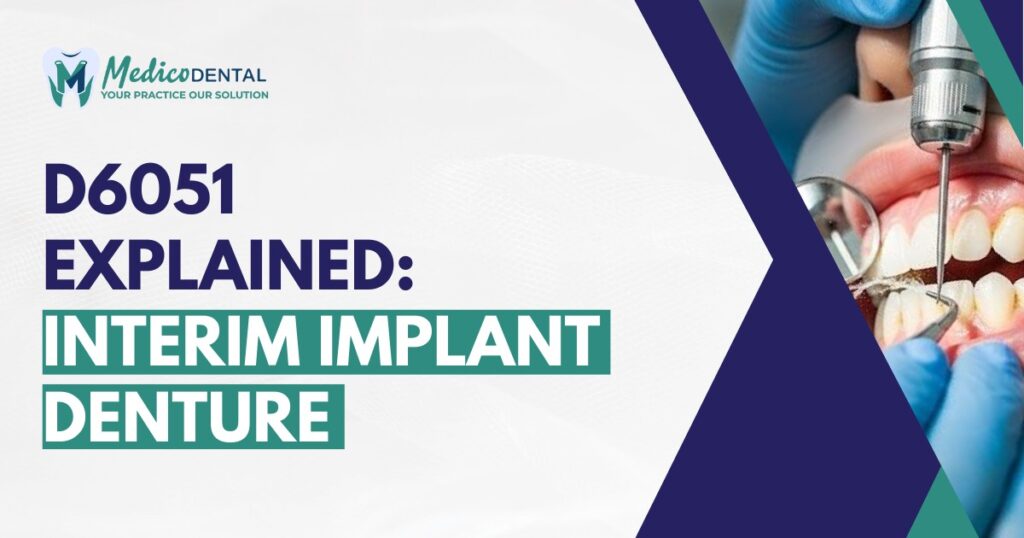
The D6051 dental code is part of the dental prosthodontic classification, specifically related to interim implant dentures. It is used to describe temporary dentures provided to patients who are awaiting the placement of a permanent implant restoration. Understanding the D6051 dental code is crucial for ensuring correct billing and proper use within dental practice.
Importance of Understanding the D6051 dental code in Dental Billing
Correctly using the D6051 dental code ensures accurate dental billing and helps avoid errors that can lead to delayed or denied insurance claims. Understanding this code is essential for dental professionals who handle billing, as it directly impacts reimbursement and patient care.
What is the D6051 Dental Code?
Definition and Explanation of the Code
The D6051 dental code refers to an “Interim Implant Denture,” which is a temporary prosthetic used for patients with missing teeth in the implant process. This temporary solution serves as a placeholder while the final implant restoration is being created. The code specifically covers dentures that are used temporarily but are an essential part of the patient’s treatment plan during the implant process.
Classification and Its Place Within Dental Prosthodontics
The D6051 dental code falls under the prosthodontics category in dental coding. It is used when a patient receives a temporary denture that is supported by implants. This temporary prosthetic ensures functionality and aesthetics while waiting for the final permanent denture or implant to be placed.
When is the D6051 dental code Used?
Indications for Using the D6051 dental code
The D6051 dental code is used when a patient needs a temporary denture while awaiting the placement of a permanent implant supported restoration. This is typically applied in cases where a patient has undergone implant surgery but requires a temporary solution to restore function and appearance during the healing process.
Specific Cases and Conditions Where the Code Applies
The D6051 dental code is applied in scenarios where the implant site is healing or when the final restoration is not yet ready. It is crucial in maintaining the patient’s oral health and comfort during this interim period, ensuring the teeth function properly until the permanent solution is in place.
Differences Between Interim Implant Denture and Permanent Dentures
Explanation of Interim vs. Permanent Dentures
Interim dentures are temporary solutions provided to patients between the time of implant placement and the final prosthetic restoration. These dentures are not meant to last long and are used only as placeholders. Permanent dentures, on the other hand, are the final restoration, designed to provide long term functionality and aesthetic appeal.
Importance of Interim Dentures in the Treatment Process
Interim dentures play a significant role in patient care by offering a functional and aesthetic solution during the healing period. They help maintain the appearance of the smile and provide the patient with the ability to eat and speak comfortably, while the permanent implant restoration is being finalized.
Common Procedures Associated with D6051
Examples of Treatments or Procedures Linked to the D6051 dental code
Common procedures associated with the D6051 dental code include the fabrication of the temporary denture, adjustments during the healing process, and the placement of the denture once the implants are stable enough to support the prosthetic. These temporary dentures are designed to fit securely on the implant abutments and ensure the patient’s comfort.
How Interim Dentures Are Fabricated and Placed
Interim dentures are typically fabricated using lightweight materials to ensure comfort during the healing process. The placement involves securely attaching the denture to the implant abutments, ensuring it fits properly to restore the patient’s ability to speak and eat without discomfort. Adjustments may be made during follow up visits to accommodate changes in the implant site as healing progresses.
D6051 vs Other Implant Codes
Comparison with Other Related Dental Codes (e.g., D6010, D6050)
The D6051 dental code is specifically for interim implant dentures, while other codes like D6010 and D6050 are used for different stages or types of implant restorations. D6010 typically refers to the placement of a dental implant, and D6050 is used for the fabrication and placement of the final implant supported prosthetic. The key difference lies in the temporary nature of the D6051 dental code, in contrast to the more permanent solutions covered by other codes.
Key Differences and Similarities
The D6051 dental code is unique in that it specifically deals with temporary dentures used while the implant site is healing. The other implant codes generally refer to procedures related to the placement of the implants themselves or the final restoration. Understanding the distinctions between these codes is important for accurate billing and patient care.
Billing and Insurance Considerations for D6051
How to Correctly Bill for the D6051 dental code
When billing for the D6051 dental code, it is important to ensure that all supporting documentation, including the patient’s treatment plan and any other relevant information, is included. The correct use of the D6051 dental code will help prevent denials and ensure that the temporary denture is reimbursed appropriately.
Common Insurance Issues and Tips for Smooth Processing
Insurance companies may question the need for a temporary denture or its classification as a necessary part of the treatment process. It is important to clearly explain why the interim denture is required and how it fits into the overall treatment plan for the implant restoration. Providing proper documentation can help ensure that claims are processed smoothly.
Challenges in Using the D6051 dental code
Potential Issues When Applying the D6051 dental code
One common issue is confusion about the temporary nature of the prosthetic. Dental professionals may sometimes mistakenly use the code for a permanent restoration, leading to billing errors. It’s essential to accurately classify the procedure as interim to avoid issues with the insurance company or patients.
Best Practices to Avoid Billing Errors or Denials
To avoid billing errors, always double check that the patient is receiving a temporary denture and that it is part of a treatment plan for implant restoration. Providing clear, detailed notes and having proper documentation of the treatment process can help mitigate any potential issues with the use of the D6051 dental code.dental prosthodontic classification, specifically related to interim implant
Conclusion
The D6051 dental code is crucial for dental professionals working with interim implant dentures. It ensures proper dental billing and insurance processing for temporary dentures used during the implant process. Understanding when and how to use this code is essential to maintaining accuracy in patient care and treatment planning.
By properly applying the D6051 dental code, dental professionals can ensure that patients receive the appropriate care while avoiding billing mistakes. It’s important to remain knowledgeable about the distinctions between interim and permanent dentures and to follow best practices for billing and documentation.
FAQs
What is the purpose of the D6051 dental code?
Ans. The D6051 dental code is used for interim implant dentures, which are temporary prosthetics provided while the permanent implant restoration is being prepared.
Can the D6051 dental code be used for permanent dentures?
Ans. No, the D6051 dental code is strictly for temporary dentures. Permanent restorations are covered by other implant codes.
How long do interim implant dentures last?
Ans. Interim implant dentures are temporary solutions, typically used for a few months while the implant site heals and the final restoration is being fabricated.
Can insurance cover interim dentures?
Ans. Yes, if properly documented as part of the implant restoration process, interim dentures are typically covered by insurance.