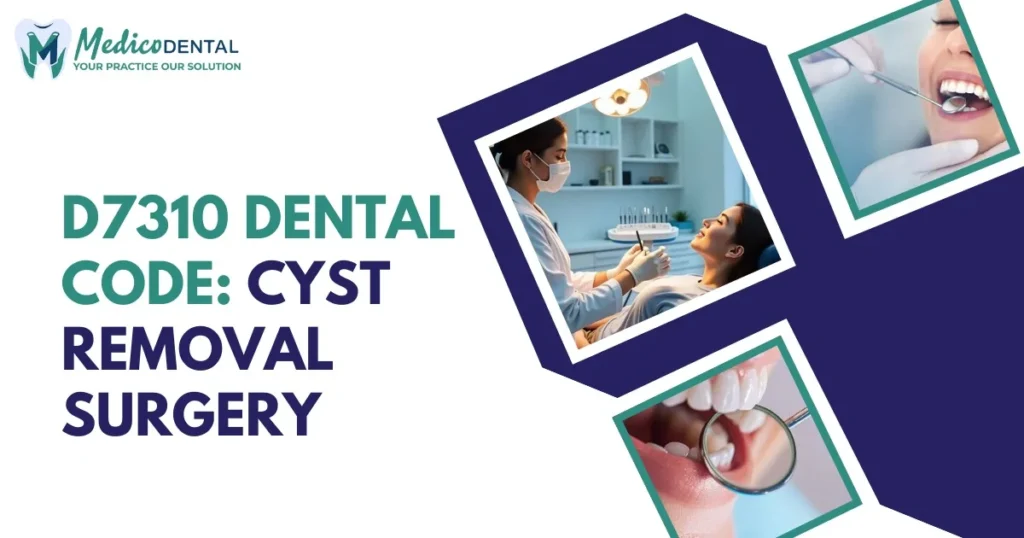
The D7310 Dental Code is a critical component of dental coding, especially for procedures that involve alveoloplasty in conjunction with tooth extractions. While often used for bone recontouring after extractions, it also plays a crucial role when cyst removal is involved. This guide will explain the purpose, scope, and application of D7310, specifically in the context of cyst removal surgery.
What is the D7310 Dental Code?
The D7310 Dental Code is used to classify a specific procedure in the realm of oral and maxillofacial surgery. It refers to alveoloplasty performed alongside tooth extractions, specifically when four or more teeth or tooth spaces are involved per quadrant. The primary purpose of this procedure is to recontour the alveolar bone — the bony ridge that supports teeth — in preparation for dental prosthetics, such as dentures. In the case of cyst removal, D7310 also helps in reshaping the bone around the affected area, improving the fit of the prosthesis or assisting in further surgical needs.
Purpose of the D7310 Procedure
The D7310 procedure is designed to smooth and reshape the bone after tooth extractions, making it easier for dentures or other prosthetics to fit securely. When cysts are involved, the procedure ensures that the bone is properly prepared after the cyst and surrounding tissue have been removed. This can be especially important when dealing with large cysts that affect the jaw structure. Additionally, D7310 ensures a smoother recovery for the patient and better long-term oral health.
Cyst Removal Surgery and Alveoloplasty
What is Alveoloplasty in Cyst Removal?
Alveoloplasty is a surgical procedure where the alveolar bone is reshaped to improve its contour. When cyst removal is required, especially in cases where the cyst has significantly affected the bone structure, alveoloplasty becomes an essential part of the treatment. Cysts in the jaw can cause irregularities, and without proper bone reshaping, it may be difficult to fit a prosthesis, such as dentures or implants. In these cases, the D7310 code is used for the procedure, ensuring that after the cyst is removed, the bone is properly contoured for future restorative treatments.
How D7310 Relates to Cyst Removal Procedures
Cyst removal procedures often leave behind irregular bone surfaces that require attention. The D7310 code is used to classify the surgical procedure where the dentist recontours the alveolar bone after a cyst has been removed, along with tooth extractions. This step is essential for healing and preparing the patient for a prosthesis. By reshaping the bone, the procedure ensures the jaw remains structurally sound, allowing for better-fitting dentures or implants post-surgery. It is a crucial step in the surgical journey, contributing to both the aesthetic and functional restoration of the patient’s oral health.
Scope of D7310 Dental Code
When is D7310 Used for Cyst Removal?
The D7310 code is applied during the cyst removal process when multiple teeth are extracted within a single quadrant, and there is a need to reshape the bone. This may occur in cases where cysts cause bone loss or distortion, making it necessary to remove several teeth in the affected area. The D7310 code ensures that not only the cyst is removed, but also the surrounding bone is reshaped to promote healing and prepare the site for further dental restoration. This code is commonly used when cyst removal requires comprehensive surgical intervention in multiple tooth spaces.
Key Aspects of the D7310 Procedure in Cyst Removal
The key elements of the D7310 dental code procedure when used in cyst removal surgery include:
-
Bone Recontouring: After the cyst and any damaged or infected teeth are removed, the dentist reshapes the remaining bone to eliminate any irregularities.
-
Improved Healing: By smoothing and reshaping the bone, the procedure helps promote better healing and reduces the risk of complications in the future.
-
Preparation for Prosthetics: This is a crucial step if the patient plans to receive a denture, implant, or other prosthetic devices. A well-contoured alveolar ridge ensures a better fit for these prosthetics.
-
Integration with Extraction: The D7310 code is specifically for cases where bone recontouring is done in conjunction with tooth extractions. This integration is important for streamlining the surgical process and minimizing the need for additional visits.
D7310 vs. Other Alveoloplasty Codes
D7310 vs. D7311: Differences in Application
Both D7310 and D7311 are used for alveoloplasty procedures, but they differ in terms of the scope of the surgery and the number of teeth involved.
-
D7310 refers to alveoloplasty performed in conjunction with extractions of four or more teeth or tooth spaces per quadrant. This procedure typically requires more extensive reshaping of the alveolar bone, especially when cysts are involved and multiple teeth must be removed.
-
D7311, on the other hand, is used for alveoloplasty when one to three teeth or tooth spaces are involved in the extraction per quadrant. This code applies to more limited procedures, where the extent of bone reshaping is less than that required in D7310.
In the case of cyst removal, D7310 dental code is typically preferred when multiple teeth are being extracted and the bone requires significant reshaping, while D7311 would be applied for more minor cases with fewer teeth involved.
H3: D7310 vs. D7320: When to Use Each Code
While D7310 is used when alveoloplasty is performed alongside extractions, D7320 is used when alveoloplasty is done as a standalone procedure without any extractions.
-
D7310 is applied when alveoloplasty is necessary to reshape the bone after multiple tooth extractions, such as in the case of cyst removal where large portions of the bone may need to be recontoured.
-
D7320 is used for situations where alveoloplasty is performed independently, typically when no extractions are involved, or when the bone reshaping is being done for reasons unrelated to tooth extraction. For instance, D7320 might be used if the cyst removal was done separately and alveoloplasty is required to prepare the bone for dentures or implants.
Choosing between D7310 and D7320 depends on whether the procedure involves extractions and the number of teeth affected.
Billing and Documentation for D7310
Proper Coding for Cyst Removal with Alveoloplasty
When coding for cyst removal and alveoloplasty, it’s essential to use the correct dental codes to ensure accurate billing and avoid claim denials. For cyst removal procedures involving extractions and bone reshaping, D7310 is the appropriate code. The key to proper dental coding is to ensure that both the cyst removal and alveoloplasty are documented correctly.
-
Document the number of teeth involved: If four or more teeth are extracted in a quadrant along with cyst removal, D7310 should be used.
-
Separate the services: If the cyst removal is performed as a separate procedure, it must be clearly differentiated from alveoloplasty in the patient’s medical records. Ensure that the alveoloplasty part is coded using D7310 to reflect the bone reshaping after the extraction.
This helps avoid confusion and ensures the dental practice gets reimbursed for the full scope of treatment provided.
Insurance and Claiming Process for D7310
The insurance and claiming process for D7310 involves submitting the correct codes along with detailed documentation of the procedure. Insurance companies may require supporting documents such as:
-
Pre-authorization: For procedures like alveoloplasty with cyst removal, it’s often necessary to obtain pre-authorization from the insurance company before performing the surgery.
-
Detailed Procedure Notes: Submit notes that outline the extent of the cyst removal, the number of extractions, and the recontouring of the bone using D7310.
-
Post-Procedure Documentation: Include photos or radiographs that show the condition of the jawbone after the cyst removal and alveoloplasty, ensuring there’s clarity on how the procedure improved the bone for prosthesis placement.
Accurate and detailed documentation improves the chances of claim approval and ensures smooth reimbursement for the procedure.
Clinical Considerations and Benefits of D7310
Benefits of Alveoloplasty in Cyst Removal
The primary benefit of alveoloplasty in cyst removal is the successful reshaping of the bone. When cysts develop in the jaw, they can cause significant bone deformities, making it difficult for prosthetics, such as dentures or implants, to fit properly. D7310 dental code addresses these issues by not only removing the cyst but also recontouring the bone to create a smoother, more stable foundation.
-
Improved Prosthesis Fit: After alveoloplasty, the bone’s contour is corrected, allowing for a better fit for dentures or implants.
-
Faster Recovery: A properly reshaped jawbone encourages faster healing and reduces complications that could arise from improperly aligned bone.
-
Long-Term Stability: By smoothing the bone after cyst removal, alveoloplasty helps maintain jaw stability, preventing future issues like misalignment or denture movement.
Why D7310 is Critical for Accurate Treatment and Prosthesis Fit
D7310 plays a crucial role in ensuring that the jawbone is appropriately prepared for future dental treatments. After cyst removal, the bone can often be irregular or uneven, which would hinder the placement of dental prosthetics. Using D7310 to recontour the bone ensures that the foundation for any future dentures or implants is solid and stable.
Without this step, patients might experience discomfort, difficulty chewing, or issues with their prosthetics fitting properly. D7310 thus becomes essential not only for treating the cyst but also for ensuring the patient’s long-term dental health and comfort.
Conclusion
The D7310 Dental Code is an essential tool in the dental field, particularly when dealing with alveoloplasty procedures performed in conjunction with tooth extractions. Its use is critical when addressing complex cases such as cyst removal surgeries, where reshaping the alveolar bone is necessary to ensure the proper fit of dental prosthetics. By accurately coding for these procedures, dental professionals can provide patients with better outcomes, including improved healing, enhanced prosthesis fit, and long-term oral health stability.
Proper understanding and application of D7310 not only facilitate smooth surgical procedures but also ensure accurate billing and insurance processing, helping to maintain financial integrity in dental practices. As a critical step in post-extraction care, alveoloplasty through D7310 dental code is fundamental in preparing the jaw for future dental work, ensuring that patients receive the best possible care and results.
FAQs
What Procedures Are Covered Under D7310?
Ans. The D7310 Dental Code is used for alveoloplasty performed with tooth extractions, specifically when four or more teeth are involved per quadrant. It covers both the extraction of the teeth and the reshaping of the bone, which may be required after cyst removal, trauma, or other conditions that affect the bone structure.
In the case of cyst removal, D7310 is used when the cyst has caused significant bone distortion, requiring extensive reshaping to prepare the area for a prosthesis.
How Does D7310 Impact Post-Surgery Recovery?
Ans. The impact of D7310 on post-surgery recovery is generally positive. By reshaping the jawbone after cyst removal and tooth extraction, patients typically experience:
-
Faster Healing: Proper bone recontouring promotes better healing, reducing the risk of complications.
-
Less Pain: A well-contoured bone reduces irritation and potential pain that may arise from uneven bone surfaces.
-
Better Prosthesis Fit: Patients can expect a smoother recovery with a prosthetic that fits more securely and comfortably.