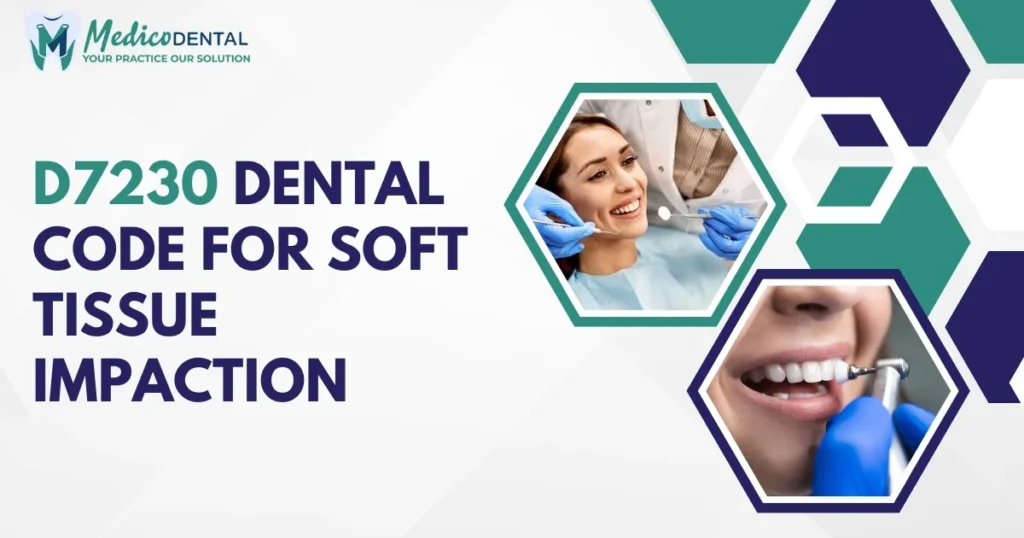
The D7230 dental code is a key part of oral surgery, focusing on the surgical removal of a partially bony impacted tooth. Impacted teeth, particularly wisdom teeth, are a common challenge in dentistry. When a tooth is unable to fully emerge through the gums due to obstruction by both bone and soft tissue, a more intricate surgical procedure is required. The D7230 code ensures that dentists are able to bill for this complex procedure, enabling proper documentation for both treatment and billing purposes. This article delves into the importance of the D7230 code, its procedures, indications, and case scenarios where it is applied.
Overview of D7230 Dental Code and Its Importance
The D7230 dental code is designated for the surgical removal of a tooth that is partially bony impacted, meaning it is obstructed by both bone and gum tissue. This condition typically prevents the tooth from fully erupting, causing pain, infection, or even damage to surrounding teeth. The surgical removal involves accessing the tooth through an incision in the gum and removing a portion of the surrounding bone before extracting the tooth. This code is vital for dental professionals to accurately bill for such procedures and ensure proper reimbursement, as impacted tooth extractions often require more time and resources than a simple extraction.
What is the D7230 Dental Code?
Definition and Scope of the Code
The D7230 code specifically refers to the surgical removal of a partially bony impacted tooth. This means that the tooth is not only covered by soft tissue but also partially embedded in the bone, making it more complex to extract. In such cases, a regular extraction is not feasible, and surgical intervention is necessary. The code is crucial for documenting and billing the surgery needed to access the impacted tooth and extract it carefully, ensuring minimal damage to surrounding tissues.
Explanation of Soft Tissue Impaction
Soft tissue impaction occurs when a tooth is blocked by gum tissue but not bone, preventing it from fully erupting through the gumline. While this may be easier to treat than a bony impaction, it still requires surgical intervention in some cases. When both soft tissue and bone are involved, a more invasive procedure is needed to remove the tooth, which is precisely what the D7230 code addresses. This process involves removing the bone blocking the tooth and then extracting it, making it more complex than a simple tooth extraction.
Indications for D7230
When is the D7230 Code Used?
The D7230 code is used in situations where a tooth is impacted by both bone and soft tissue and cannot be extracted using traditional methods. Typical situations where this code is used include:
- Wisdom teeth that have not erupted properly and are causing pain or infection.
- Teeth that are causing damage to surrounding teeth or are crowding the jaw.
- Abscesses or cysts develop around the impacted tooth, which can cause further complications.
D7230 is specifically used for cases that cannot be treated by a simple extraction, where the tooth is obstructed by bone and tissue, and a surgical approach is required.
Common Symptoms and Conditions Leading to Soft Tissue Impaction
Symptoms and conditions that may prompt the use of the D7230 code include:
- Pain and tenderness around the impacted tooth or gums.
- Swelling and discomfort in the jaw.
- Infections or abscesses due to trapped food or bacteria.
- Difficulty chewing or opening the mouth due to swelling or discomfort.
- Damage to adjacent teeth caused by pressure from the impacted tooth.
These issues often necessitate a surgical solution, which is where the D7230 dental code comes into play.
Procedure for D7230
Steps Involved in the Surgical Removal of a Partially Bony Impacted Tooth
The procedure to remove a partially bony impacted tooth typically follows these steps:
- Anesthesia: The area is numbed using local anesthesia, and in some cases, the patient may be given sedation to ensure comfort during the procedure.
- Incision and Flap Creation: A small incision is made in the gum tissue to expose the bone and impacted tooth. In some cases, a mucoperiosteal flap (gum tissue and bone) is lifted to provide better access to the impacted tooth.
- Bone Removal: Since the tooth is impacted by bone, part of the surrounding bone is removed to expose the tooth fully.
- Tooth Extraction: After removing the bone, the tooth is carefully elevated and extracted using dental instruments. The extraction may be done in sections if the tooth is too large or difficult to remove in one piece.
- Stitching the Incision: Once the tooth is removed, the gum tissue is sutured back into place. This helps ensure proper healing and minimizes the risk of complications.
- Post-operative Care: The dentist provides aftercare instructions, including how to manage pain, care for the surgical site, and signs to watch out for infection.
Surgical Techniques: Mucoperiosteal Flap, Bone Removal, and Extraction
- Mucoperiosteal Flap: The flap technique involves lifting both the gum tissue and the periosteum (a layer of tissue covering the bone) to access the impacted tooth. This provides better visibility and control during surgery.
- Bone Removal: When a tooth is embedded in the bone, a portion of the bone needs to be carefully removed to allow for easier extraction. This step is essential in the D7230 procedure.
- Tooth Elevation and Extraction: Once exposed, the tooth is elevated from its socket using specialized tools, and then it is carefully extracted.
When is D7230 Applicable?
Conditions That Require D7230 for Extraction
D7230 is applicable in cases where a tooth is impacted by both bone and soft tissue, making it difficult to extract using conventional methods. Typical conditions include:
- Impacted wisdom teeth that are causing pain, swelling, or infection.
- Teeth that are blocking the eruption of adjacent teeth or causing damage.
- Situations where an infection or abscess has developed around the tooth, requiring surgical removal.
Case Scenarios: Wisdom Teeth and Other Impacted Teeth
- Wisdom Teeth: The most common use of D7230 is for the removal of impacted wisdom teeth. These teeth often become impacted due to lack of space in the jaw, leading to swelling, infection, or damage to other teeth.
- Other Impacted Teeth: While wisdom teeth are the most common, other teeth such as molars or premolars can also become impacted, especially in cases where there isn’t enough room in the jaw for the tooth to emerge fully. D7230 is used for these cases as well, especially when the tooth is blocked by both soft tissue and bone.
Comparison: D7230 vs. Other Extraction Codes
The D7230 dental code is specifically for the surgical removal of a partially bony impacted tooth, which involves more complexity than regular tooth extractions. However, there are other extraction codes that address different types of impactions or extractions. Understanding how D7230 compares to these other codes is essential for accurate billing and treatment planning.
How D7230 Differs from Other Codes for Soft Tissue and Bony Impactions
- D7230 is used for teeth that are partially bony impacted, meaning the tooth is partially covered by bone and soft tissue. This requires the surgeon to remove bone and gum tissue to access and extract the tooth.
- D7220 is used for simple tooth extractions or for removing a tooth that is only partially erupted or obstructed by soft tissue. The procedure does not require the removal of bone and is typically less invasive.
- D7240 is for full bony impactions, where the tooth is completely covered by bone. This is a more complex procedure than D7230, requiring more bone removal and a more extensive surgical approach.
- D7210 is Used for the removal of a tooth that is surgically impacted and requires cutting of the soft tissue or bone. This code is more specific than D7999 and would be used for complex surgical extractions. D7999 might be used instead of D7210 when there is an unusually complex situation that requires more than just a standard surgical extraction but does not fully meet the criteria of D7210.
The key difference lies in the degree of impaction and the complexity of the surgical procedure. D7230 deals with partial bony impactions, while D7220 is for simpler soft tissue impactions and D7240 addresses fully bony impactions.
Benefits and Risks of D7230 Procedure
Benefits of Using D7230 for Impacted Teeth
- Relieves Pain: Impacted teeth often cause significant discomfort due to pressure, infection, or inflammation. Removing the tooth using D7230 alleviates this pain and reduces the risk of further complications like abscesses.
- Prevents Future Problems: Impacted teeth can lead to issues such as infection, damage to adjacent teeth, or crowding. Extracting the tooth with D7230 helps prevent these issues from worsening over time.
- Improves Oral Health: By addressing an impacted tooth, D7230 ensures better long-term oral health, improving overall function and hygiene by eliminating areas where food and bacteria can accumulate.
- Reduces Risk of Infection: The D7230 procedure addresses infections that might arise due to trapped food particles and bacteria around impacted teeth, ensuring that they don’t spread to other areas of the mouth.
Potential Risks and Complications of the Surgery
- Infection: Like any surgical procedure, there is a risk of infection, especially if post-operative care instructions are not followed carefully. Keeping the surgical site clean and monitoring for signs of infection (such as swelling or fever) is critical.
- Damage to Surrounding Tissues: There is a small risk of damaging adjacent teeth, nerves, or blood vessels during the extraction, particularly when the tooth is in a difficult position.
- Swelling and Bruising: Post-operative swelling and bruising are common after a D7230 procedure and typically subside within a few days to a week.
- Dry Socket: Dry socket is a potential complication, where the blood clot that forms in the extraction site dislodges, leaving the bone exposed. This can lead to significant pain and delays in healing.
- Prolonged Healing Time: Since D7230 involves the removal of bone, healing time can be longer compared to simpler extractions, requiring extra attention to post-operative care.
Billing and Insurance for D7230
Understanding Coverage for D7230 Dental Code
Insurance companies typically cover the D7230 procedure, but coverage depends on the patient’s plan and the severity of the impaction. It is important to verify insurance benefits and obtain pre-authorization before performing the procedure to avoid unexpected costs. Many insurance providers classify D7230 as a medically necessary procedure, especially if the impacted tooth is causing pain or infection. However, there may be limitations on how often the procedure can be covered or whether it requires documentation of the medical necessity.
How to Submit Claims and Common Billing Issues
Pre-Authorization: Before performing the surgery, pre-authorization is often required by insurance companies to confirm coverage for the procedure. Ensure all necessary documentation, such as X-rays and medical records, are submitted.
Accurate Coding: When dental billing for D7230, ensure that the correct procedure code is used and that the diagnosis code aligns with the patient’s condition (e.g., infection, pain, damage to adjacent teeth). Incorrect coding may lead to claim rejections.
Billing for Additional Procedures: If other procedures, such as bone grafting or the removal of additional teeth, are performed during the same appointment, make sure to bill these separately using the appropriate codes.
Follow-up Documentation: Be prepared to submit additional clinical notes or documentation that supports the necessity of the procedure, such as evidence of infection or impaction that cannot be treated with simpler methods.
Appeals Process: If the claim is denied, understanding the appeals process and submitting a detailed explanation of the patient’s medical necessity can help secure reimbursement.
Conclusion
The D7230 dental code is critical for ensuring that patients receive the necessary care when dealing with partially bony impacted teeth. This procedure not only helps alleviate pain and prevent further complications but also plays a key role in maintaining long-term oral health. By understanding the differences between D7230 and other extraction codes, dental professionals can more accurately diagnose and treat impacted teeth, while also navigating the complexities of insurance and billing.
Key takeaways:
- D7230 is used specifically for the surgical removal of partially bony impacted teeth.
- The procedure offers significant benefits, including pain relief and the prevention of further oral health issues.
- Proper billing and insurance procedures are vital to ensure that the procedure is reimbursed correctly.
FAQs
What does the D7230 code cover?
Ans. The D7230 code covers the surgical removal of a partially bony impacted tooth, typically involving both bone and soft tissue obstruction.
When is D7230 necessary?
Ans. D7230 is necessary when a tooth is impacted by both bone and soft tissue, causing pain, infection, or damage to adjacent teeth, and cannot be extracted using traditional methods.
How long does recovery take after a D7230 procedure?
Ans. Recovery from a D7230 procedure generally takes about a week for initial healing, but full recovery may take several weeks, depending on the complexity of the extraction.
Does insurance cover the D7230 procedure?
Ans. Insurance coverage for D7230 varies, but it is typically considered a medically necessary procedure and may be covered under most dental plans, though pre-authorization may be required.
What are the risks of the D7230 procedure?
Ans. The risks include infection, damage to surrounding tissues, swelling, and delayed healing. Following post-operative care instructions is critical to minimize these risks.