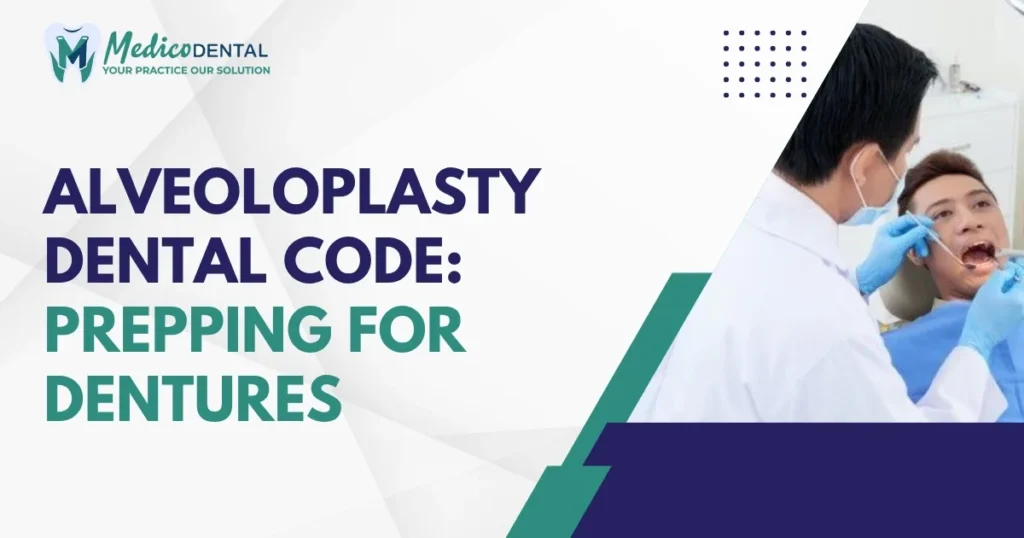
When preparing a patient for dentures, a dental procedure called alveoloplasty often becomes necessary. Alveoloplasty involves reshaping or smoothing the jawbone to ensure that dentures fit securely and comfortably. This procedure is essential for patients who need dentures but may have uneven or irregular bone contours due to tooth extractions or wear and tear over time. Understanding the correct dental codes related to alveoloplasty is crucial, not just for the procedure itself, but also for proper billing, insurance claims, and maintaining clear medical records.
What is Alveoloplasty?
Alveoloplasty is a surgical procedure performed to reshape or contour the jawbone, typically in preparation for dentures or to improve the fit of existing dentures. It involves removing excess bone or smoothing out the bony ridges left behind after a tooth extraction.
In dental care, especially when preparing for dentures, alveoloplasty is performed to ensure the prosthetic teeth fit well and do not cause discomfort or cause further oral health issues. The goal is to create a smooth, stable surface that helps prevent denture movement, discomfort, and gum irritation. This process is important for ensuring long-term success and comfort with dentures.
Why Alveoloplasty is Done: Prepping for Dentures
The primary reason for performing alveoloplasty before dentures is to provide a stable and comfortable foundation. When teeth are extracted, the bone in the extraction sites may change shape, shrink, or become uneven. If this happens, dentures may not fit properly, leading to discomfort or difficulty in chewing.
By performing alveoloplasty, the dentist smooths the bone contours, removes sharp edges, and addresses any irregularities that could interfere with the fit of the denture. This procedure ensures that the dentures will stay in place and function properly, ultimately improving the patient’s quality of life. In essence, alveoloplasty helps create a solid foundation for the dentures, providing the patient with a better overall fit and feel.
Understanding Alveoloplasty Dental Codes
When it comes to dental procedures, proper coding is essential for both insurance reimbursement and accurate patient records. Alveoloplasty is no exception. There are specific codes that correspond to different types of alveoloplasty, depending on whether the procedure is performed with or without tooth extractions, and how many teeth or tooth spaces are involved.
Dental codes are used by professionals to identify procedures performed during treatment. These codes are used for billing purposes, ensuring the dental office is reimbursed correctly, and are important for insurance providers to understand the scope of work involved.
Importance of Correct Coding for Insurance and Billing Purposes
Correctly coding alveoloplasty procedures ensures that insurance claims are processed efficiently and accurately. Incorrect codes could lead to claim denials or delays, which can cause unnecessary frustration for both dental offices and patients. Additionally, the proper coding allows dental offices to maintain accurate financial records and avoid billing mistakes.
Using the correct code also helps dental practices maintain compliance with industry regulations and avoid audit issues, ultimately safeguarding the practice’s financial health and reputation.
Breaking Down Alveoloplasty Dental Codes
The American Dental Association (ADA) assigns specific codes for alveoloplasty procedures based on whether the surgery is done with extractions and how many teeth or spaces are involved. Let’s take a closer look at these codes:
D7310: Alveoloplasty with Extractions (4+ Teeth/Spaces)
This code is used when alveoloplasty is performed in conjunction with tooth extractions, involving four or more teeth or tooth spaces. This could occur when a patient requires multiple extractions, and the dentist needs to smooth the bone ridges to prepare for dentures. For instance, if a patient needs several extractions in different parts of the mouth, D7310 would be used to cover both the extractions and the alveoloplasty.
D7311: Alveoloplasty with Extractions (1-3 Teeth/Spaces)
D7311 is used when alveoloplasty is performed alongside extractions, but the number of teeth or tooth spaces involved is between one and three. This might be used for patients who need fewer extractions or only part of the mouth needs preparation. For example, if a patient needs a few teeth extracted from a particular quadrant of the mouth, this code would apply.
D7320: Alveoloplasty without Extractions (4+ Teeth/Spaces)
When alveoloplasty is performed without any extractions, and the procedure involves four or more teeth or tooth spaces, the code used is D7320. This situation could arise when the patient’s existing teeth need to be reshaped, or if bone smoothing is necessary for multiple tooth spaces that will eventually receive implants or dentures. This code indicates that the alveoloplasty was done independently and not as part of the extraction process.
D7321: Alveoloplasty without Extractions (1-3 Teeth/Spaces)
This code applies when alveoloplasty is performed without extractions, but it involves one to three teeth or tooth spaces. It’s typically used for patients who only need minor bone contouring in certain areas of the mouth. For example, this code would be appropriate for a patient whose existing teeth need reshaping or contouring before fitting dentures, but without any extractions taking place.
How to Choose the Right Alveoloplasty Code
Selecting the correct alveoloplasty code is essential for accurate dental billing and insurance processing. Here are key factors to consider when choosing the right code for your alveoloplasty procedure:
- Number of Teeth or Spaces Involved
The number of teeth or tooth spaces treated during the procedure significantly influences the code. For instance:
- If four or more teeth/spaces are involved, you would typically use D7310 or D7320, depending on whether extractions are performed.
- If the procedure involves one to three teeth/spaces, then D7311 or D7321 would be appropriate.
- Whether Extractions Are Performed:
Extractions play a crucial role in determining the correct code:
- If extractions are part of the procedure, use D7310 or D7311, depending on how many teeth/spaces are involved.
- If no extractions are involved, use D7320 or D7321, based on the number of teeth/spaces treated.
- Procedure Type:
- If the procedure is primarily to smooth the bone or reshape it for dentures, and it involves extractions, D7310 or D7311 would apply.
- If it is a standalone procedure, meaning there are no extractions but the jawbone still needs reshaping for dentures or implants, then D7320 or D7321 would be correct.
- Insurance Requirements:
Always check with the patient’s insurance provider to verify if there are any specific coding guidelines for alveoloplasty. Some insurers may require additional documentation or may not cover certain codes, depending on the procedure’s specifics.
By carefully considering the number of teeth/spaces, whether extractions are involved, and the type of alveoloplasty, you can ensure that the correct dental code is used. This helps avoid billing mistakes, ensures the correct reimbursement, and maintains accurate patient records
The Role of Alveoloplasty in Denture Fit
Alveoloplasty plays a crucial role in preparing a patient’s mouth for dentures, ensuring that the dentures fit securely and comfortably. Here’s how alveoloplasty improves the fit and function of dentures:
Bone Reshaping for Stability:
After tooth extractions, the jawbone can become irregular, creating uneven surfaces that can affect how dentures sit. Alveoloplasty reshapes and smooths these bone ridges to provide a more stable foundation for the dentures. A smooth, even jawbone helps the dentures stay in place, preventing discomfort and shifting during use.
Improved Comfort:
Without alveoloplasty, dentures may cause irritation and discomfort, as they may not fit snugly. The reshaping of the bone makes it possible for the denture to fit securely, preventing pressure points and sores from developing on the gums. This leads to better overall comfort for the patient.
Prevention of Bone Shrinkage:
In some cases, alveoloplasty can help minimize the risk of further bone shrinkage by smoothing the areas where extraction sites have created irregularities. When the bone is evened out, it’s less likely to shrink in a way that negatively impacts denture fit.
Enhancing Function:
A well-fitting denture enhances a patient’s ability to eat, speak, and smile confidently. By smoothing and reshaping the bone, alveoloplasty improves the functionality of the dentures, ensuring that they not only fit better but also work better in daily life.
In summary, alveoloplasty creates a more stable, comfortable, and functional foundation for dentures, ultimately leading to a better fit and improved quality of life for the patient.
Common Mistakes in Alveoloplasty Coding
Proper coding for alveoloplasty is vital, but several common mistakes can occur when selecting the correct code. Here’s a look at some of those mistakes and how to avoid them:
- Incorrectly Using Codes for Extractions or Non-Extractions:
One of the most common mistakes is using the wrong code based on whether extractions were performed. If extractions were part of the procedure, D7310 or D7311 should be used, but if no extractions were done, D7320 or D7321 is required.
How to Avoid: Carefully review the patient’s treatment and check if extractions were part of the alveoloplasty procedure before selecting the correct code.
- Misunderstanding the Number of Teeth/Spaces Treated:
Selecting the wrong code based on the number of teeth or spaces involved can lead to billing discrepancies. For example, if a procedure involved one to three teeth, but the code for four or more teeth was mistakenly chosen, this could result in an overcharge or claim rejection.
How to Avoid: Be meticulous when counting the number of teeth or spaces affected by the procedure to ensure the correct code is applied.
- Failing to Confirm Insurance Guidelines:
Some dental insurance providers may have specific requirements for how alveoloplasty codes should be used. If these guidelines are not followed, claims may be denied, or the office may face delays in payment.
How to Avoid: Always check with the patient’s insurance provider for any special coding requirements or restrictions before submitting claims.
- Using General or Vague Codes:
Using overly broad codes that do not accurately describe the procedure can cause confusion and lead to issues with insurance or patient records.
How to Avoid: Use the most specific code that directly matches the procedure performed to ensure accuracy and clarity.
- Inconsistent Documentation:
Another mistake is failing to document the procedure thoroughly. Without sufficient documentation, even the correct code may not be accepted by insurance companies, which can lead to payment delays.
How to Avoid: Always document the details of the procedure clearly, noting whether extractions were performed, the number of teeth/spaces involved, and any other relevant details.
By being aware of these common mistakes and taking steps to avoid them, dental practices can ensure accurate billing and smooth processing of insurance claims.
Conclusion
Choosing the correct alveoloplasty code is vital for both proper billing and the effective preparation of a patient for dentures. By understanding the differences between D7310, D7311, D7320, and D7321, and carefully considering factors like extractions and the number of teeth involved, you can ensure that the right code is selected. This not only avoids potential billing issues but also ensures that the patient’s treatment is properly documented and reimbursed.
In preparing a patient for dentures, alveoloplasty is an essential step in creating a comfortable and functional foundation. By using the right codes, dental offices can help streamline the process and focus on delivering the best possible care for their patients.
FAQs
What is the difference between D7310 and D7311?
Ans. D7310 is used for alveoloplasty with extractions when four or more teeth/spaces are involved. D7311 is used for the same procedure, but when one to three teeth/spaces are treated.
Can alveoloplasty be done without extractions?
Ans. Yes, D7320 and D7321 are used for alveoloplasty procedures that do not involve extractions, with the codes depending on the number of teeth or spaces involved.
Why is correct coding important in alveoloplasty?
Ans. Correct coding ensures accurate billing, timely insurance reimbursement, and proper documentation of the procedure, avoiding errors or delays in payment.
Do I always need alveoloplasty before getting dentures?
Ans. Not everyone requires alveoloplasty, but it’s often necessary if the jawbone has irregularities that could affect the fit of dentures.
How long does it take to heal after alveoloplasty?
Ans. Healing time can vary but typically takes a few weeks to a few months, depending on the extent of the procedure and the patient’s overall health.