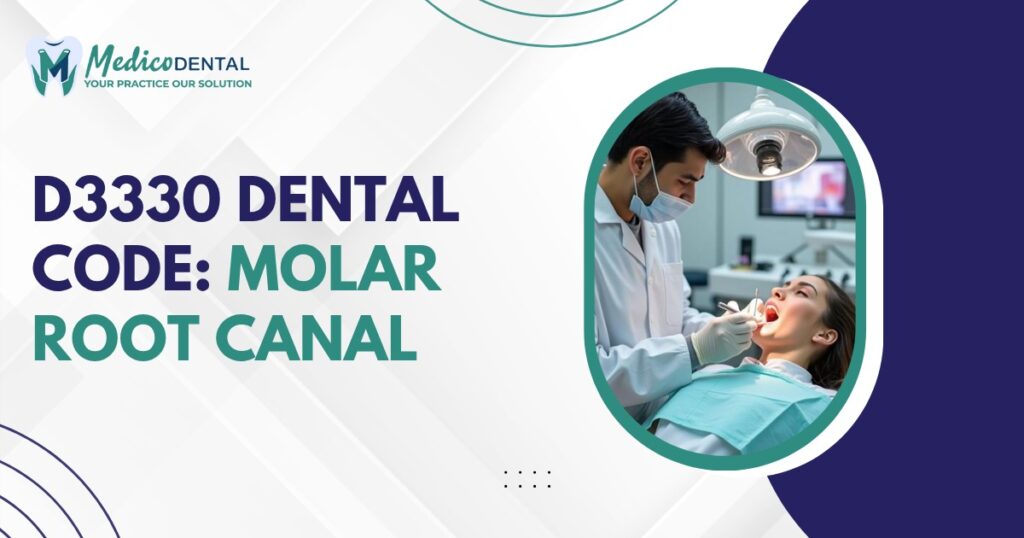
The D3330 dental code refers to endodontic therapy (root canal) performed on molar teeth, aimed at saving the tooth from extraction due to infection or damage. This procedure involves removing infected pulp, cleaning and sealing the root canals, but does not cover the final restoration, such as a crown. Understanding the D3330 code is crucial for dental professionals to ensure accurate billing and effective patient care throughout the treatment process.
Brief Overview of D3330 Dental Code
The D3330 dental code is specifically used to describe the endodontic therapy (commonly known as a root canal) performed on molar teeth. This procedure is critical for saving a tooth that has become severely damaged due to infection, deep decay, or trauma. The code encompasses the entire process of cleaning, treating, and sealing the tooth’s root canals. However, it excludes the final restoration, such as a crown or filling, which is typically applied after the root canal procedure.
Understanding the details of this dental code is essential for dental professionals, including dentists, dental office managers, and insurance coordinators, to ensure accurate treatment billing and avoid unnecessary misunderstandings with insurance companies.
Importance of Understanding D3330 for Dental Professionals
For dental professionals, knowing the specifics of the D3330 code is essential for several reasons:
Accurate Billing
Correctly coding the D3330 ensures that the practice is reimbursed properly for the work done during the root canal therapy on a molar.
Insurance Compliance
Dental insurance providers require accurate coding for reimbursement purposes. Understanding when to use D3330 vs. other codes like D3310 or D3320 helps prevent claim denials.
Treatment Planning
For endodontists and general dentists, knowing what D3330 covers and excludes ensures that the patient’s treatment plan is clearly defined. Patients can be informed in advance about any additional costs (e.g., the need for a crown after the root canal).
Patient Expectations
Clear communication with patients about what is included in D3330 and what isn’t (such as the final restoration) helps to set realistic expectations, reducing confusion and ensuring a smooth treatment experience.
What is D3330?
Definition and Purpose of D3330
The D3330 dental code represents endodontic therapy on a molar tooth, which is commonly referred to as a root canal. This treatment is required when the pulp (the soft tissue inside the tooth) becomes inflamed or infected, typically due to deep decay, a cracked tooth, or trauma.
The main purpose of D3330 is to eliminate the infected pulp tissue from the tooth’s canals, thoroughly clean and disinfect those canals, and then fill them to prevent further infection. The procedure aims to save the molar tooth from extraction, alleviating pain and restoring functionality.
How D3330 Relates to Root Canal Treatment
A root canal treatment involves the removal of the infected or damaged tissue (pulp) from inside the tooth and sealing the canals to prevent bacteria from re entering. D3330 specifically applies to molar teeth, which are more complex due to the multiple roots they contain. These teeth require thorough cleaning, shaping, and sealing to ensure complete removal of infection and to protect the tooth’s integrity.
What D3330 Covers
Removal of Infected or Damaged Pulp
One of the key elements of D3330 is the removal of infected or damaged pulp. This step is crucial for stopping the infection from spreading further into the tooth and jawbone, which could lead to more severe health complications.
Cleaning, Shaping, and Sanitizing Root Canals
After the pulp has been removed, the next phase involves cleaning and shaping the root canals to prepare them for filling. This process ensures that all infected material is removed, and the canals are widened to allow for optimal sealing. The use of antiseptic solutions during this phase helps to sanitize the area, further minimizing the risk of re infection.
Filling and Sealing the Root Canals
Once the root canals have been cleaned and shaped, the next step in the D3330 procedure is the filling and sealing of the canals. This step is crucial for preventing any future bacterial growth. A rubber like material, such as gutta percha, is typically used to fill the canals, and a sealant is applied to ensure the canals are completely sealed.
Pre Operative and Post Operative Radiographs
D3330 includes pre operative and post operative radiographs as part of the procedure. The pre operative X ray is taken before the procedure to assess the extent of the infection or damage and to determine the appropriate treatment plan. The post operative X ray is taken to ensure that the root canals have been properly cleaned, shaped, and sealed. These radiographs are part of the comprehensive care that comes with the D3330 code and should not be billed separately.
What D3330 Does Not Cover
Exclusion of Final Restoration (Crown or Filling)
While the D3330 code covers all aspects of the root canal procedure, it does not include the final restoration. After a root canal is completed, the tooth often requires a crown or a filling to restore its structure and function. These restorations are necessary to protect the tooth from further damage and decay, but they must be billed separately using other appropriate dental codes.
For instance, a post endodontic restoration, such as a crown, is typically billed with a code like D2750 (crown, porcelain/ceramic) or D2950 (core buildup, including any pins). It’s important to communicate to patients that the cost of the crown or filling is separate from the root canal therapy.
Separate Billing for Final Restoration
Since D3330 does not cover the final restoration, dental professionals should be careful to bill separately for this service. This ensures that the practice is reimbursed properly for the comprehensive care provided during the root canal and for the necessary restorative work afterward. It’s also crucial for dental professionals to inform patients that they will be responsible for the additional costs of the final restoration.
When is D3330 Used?
The D3330 dental code is used when a molar tooth requires endodontic therapy (root canal treatment) due to severe infection, inflammation, or damage. This procedure is necessary when the pulp (the soft tissue inside the tooth) becomes inflamed or infected due to factors like deep decay, trauma, or a cracked tooth. The goal of D3330 is to preserve the tooth and prevent the need for extraction by treating the internal infection and sealing the canals.
Conditions that Require D3330 (Inflamed or Infected Pulp, Deep Decay, Trauma, Cracked Tooth)
Inflamed or Infected Pulp
When the pulp inside the tooth becomes inflamed or infected, it can cause significant pain and discomfort. This often happens due to deep decay or damage that allows bacteria to enter the tooth’s interior. D3330 is used to remove the infected tissue and prevent further infection.
Deep Decay
Extensive cavities can reach deep into the tooth, affecting the pulp and leading to infection. If left untreated, the infection can spread, requiring a root canal to save the tooth.
Trauma
An injury or impact to a molar can damage the pulp, causing it to become necrotic (dead). D3330 is used to treat these types of injuries and prevent further complications like abscesses.
Cracked Tooth
A cracked molar can expose the pulp to bacteria, leading to infection. D3330 is necessary to clean and seal the root canals, ensuring the tooth remains functional and pain free.
The Need for D3330 in Preventing Tooth Extraction
One of the primary purposes of using the D3330 code is to avoid tooth extraction. Root canal treatment saves the tooth from being pulled out by eliminating the infection or damage in the pulp, cleaning the canals, and sealing them. This treatment allows patients to keep their molar and continue using it for chewing and other dental functions, providing a long term solution rather than opting for tooth removal.
D3330 and Other Related Codes
Comparison with Other Endodontic Codes (e.g., D3310, D3320)
It’s important to understand the distinctions between the D3330 code and other related endodontic codes. The D3310 and D3320 codes are used for root canal treatments on anterior (front) teeth and premolars, respectively. While D3330 is specifically for molars, D3310 and D3320 address similar procedures on different types of teeth.
- D3310: Used for anterior teeth (front teeth) root canal therapy.
- D3320: Used for premolar teeth root canal therapy.
- D3330: Specifically for molars, which typically have multiple roots and require more extensive treatment due to their complex structure.
The D3330 procedure is typically more involved than root canals on front teeth because molars have more roots and are more prone to infection due to their larger surface area. Understanding these differences ensures that the correct codes are used for dental billing and treatment planning.
Understanding the Full Treatment Process
D3330 covers all aspects of the root canal procedure for molars, including removal of infected pulp, cleaning and shaping the canals, and sealing them. However, it does not cover the final restoration (like a crown or filling). After the molar’s root canal is completed, a separate restoration procedure is required to restore the tooth’s function and appearance. This typically involves a crown, which protects the tooth from further damage and restores its chewing ability.
How D3330 Impacts Dental Billing and Insurance
How to Bill for D3330
Accurate billing for D3330 is critical for both the dental practice and the patient’s insurance claims. When a dentist performs a root canal on a molar, they must bill for the procedure under the D3330 code. This includes all aspects of the root canal treatment, such as the removal of infected pulp, cleaning, shaping, and sealing the root canals, as well as pre and post operative radiographs.
It’s important to note that the final restoration (like a crown) must be billed separately using a different code (e.g., D2750 for a crown). Dentists should ensure they use the correct codes for each part of the procedure to avoid insurance claim denials.
Insurance Coverage for D3330 and Related Procedures
Most dental insurance plans cover the cost of D3330 as part of endodontic therapy for molars. However, coverage can vary depending on the plan. Some insurance providers may require pre authorization for certain procedures, while others may have limits on how much they will cover for root canal treatments. Additionally, the final restoration (such as a crown) is often not covered as part of D3330 and may need to be billed separately, which can be an additional cost to the patient.
It’s essential for both dental practices and patients to understand their insurance coverage before proceeding with the treatment. Ensuring the correct billing codes are used and that all necessary authorizations are obtained can help prevent delays in treatment and payment.
Conclusion
The D3330 dental code is used for endodontic therapy on molar teeth. It covers the complete root canal treatment, including the removal of infected pulp, cleaning and sealing the root canals, and necessary radiographs. However, it does not include the final restoration, such as crowns or fillings, which must be billed separately.
Accurate coding ensures that dental professionals are properly reimbursed for the services provided and helps avoid claim denials from insurance companies. It also facilitates clear communication between dental offices, patients, and insurance providers, ensuring that patients understand the full scope of their treatment and any additional costs involved.
FAQs
What does the D3330 code cover?
Ans. D3330 covers the complete root canal treatment for molars, including pulp removal, cleaning, shaping, and sealing the root canals. It does not include the final restoration, such as a crown.
Does D3330 include a crown or filling?
Ans. No, D3330 does not include the final restoration (crown or filling), which is billed separately.
When should D3330 be used?
Ans. D3330 is used when a molar tooth has inflamed or infected pulp due to deep decay, trauma, or a cracked tooth, and the goal is to preserve the tooth and avoid extraction.
How do I bill for D3330?
Ans. The D3330 code should be used to bill for the root canal treatment on molars, excluding the final restoration, which should be billed separately.
Will insurance cover D3330?
Ans. Most dental insurance plans cover D3330, but coverage can vary, and the final restoration may need to be billed separately. Always check with the insurance provider for specific details.